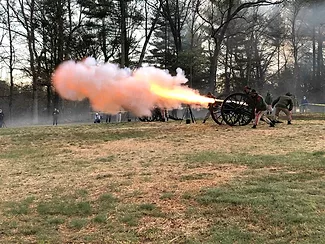
It’s six o’clock in the morning and you just heard a loud boom pierce the silence as dawn breaks on a crisp spring day in Concord. If you’re new to town you probably just spilled your coffee. But if you’re a longtime resident, you just smile and say to yourself, “the Battery is back.”
You won’t want to miss a moment of the exciting history that comes alive as we remember and honor the bravery of those who fought for liberty on April 19, 1775. Here are a few of the highlights of this year’s events.
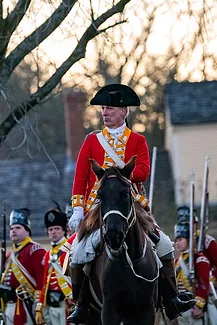
Shortly after sunrise, Reuben Brown crouched on a hill just outside the center of Lexington, Massachusetts. He was out of breath from his six-mile ride from Concord, and what he saw didn’t make him breathe any easier. More than 700 British troops were on the road, and 70-odd provincial militia were all that stood between them and Concord.
Every year, more than a million people descend on Minute Man National Historical Park to bear witness to the events that started the American Revolution. For the vast majority, North Bridge is the focal point, the place where visitors can literally walk over history while admiring the setting along this notable stretch of the Concord River.
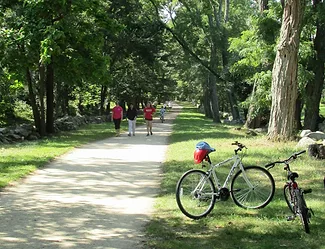
A growing number of travelers and national park aficionados are exploring more of the 1,034 acres that comprise Minute Man. That includes nine miles of walking trails! While history remains its cornerstone, Minute Man is also a national park, a welcome oasis offering an outdoor escape to the metropolitan Boston area.
In 1774 when Parliament passed the Boston Port Act in an attempt to break the Massachusetts colonists of their resistance to crown policy, it also authorized English General and acting Massachusetts Governor Thomas Gage to undertake any military measures necessary to help bring the colony under control. In late winter and early spring of 1775, Gage received a series of dispatches from London ordering him to not only arrest the leaders of Massachusetts’ opposition party but to launch a major strike against the apparently growing provincial stockpiles of weapons and munitions located throughout eastern Massachusetts.
In 1774, a war between England and Massachusetts Bay Colony appeared inevitable. In preparation, Massachusetts militiamen relied upon muskets obtained from various sources: inheritance, the French and Indian War, the Siege of Louisbourg, and commercial markets.
The result was a variety of weapons of different caliber, origins, and values.
There are 34 muscles in the human hand.
You can stretch them wide to claim something or clasp them tight to hold on. It depends on what your brain commands, but sometimes, it’s not up to you; the hand of fate cuts in
and pushes you where you were never
meant to be.
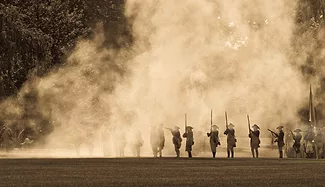
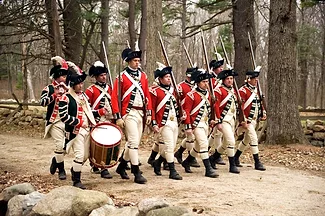
Events surrounding the observance of Patriots’ Day are once again being presented live and you won’t want to miss them! After two years of honoring this special time virtually, we once again welcome people from around the world as we remember and celebrate the events that lead to the birth of our nation.
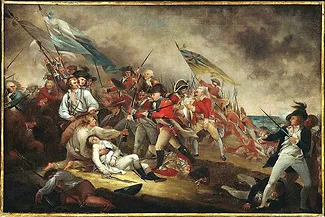
In the aftermath of the Battles of Lexington and Concord in April 1775, thousands of colonial militiamen trapped occupying British forces and ordinary civilians on the tiny Boston peninsula.
In Concord’s center, there stands an iconic red building. Known as the Wright Tavern, the building is 275 years old and has been closed to the public for more than 30 years (except for a brief time when operated by Concord Museum). That is about to change.



.webp?height=325&t=1721830913&width=325 "Munroe_WrightTavern2-(1).jpg")