
During the colonial period, taverns served as important community centers, where people could learn current events, hear from travelers, and discuss politics and the latest gossip. The Wright Tavern, built by Captain Ephraim Jones in 1747, was ideally located between the Meeting House (now the First Parish in Concord) and the training grounds for the militia.
The land on which the Tavern sits once belonged to Reverend Peter Bulkeley, a non-conforming Puritan minister who was one of the founders of Concord. It is meaningful that his ancestors were strong promoters of the Magna Carta, and his descendants included William Emerson and later Ralph Waldo Emerson.
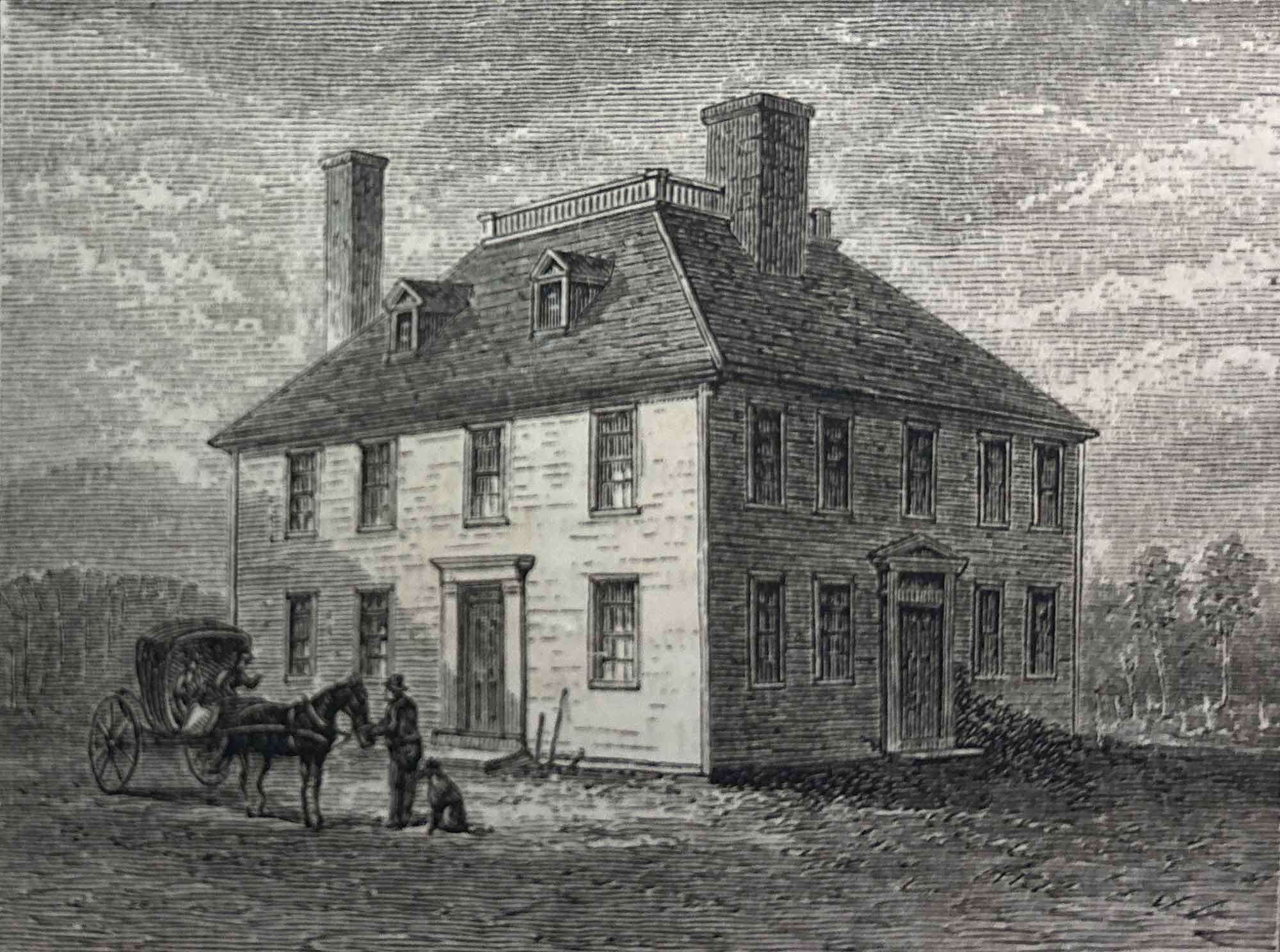
Illustration of Wright Tavern circa 1800s
| © istock/campwillowlakeThomas Munroe purchased the Tavern in 1751. It is not clear when Amos Wright became its proprietor. He was considered a quiet, retiring, gentle man. The Tavern was successful, and, in a few years, events would forever associate Wright’s name with this special place.
On May 20, 1774, the British Parliament annulled the Massachusetts Charter of 1692, the governing doctrine of the Colony, and installed the Massachusetts Government Act. This severely reduced citizens’ participation and the authority of local officials. In response, the Massachusetts General Assembly met in Salem on June 17 and locked the doors to the meeting house. They wanted to prevent Major General Thomas Gage, the appointed Governor, from serving the order to dissolve them. After two days, they left and reconvened in Concord on October 11.
Here, the Assembly held the Massachusetts First Provincial Congress to “call together to maintain the rights of the people.” They met in the (First Parish) Meeting House, but the planning occurred in the Wright Tavern. Important decisions were deliberated and made in the Tavern, then taken to the Congressional sessions for approval.
The most important of these decisions was to withdraw Massachusetts from British control and establish an independent representative government - the first Colony to do so. John Hancock was elected President and Benjamin Lincoln as Secretary. They became the de facto government for Massachusetts by taking control over the Colony outside of Boston, collecting taxes and fees meant for the British, and establishing a formal militia. These were clearly unlawful acts conspired in the Wright Tavern.
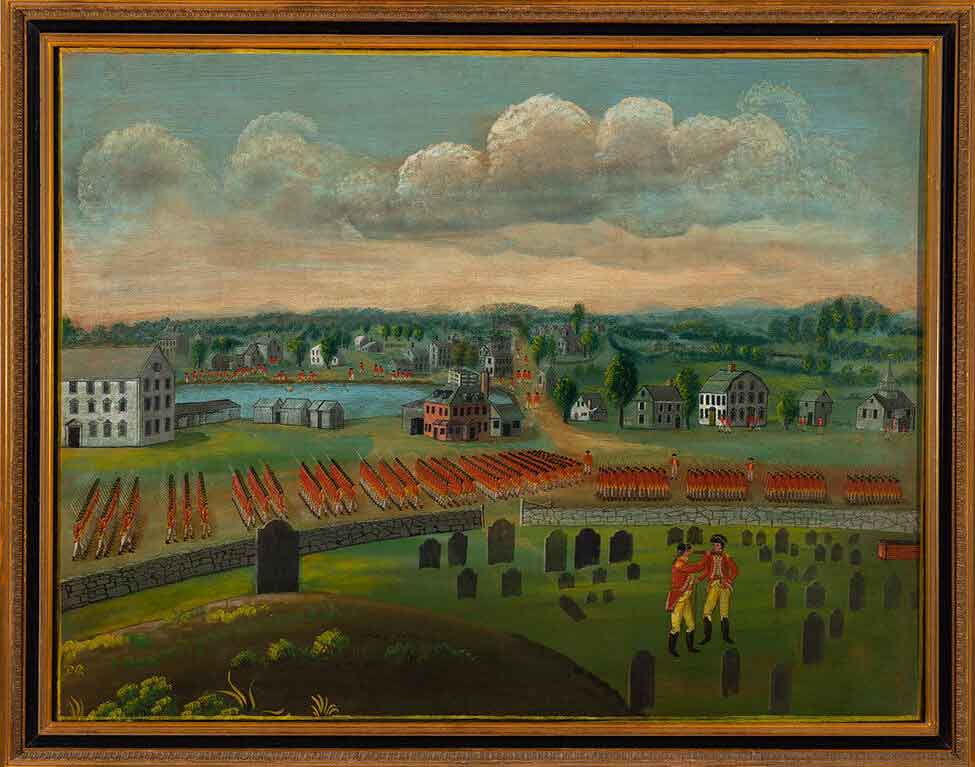
A View from the Town of Concord, by Timothy Martin Minot. Massachusetts, about 1825. Concord Museum Collection, Bequest of Mrs. Stedman Buttrick, Sr.; Pl414.
Just six months later, in the early hours of April 19, 1775, Dr. Samuel Prescott rode to Concord (after Paul Revere and William Dawes were captured) to alert the colonists of British advances. The redcoats were coming.
The colonial militia leaders met in the Wright Tavern to develop their plans. Just before the British arrived at Meriam’s Corner, they escaped into the Concord hills.
As 700 British Regulars entered Concord, Lieutenant Colonel Francis Smith and Major John Pitcairn took over the Wright Tavern to make it into their new command center. Legend has it that Colonel Smith said, as he was stirring his toddy with his finger, the British were going to “stir the blood of the Yankees.” However, events at the North Bridge did not go well for the redcoats.
As the British Regulars retreated to Boston and gunfire faded into the distance, the townspeople met at the Wright Tavern to celebrate one of the most important events in American history.
We invite you to experience the Tavern where it happened. For information on tours and events, please visit WrightTavern.org