
This year, the Trinitarian Congregational Church (TriCon) on Walden Street is celebrating its 200th anniversary. However, from the early days of Concord’s founding in 1635, there was only one meeting house, and that was First Church in the center of town. In 1778, Reverend Ezra Ripley assumed the pastorate, a position he would hold for 63 years. By 1825, First Parish, like many Congregational churches in Massachusetts, had changed, adopting a Unitarian theology. But not all parishioners were happy with “Dr. Ripley’s church” or his unorthodox preaching. In March 1826, nine dissenters, joined by seven townspeople, left First Parish to form their own “religious conference.”
In the summer of 1826, these dissenters formed an independent religious society that would become the Trinitarian Congregational Church. Among the parishioners were the “Misses Thoreau”: Jane, Elizabeth, and Maria (Henry Thoreau’s aunts). The first service on June 5, 1826, was officiated by the famous Reverend Lyman Beecher, the leader of an Orthodox movement that embraced Calvinist theology. Later that year, a new church was built on land donated by Ebeneezer Hubbard across the Mill Dam from First Parish. The new congregation had literally “crossed the brook over the leaving out of the Trinity.”
Women’s groups were extremely important in the early church. In 1828, the Ladies’ Sewing Society, which later became the Ladies’ Missionary Society, was formed to “aid in the cause of benevolence, according to the ability which God giveth.” Among the members was a free Black woman named Susan Robbins Garrison, the mother of three-year-old Ellen; the future civil-rights activist would attend the church’s Sabbath School as a young girl.
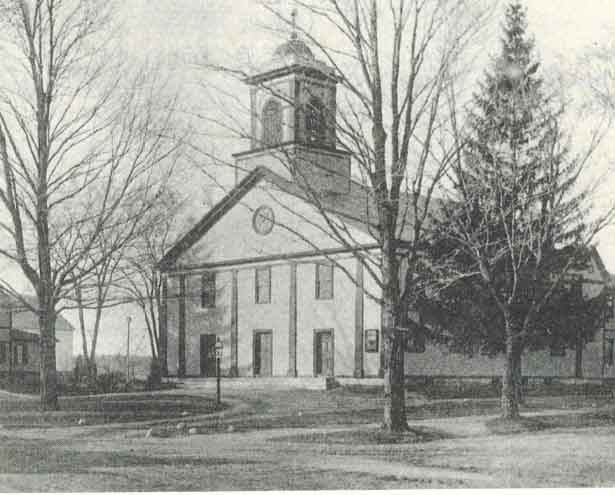
Original Church in 1826
| Courtesy of Trinitarian Congregational ChurchReverend Rebecca Floyd Marshall, the senior minister since 2024, is proud of TriCon’s involvement with social justice from the very beginning of its existence. What she calls “following the way of Christ in community” was evident in 1836 when the congregation took a strong stand against slavery and voted that “no person claiming property in human beings, or in any way concerned in this, shall be eligible to membership in this church.”
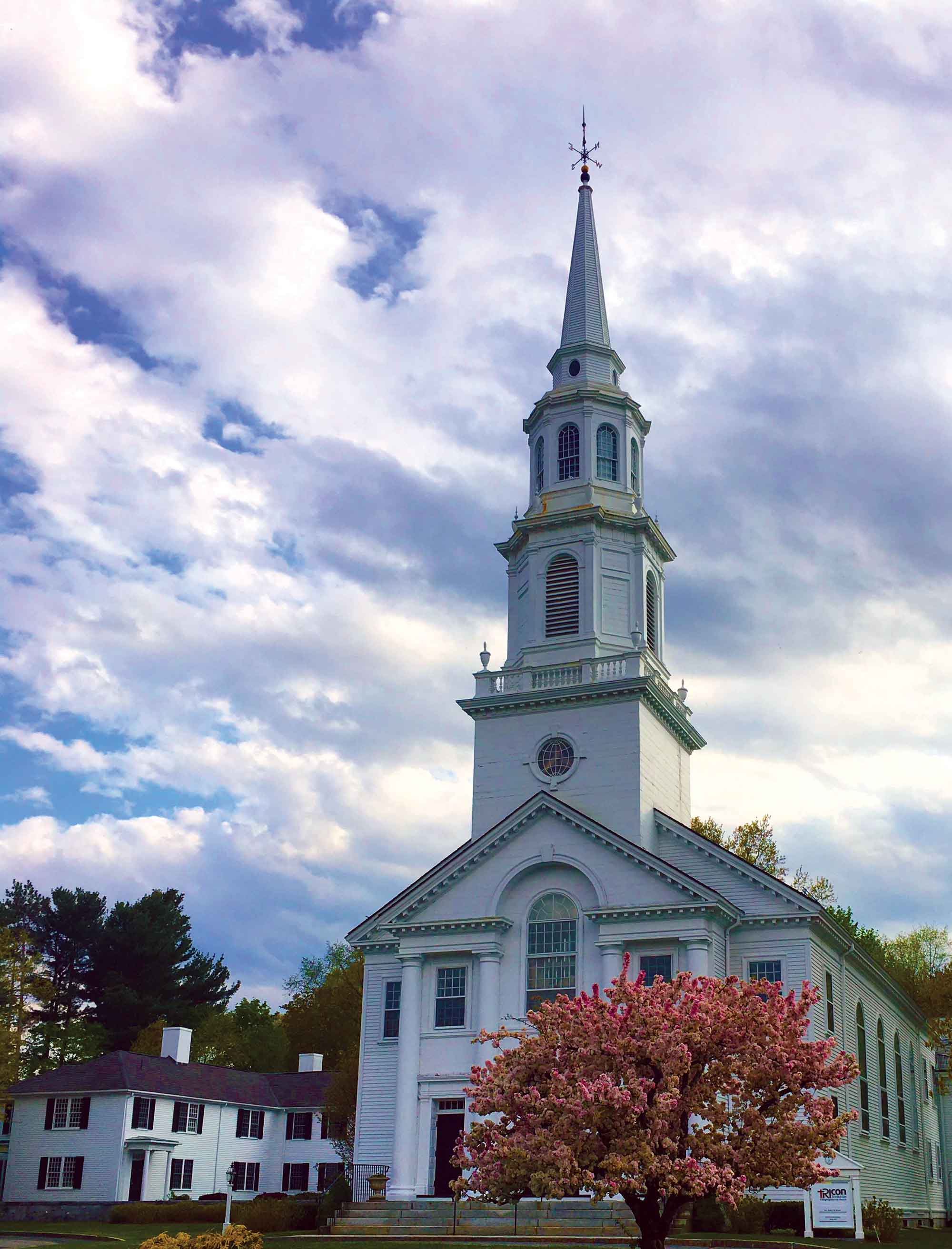
Church today
| © Jennifer SchünemannToday, the church continues its work for social justice, and it is this “generosity of spirit” of which Rev. Rebecca is most proud. TriCon’s welcome statement calls for “loving our neighbors” and “seeking racial, economic, environmental, and LGBTQ justice.” For instance, this year the church’s Easter offering will be donated to La Colaborativa, a non-profit agency based in Chelsea, MA, whose mission is to aid immigrant communities. TriCon officially became an Open and Affirming congregation in 2006, and celebratory Pride worship services are held every June.
TriCon’s bicentennial celebration will go on throughout the year. On May 6, Dr. Robert A. Gross, author of The Transcendentalists and Their World, will join Kyle B. Roberts, executive director of the Congregational Library & Archives in Boston, for a conversation about abolition in Concord among congregationalists. This event will be free and open to the public.
TriCon is not just a historic building in a historic town. It is a living church, facing the challenges of modern life. As the congregation enters its third century, they will continue to render loving service toward all of God’s creation and to work for righteousness, justice, and peace.

For more information, visit TriConChurch.org.
*This article made possible by Trinitarian Congregational Church.