
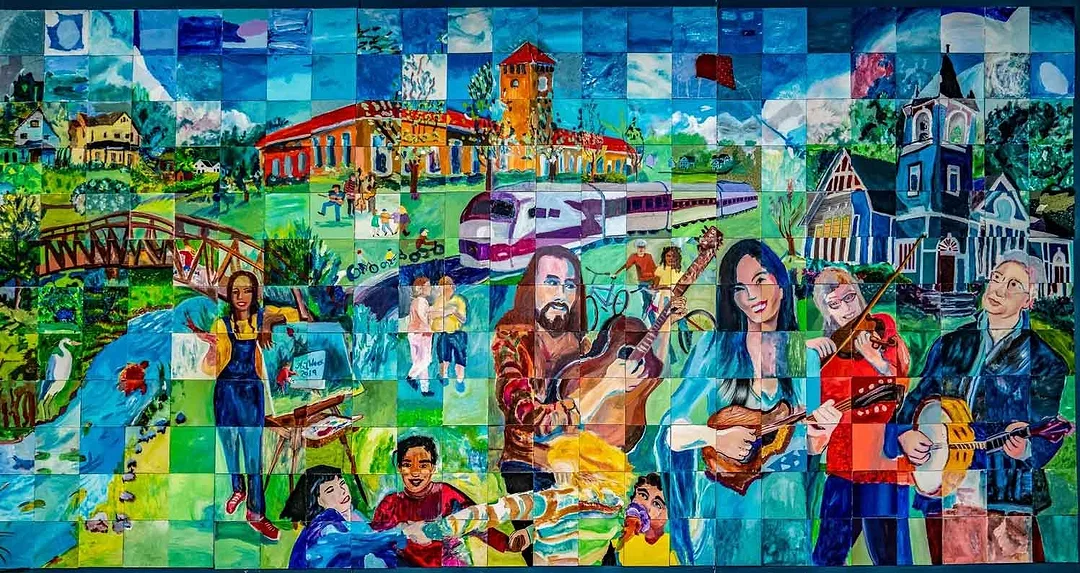
West Concord has never been a place that stood still. Its identity has been shaped and reshaped by the Assabet River, mills and factories, railroads, a prison, farms, shopkeepers, artists, and entrepreneurs. Buildings have repeatedly found new purposes; new arrivals have affixed their own layers, adding to what came before.
Few people have watched that process longer than Maynard Forbes. He arrived in West Concord in 1951 at fourteen and, nearly seventy-five years later, still describes the village in terms of three forces that preceded him: “The railroad, the prison, and industry. Those are the entities that developed West Concord as we know it today.”
A Village Built by Water and Work
Industry was part of West Concord’s story almost from the town’s beginning. The stronger current of the Assabet made it better suited to waterpower than Concord’s other rivers. The Concord Iron Works was established on its banks in 1660, processing bog ore mined from local swamps into bar iron for nails and hinges. Sawmills, gristmills, and fulling mills followed.
West Concord did not grow outward from a single mill or settlement. Several small industrial communities developed near the meeting of the Assabet River and Nashoba Brook and eventually merged. One was Factory Village, centered on what became Damon Mill. Another was Warnerville, which grew around Ralph Warner’s pail-and-tub factory on Nashoba Brook.
Warner took over the former Loring Lead Works site in 1854, and his enterprise helped shape the neighborhood as well as its economy. Workers built more than twenty-five houses along Commonwealth Avenue, many of which remain today, while Warner supported a community hall, a local post office, and the land for a new school.
 Courtesy of the Concord Free Public Library
Together with the railroad junction and the settlement surrounding the reformatory, these once-distinct communities gradually became West Concord.
By the early 19th century, a wooden five-story cotton factory stood near the site of today’s Damon Mill. The growing settlement around it became known as Factory Village—a name that plainly expressed both its purpose and how it differed from the agricultural and intellectual center of Concord.
Calvin Carver Damon purchased the mill in 1834 and transformed it. He shifted production from cotton yarn to textiles, improved the waterworks, hired more local residents, and built additional housing for workers. Under Calvin, and later, his son Edward, the mill community grew to include tenements, a school, and a store. At its height in the 1880s, Damon Mill employed approximately 175 people and maintained forty worker tenements. The mill did not merely occupy West Concord; it helped build it.
A devastating fire destroyed the wooden factory in June 1862, just as the mill was filling a large order for the Union Army. Edward Damon rebuilt almost immediately, commissioning the handsome brick structure that survives today. That instinct—to rebuild, adapt, and keep going—would become a recurring pattern in West Concord’s history.
 Courtesy of the Concord Free Public Library
Rails, Roads, and the Reformatory
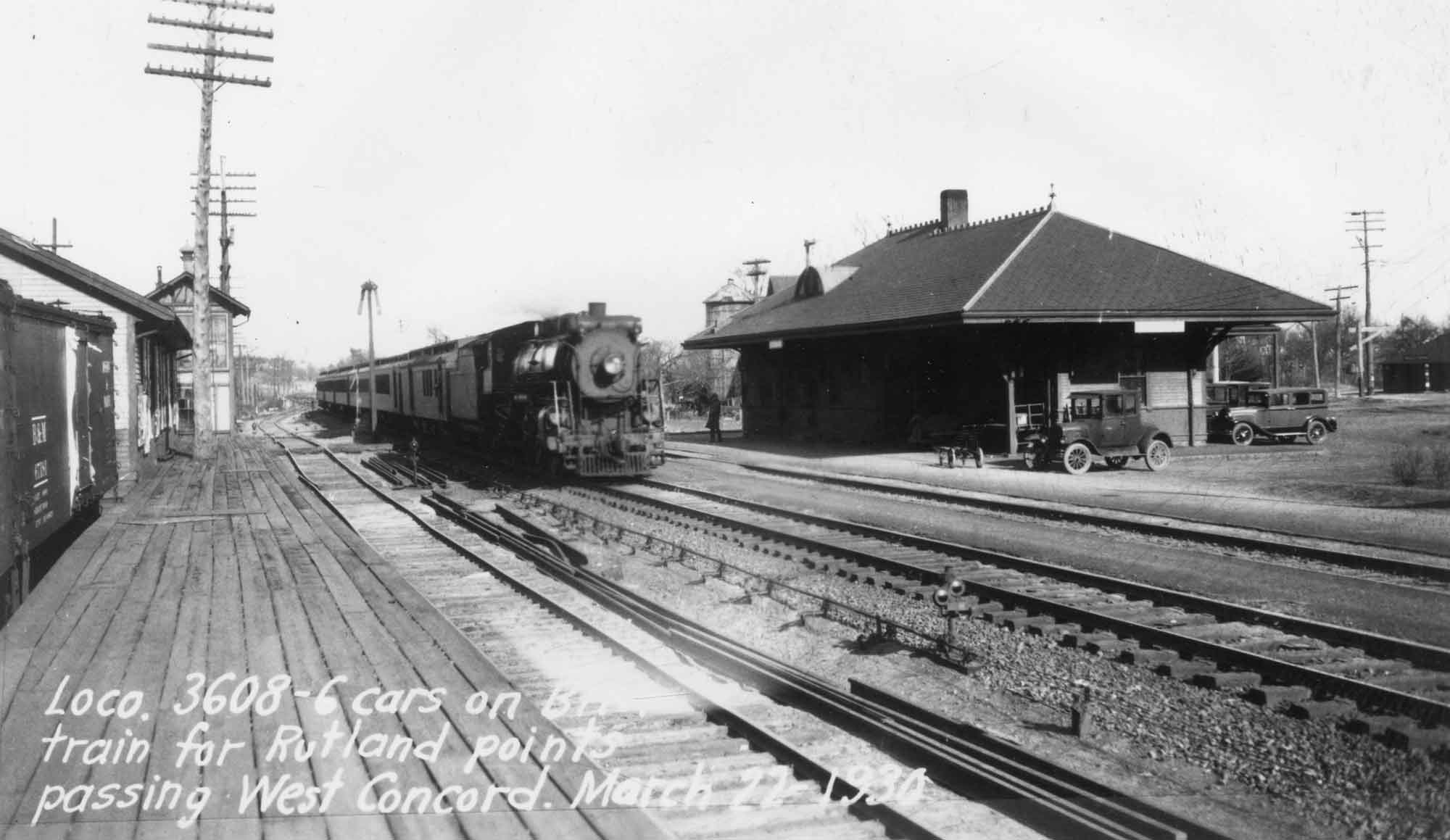
Industry demanded better connections. Main Street was extended toward Acton, a substantial bridge was built across the Assabet, and the Fitchburg Railroad reached Concord in 1844. The station at the Conant Street crossing connected local factories and farms with Boston and markets beyond. Additional rail lines eventually made the area a true junction; by the late 19th century, an astonishing 125 trains a day passed through what was then called Concord Junction.
The prison became another powerful force. The Concord Reformatory opened in 1878 on former farmland near today’s Route 2 rotary. Conceived in part as an alternative to placing younger men with older prisoners in Charlestown, the reformatory emphasized vocational training and the possibility of reentry to society. It also became one of the area’s largest institutions and employers.
Its influence extended well beyond its walls. Because prisoners were transported by rail, the reformatory encouraged further expansion of the railroad, and a station, hotel, and restaurant appeared near Reformatory Circle. Prison industries also intersected with the local economy. West Concord women at the Waring Hat factory decorated hats made inside the institution. Correctional officers and other employees lived locally, shopped locally, and became part of village life.
The prison fostered an unusual tradition of civic involvement. Generations of Concord residents entered its gates as teachers, tutors, artists, clergy, and volunteers. Louisa May Alcott went there with her father and told a story to close to four hundred incarcerated men. In her journal, she described watching several young listeners struggle to hold back tears. One later sought her out after his release, telling her that the story had helped convince him that it was not too late to begin again. Alcott helped him pursue work.
That tradition continued into the modern era. Beginning in the 1960s, local churches and volunteers developed increasingly organized programs inside the prison. Their work eventually grew into Concord Prison Outreach, drawing upon residents’ expertise to offer tutoring, job preparation, arts programs, financial education, and family support. The relationship was not always easy, but it ensured that the prison remained connected to the civic and cultural life beyond its walls.
The institution’s history reached far beyond Concord. Malcolm X—then Malcolm Little—spent approximately fifteen months at the reformatory in 1947 and 1948 during a period of intellectual and spiritual awakening that would transform his life. In 1988, Mother Teresa addressed prisoners and staff behind the same walls.
For nearly a century and a half, the prison generated jobs, activity, unease, debate, volunteerism, and human connection. It reinforced West Concord’s identity as the practical, working side of town—a place markedly different from the monuments, authors’ homes, and visitors of Concord Center.

The Reformatory at the MCI Prison
| Wikimedia CommonsThe Rise of Commonwealth Avenue
The mills, railroad, and prison created the conditions for a commercial village. Workers and their families needed food, clothing, lodging, and everyday services. Prison employees and rail passengers added to the movement of people through the area. A trolley line linking Concord, Maynard, and Hudson began operating around the turn of the 20th century. Manufacturers such as Boston Harness, the Bluine Factory, Allen Chair, Concord Rubber, and Strathmore Worsted Mills brought more workers and customers.
Commonwealth Avenue emerged as the village’s retail spine. Serving people who lived and worked nearby, its businesses were practical and personal. The storefronts carried names attached to individuals and families rather than corporations. Forbes remembers Agnes Lehiff’s millinery shop, Anthony “Tony the Tailor” Blasi, and the Andrioli family’s market. The burgeoning marketplace also drew new residents, including a substantial Italian community that became part of West Concord’s commercial and social fabric.
By the time Forbes arrived, Commonwealth Avenue was firmly established as the heart of a largely self-contained working village. Behind its shops were manufacturers, warehouses, farms, and the prison. Along the avenue, residents could find many of the goods and services they needed close to home.
Forbes also remembers how closely agriculture remained connected to the village. As a teenager, he worked summers on an Acton vegetable farm and eventually drove produce into Boston to supply the city’s markets. During the destructive storms of 1955, Forbes and other workers scrambled to secure farm equipment. Across the road, he remembers, stood Edward Anderson’s chicken farm. Asked whether he helped secure the chickens too, Forbes laughs. “No,” he says. “That was Edward’s problem.”
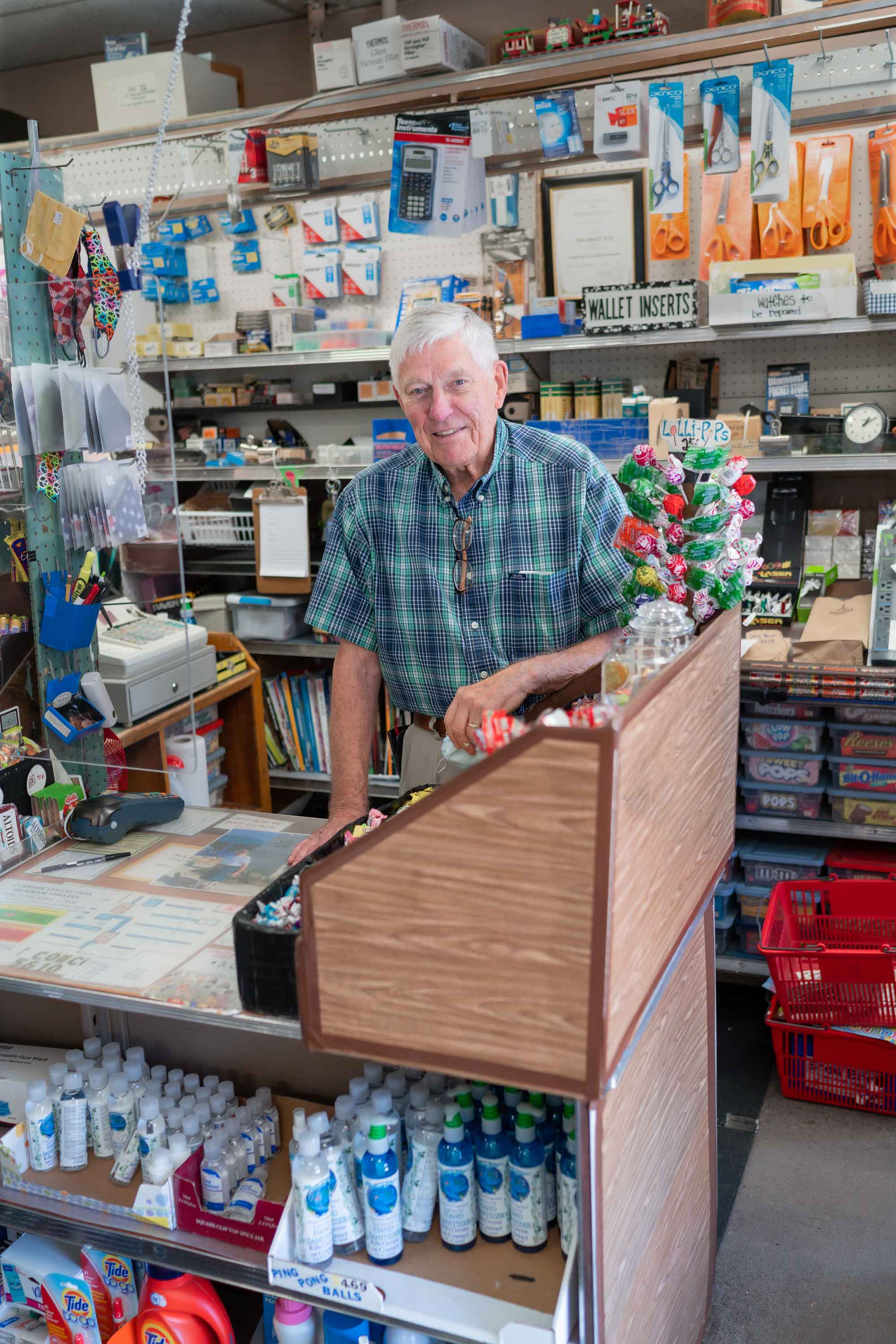
Maynard Forbes at the West Concord 5&10
| © Pierre Chiha PhotographyThe Forbes Years
For the Forbes family, West Concord’s story began in 1951, when Maynard’s father, John Forbes, purchased the West Concord 5&10. He later acquired the three-story building that generations of residents would associate with the store, and the business moved there in 1959.
And moved is exactly the right word. Maynard remembers inventory traveling down Commonwealth Avenue largely by rolling cart: Load it, wheel it along the sidewalk, unload it, and return for more.
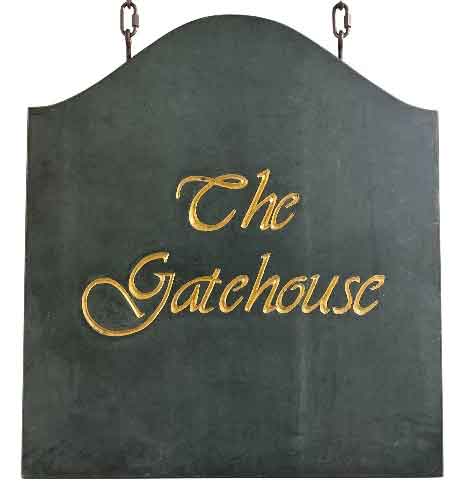
The family eventually owned the neighboring building as well, where Maynard’s wife ran a holiday shop. Later businesses included the Gatehouse, the beloved ice cream shop Reasons to Be Cheerful, and, today, Eva’s Little Kitchen. The succession is a small history of West Concord retail: Spaces remained, uses changed, and new proprietors added their own personalities.
Maynard’s father routinely worked seventy-five or eighty hours a week—and far more in December. The family owned the building, knew its customers, and understood that what happened outside the shop door mattered to the business within. Commerce in West Concord was not anonymous. It depended upon personal investment in both an enterprise and a place.
The Wherewithal to Change
Beginning in the 1960s and ’70s, the industrial economy that had built West Concord began to recede. Manufacturing declined. Farms became neighborhoods. Passenger rail remained, but the junction no longer dominated daily life as it once had.
Retail changed with the surrounding community. The avenue increasingly served a residential population rather than an industrial workforce. Traditional stores disappeared, but their spaces attracted specialty retailers, restaurants, artists, and entrepreneurs—businesses that gave people new reasons to come to West Concord rather than simply shop close to home.
Forbes points to longtime Concord farmer Steve Verrill, his contemporary in high school, as an example of successful adaptation. Forbes watched Verrill Farm in nearby Nine Acre Corner change with the times instead of becoming a relic of an earlier agricultural era. “He had the wherewithal to change,” Forbes says. Today, Verrill Farm is thriving as a cornerstone of Concord life, more than one hundred years after it was founded.
That phrase could apply equally well to West Concord itself. At 74 Commonwealth Avenue, a former gas station became Wild Bill’s Emporium, then the retail fixture A New Leaf. The site is now beginning another chapter as the Guitar Museum of New England—a cultural destination devoted to the guitar’s history, craftsmanship, and music.
Damon Mill offers an earlier example. After textile production ended, the building served as an A&P warehouse and then spent decades storing apples. By the 1970s, it was badly deteriorated, but a seven-year restoration saved it. Today, it houses offices and workspaces—an early and particularly graceful example of the adaptive reuse that characterizes West Concord.
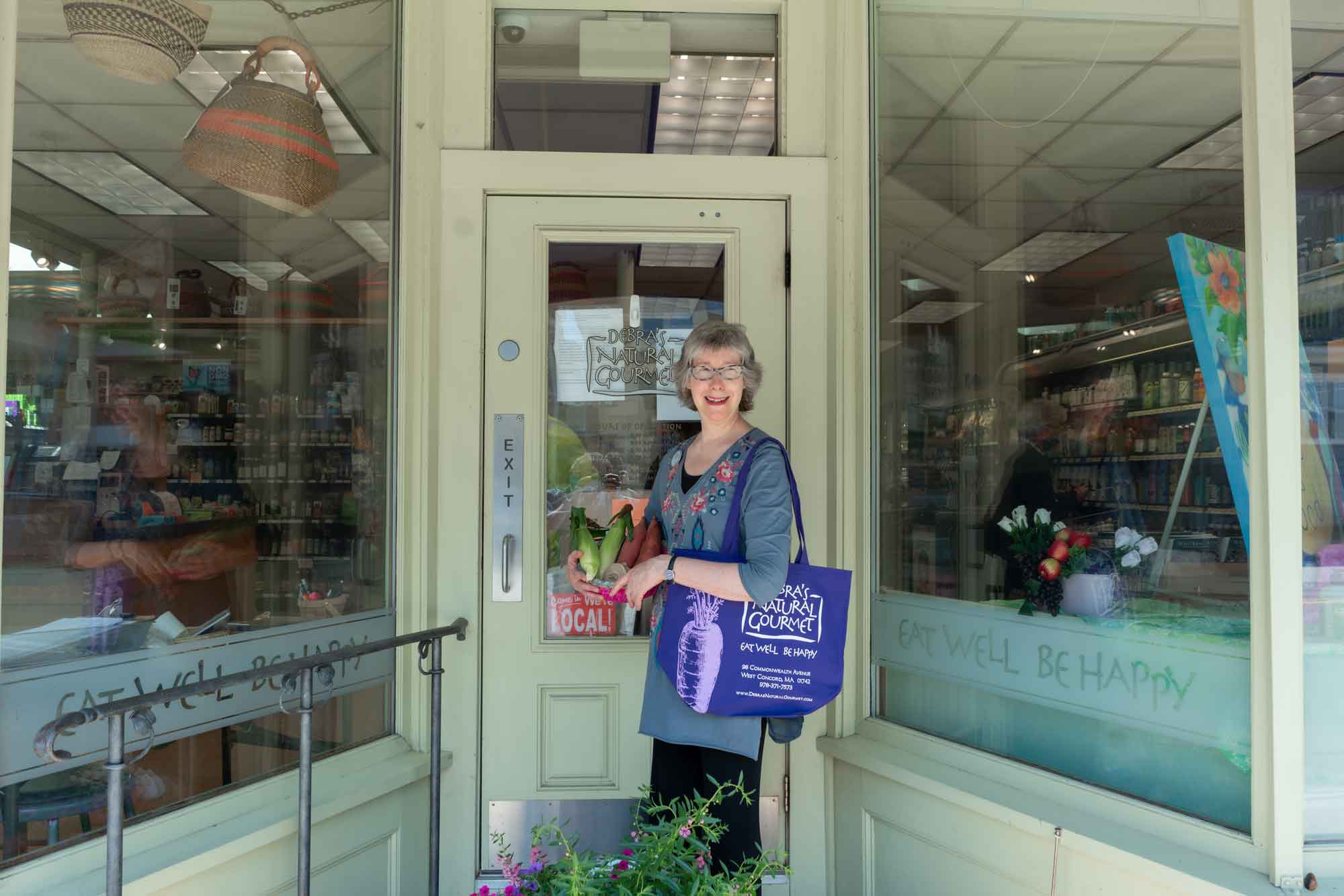
Debra Stark outside the store
| © Pierre Chiha PhotographersA Wake-Up for the Village
Debra Stark opened Debra’s Natural Gourmet next to the 5&10 in 1989, bringing a vision of organic foods and holistic living that was far from mainstream. From his store next door, Forbes had a front-row seat. “There was no stopping her,” he recalls. “She was determined.” He credits Stark with providing “a wonderful wake-up for the village.”
Debra’s grew into a nationally recognized natural-foods retailer, but its significance was also local. Stark demonstrated that an independent business in a small village could be highly individual, community-minded, and enormously successful. “Debra was the pioneer in that,” Forbes says of the women-owned businesses that flourished in West Concord. “She laid a good foundation.”
When Forbes decided to close the 5&10, preserving that independent character mattered to him. The store had survived changing shopping habits, big-box competition, and Amazon. He did not want the building that had housed his family’s business to become a generic commercial property. In 2020, he sold it to his longtime neighbor, Debra Stark. After Stark’s unexpected passing in 2022, her son, Adam, completed the expansion of Debra’s Natural Gourmet into the former 5&10 space with a frontier-breaking “Refillery” that allowed customers to purchase food in bulk using their own containers from home. Debra’s Natural Gourmet was the first retail outlet in Massachusetts to achieve this leap forward.

Kristin Canty at Woods Hill Table
| Courtesy of Woods Hill TableA Creative Village
A new generation of entrepreneurs continued the pattern. Kristin Canty envisioned a restaurant based on sustainable farming and carefully sourced ingredients. When local suppliers could not reliably provide everything she needed, she bought a New Hampshire farm in 2013. Two years later, she opened Woods Hill Table in West Concord, followed by Adelita nearby. Woods Hill Pier 4 later carried the philosophy nurtured here to Boston’s Seaport and was recently awarded recognition from the MICHELIN Guide.
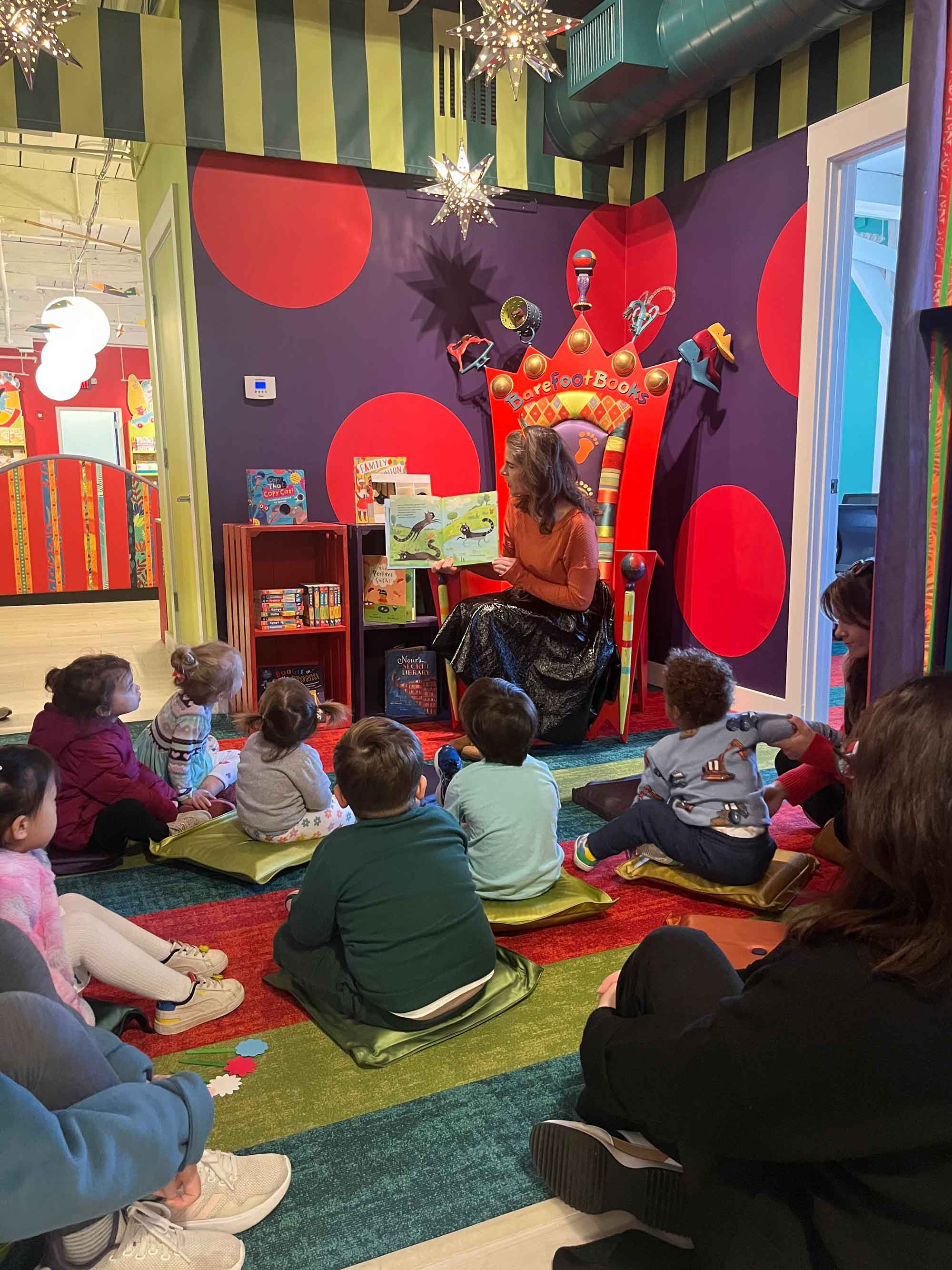
Barefoot Books located at Bradford Mill
Nancy Traversy offers another example. She and Tessa Strickland founded Barefoot Books in 1992 to create the beautiful, culturally expansive children’s books they wanted for their own families. Barefoot grew into an international publisher, and in 2021, its global publishing operation moved into Bradford Mill.
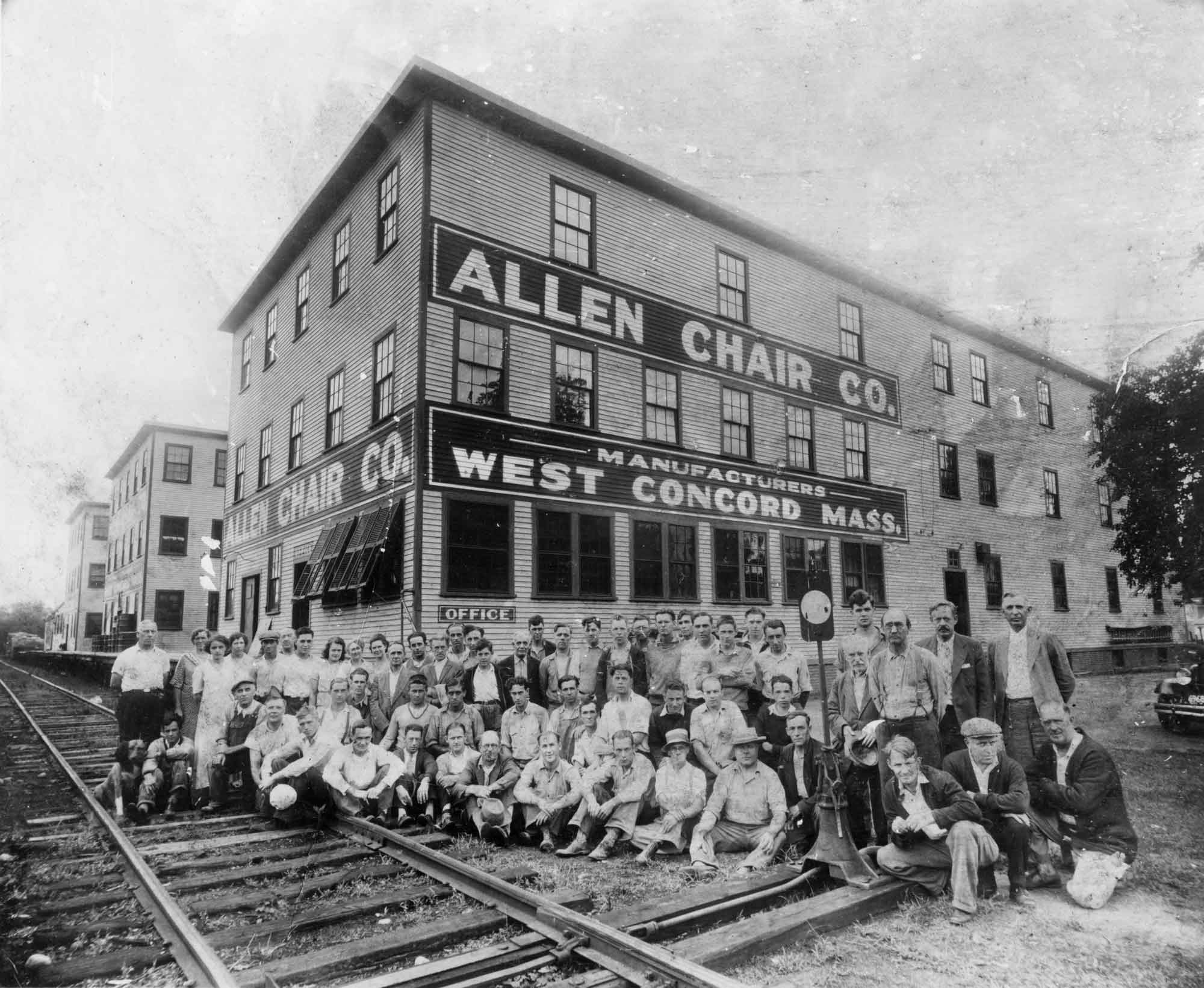
The transformation of Bradford Mill helped accelerate that creative evolution. John and Johanna Boynton were among the purchasers of the former Allen Chair Company complex, completing a restoration in 2012 that gave the industrial buildings new life as offices, coworking space, and artist studios. John Boynton established Wheelhouse Coworking and ArtScape—now a community of more than twenty artists—and later co-founded the Concord Sign Museum with sign maker Billy Crosby. Its collection of hand-painted and carved signs from vanished Concord businesses preserves an evocative record of the town’s commercial past.
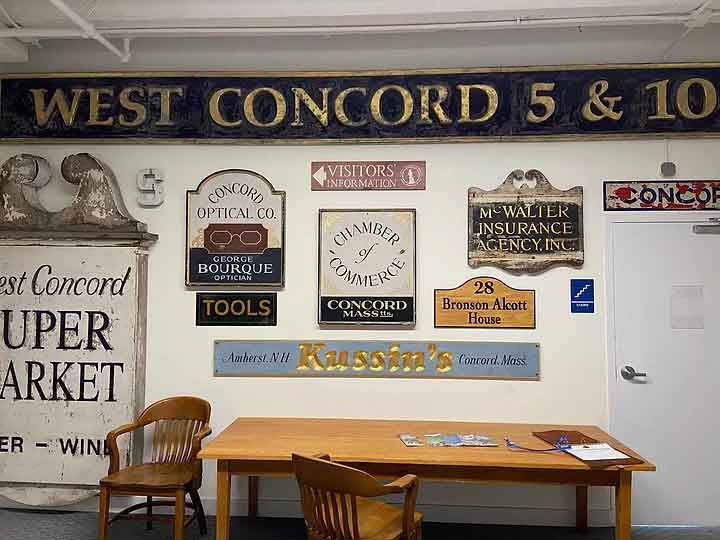
Concord Sign Museum located at Bradford Mill
The Boynton Company was also a partner in Brookside Square, which brought seventy-four apartments and commercial space to a former industrial site overlooking Nashoba Brook. It represented another change in West Concord’s evolution: new housing placed within walking distance of Commonwealth Avenue, the commuter rail station, and the emerging rail trail.
West Concord’s cultural identity continues to deepen. With help from actor Chris Evans (perhaps best known for his role as Captain America) and his mother, Lisa, Concord Youth Theatre converted a former church on Church Street into a 210-seat permanent home in 2019. The Concord Conservatory of Music has since purchased property at 15 Junction Square Drive for a future community music center and has already expanded its programming in the refurbished existing building. Together with the planned Guitar Museum of New England, these institutions are making West Concord an increasingly significant center for music, theatre, visual art, and creative enterprise.
Art for All added to that creative ecosystem, while murals transformed walls and underpasses into public canvases. In 2016, the Massachusetts Cultural Council formally designated West Concord a cultural district. Factories became studios and offices. A rail corridor became part of the Bruce Freeman Rail Trail. Restaurants, artists, specialty shops, and cultural organizations gave people reasons to linger.
Yet the reinvention did not wholly sever the village from its past. The old brick buildings, compact streets, owner-operated businesses, railroad station, and even the rescued signs of long-departed shops still make its earlier layers visible.

Chris Evans as Captain America
| © Big-Ashb/Creative CommonsThe Next Reinvention
West Concord is now confronting what may be its most consequential transformation in generations. MCI-Concord closed in 2024 after 146 years as the statewide prison population declined and the aging facility became increasingly costly to maintain. Its closure removed an institution that had helped shape the village economically, physically, and psychologically since the 19th century.
The Commonwealth retains ownership of the former prison property, while Concord is developing a master plan and new zoning to guide its eventual redevelopment. The study area encompasses approximately eighty-three acres, with more than fifty acres potentially available for new uses. Housing, commercial space, municipal facilities, historic preservation, open land, river access, and transportation connections are all part of the public conversation.
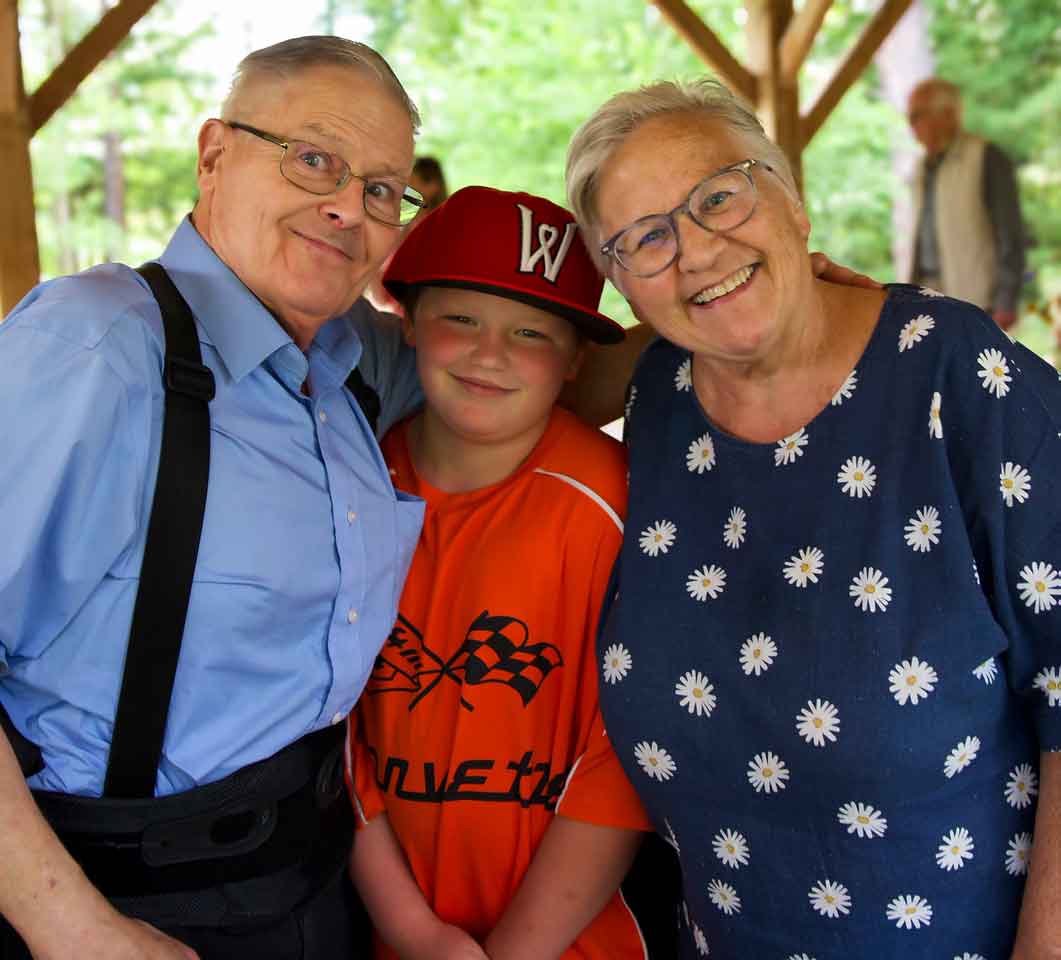
Helen and Dave Halloran celebrate
retirement with their grandson
| © Michael MillerThe uncertainty is considerable. Early discussions have contemplated hundreds of new homes, but the eventual scale and character will depend on zoning, infrastructure, wastewater capacity, transportation planning, market demand, and the choices of a future developer. Whatever rises there will affect traffic, schools, businesses, town finances, housing, and one of the principal gateways to Concord and West Concord.
The opportunity is equally significant. A property long associated with confinement and separation could become a new neighborhood more directly connected to the village. The challenge will be familiar: allowing the next generation to add its layer without erasing the history that came before.
What Must Not Change
Maynard Forbes has watched generations of shopkeepers, farmers, tailors, grocers, restaurateurs, artists, and entrepreneurs pass behind West Concord’s storefronts. Some personalities have had an outsized influence. Debra Stark was one. More recently, Concord Flower Shop owner Helen Halloran became what Forbes describes as a connective force—encouraging business owners, prodding them when necessary, and making sure neighbors communicated. Her retirement, he says, leaves a hole. But true to West Concord’s style, Halloran has passed the baton to a new, eager shopkeeper who will keep the flower shop going. Renata Paes takes the helm of this beloved institution just in time for the 2026 holiday season.
For much of Forbes’ life, West Concord and Concord Center occupied different positions in the town’s imagination. West Concord was the industrial side—the prison, mills, trains, and practical shops. Concord Center had the monuments, authors, historic houses, and tourists. Yet he believes they benefit each other. “The two business districts and their business owners may be closer today than they have been at any time that I can remember,” he says. “They talk to one another, support one another, and understand that the success of the shop next door can help their own. That is not a new idea in West Concord; it is one of the oldest strands in its history.”
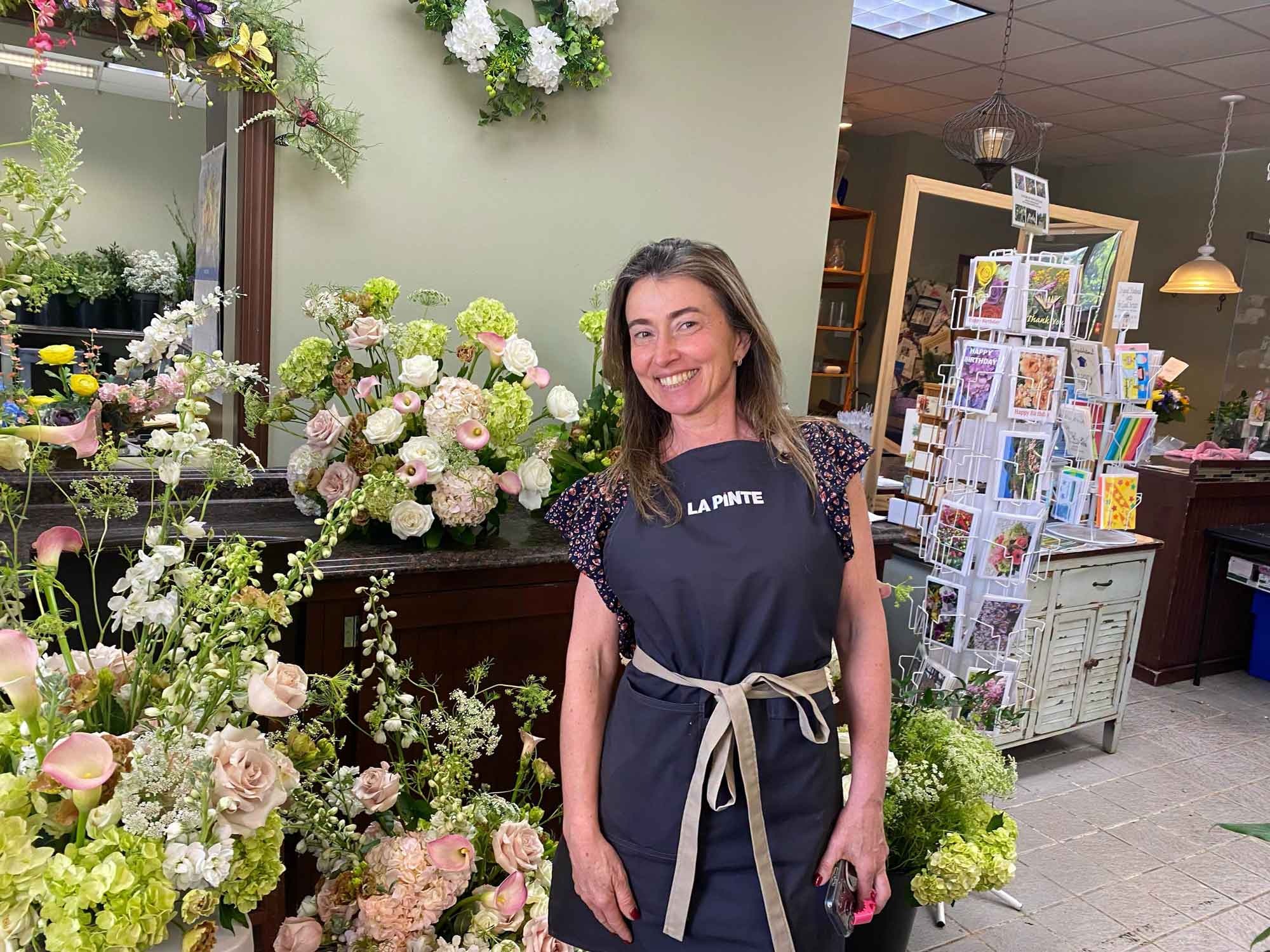
Renata Paes, the new owner of Concord Flower Shop
| Courtesy of Concord Flower ShopAsked what he most admires after nearly seventy-five years, Forbes doesn’t hesitate. “The fact that the small businesses have continued to maintain Commonwealth Avenue,” he says. “And they are owner-occupied businesses.” Their value, he believes, lies in the personal interest owners take in what happens around them.
He thinks back to his father working seventy-five- and eighty-hour weeks at the 5&10. The hours tell only part of the story. What mattered was the investment—in the business, certainly, but also in the place. “For the village to continue, that investment has to be there,” he says.
West Concord has endured not by resisting change but by absorbing it. A mill community became a railroad junction and retail district. Factories became studios. A gas station became Wild Bill’s, then A New Leaf, then a guitar museum. A chair factory became home to artists and a global publisher. Now, a prison site awaits an entirely new future.
Through it all, the village’s essential character has remained surprisingly familiar: independent businesses, interesting people, useful buildings given new life, and neighbors who take a personal interest in what happens beyond their own front doors.
When asked what he would tell someone who has never visited West Concord, Forbes needs few words to sum up nearly seventy-five years of experience: “A great collection of people, creative energy, and interesting businesses. Come see it.”