
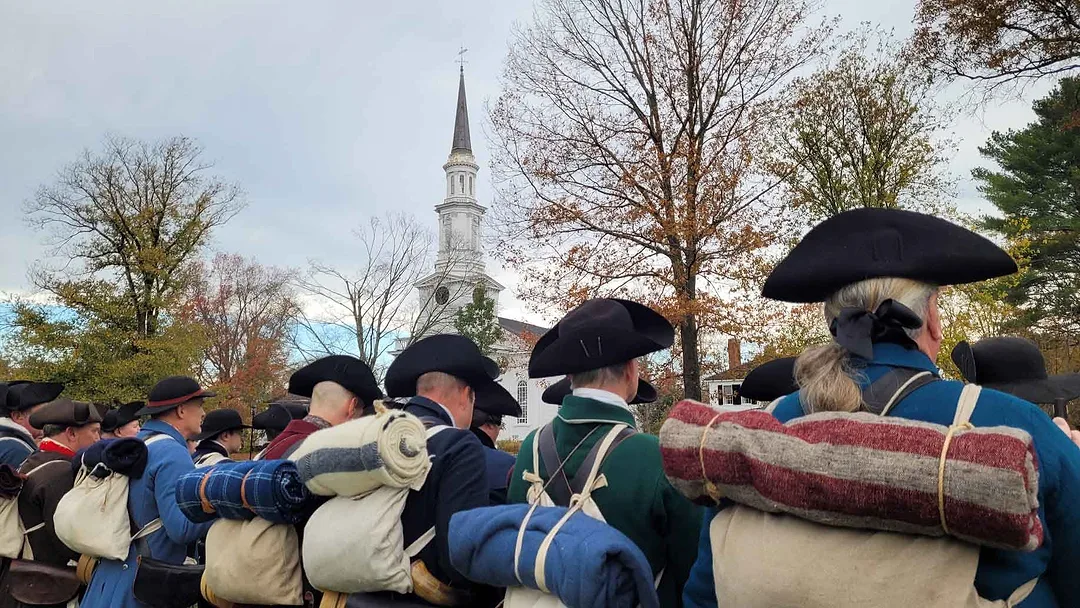
Over the past two years, I have collaborated with communities, museums, historical organizations, and heritage sites to plan commemorative events that illuminate the narrative of the American Revolution. Through this historical programming, I have consistently observed a significant trend: the 250th anniversary of the American Revolution has substantially renewed interest in the contributions of local communities to the American pursuit of independence. This commemoration demonstrates that the Revolution was not defined solely by major battles. Instead, the movement progressed incrementally through the collective actions of towns, families, and individual citizens.
Revolutionary events in Massachusetts show that ordinary men and women understood that safeguarding their rights required exceptional dedication and combined action. The citizen-soldiers who marched on April 19, 1775, and later fought at Concord, Chelsea Creek, and Bunker Hill were not professional soldiers but rather farmers, merchants, tradesmen, and laborers who responded to the call to defend their communities. A broad network supported their efforts: Local tradesmen ensured militiamen were properly armed and equipped, children contributed by making bullets, and women—including wives, sisters, daughters, and mothers—produced clothing and packs for the Continental Army while managing the home front. As a result, the 250th anniversary has deepened appreciation for the communal effort that began with the defense of traditional English liberties and ultimately evolved into the pursuit of American independence.
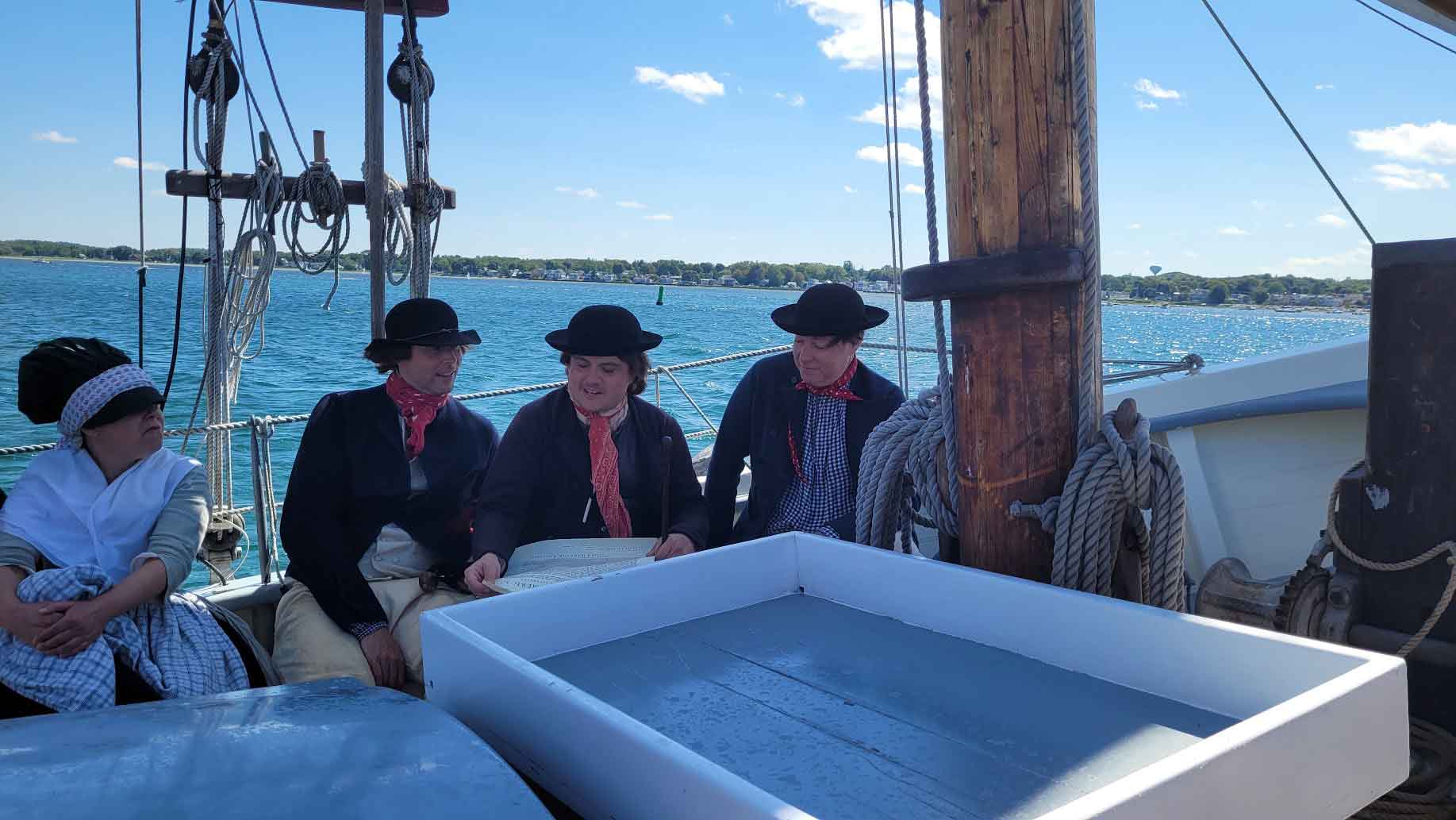
Privateers reading a copy of the Declaration of Independence—Newburyport’s 250th anniversary of the Declaration’s first public reading
| ©Alexander CainThis monumental anniversary has further emphasized the importance of honoring local heroes and preserving their legacies. Individuals such as Captain John Parker of Lexington, who, despite lacking prior combat experience, successfully rallied his men to reengage after the defeat at the Battle of Lexington, and Major John Buttrick of Concord, who commanded the American militia at the North Bridge to “Fire, fellow soldiers, for God’s sake, fire!” resulting in the first organized colonial attack against the regulars, exemplify the capable leadership that emerged from Massachusetts’ provincial militia on the Revolution’s opening day. These figures represent only a fraction of the thousands whose efforts were essential in securing American independence. Preserving artifacts, memorials, historic landscapes and structures, and community traditions associated with their legacies ensures that these narratives remain integral to the nation’s shared heritage.
Another significant development, when examined through the lens of local history, has been the expansion of the Revolutionary narrative. Greater attention has been devoted to underrepresented populations who often made substantial sacrifices to achieve, or resist, independence. Black Patriots—both free and enslaved—and Indigenous peoples served and supported the American cause despite being denied many of the liberties for which the Revolution was fought. At the same time, local historians have increasingly explored the experiences of Loyalists, acknowledging that not everyone living in the colonies supported the Patriot cause. These perspectives contribute to a more comprehensive understanding of the Revolution and the complex society from which a new nation emerged.
However, the most noteworthy achievement of the 250th anniversary has been its reminder that the history of the American Revolution endures within our local communities. From town commons and meetinghouses to battlefields and historic homes, the sites where ordinary men and women made extraordinary decisions continue to connect us to this nation’s founding. Preserving and sharing these local stories ensures that each community’s contributions to the Revolution remain a lasting source of pride, understanding, and inspiration for future generations.
