
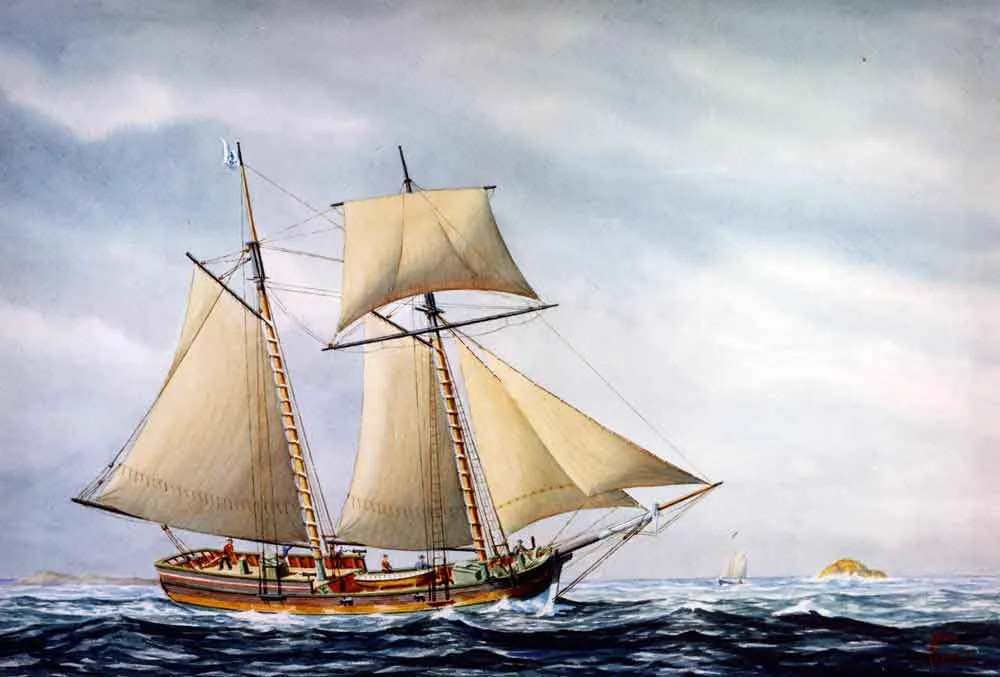
A common misconception among historians and the public is that Massachusetts privateers engaged in “lawful piracy,” operating indiscriminately with unseaworthy vessels, unsanctioned by state or local committees of safety, and motivated solely by profit and adventure. By contrast, privateers functioned as organized waterborne militias whose early interdiction efforts—particularly those targeting British supply lines to the American coast—played a significant role in securing American independence.
Newburyport, Massachusetts, was among the first communities to make significant contributions to privateer efforts, transforming into a strategically fortified harbor from which wolf packs of privateer vessels launched annual campaigns against British shipping. Among the growing Newburyport fleet was the Yankee Hero, a 120-ton brigantine armed with seventeen guns and twelve swivel guns. The Yankee Hero was first officially documented as an armed vessel in January 1776. The owners—Jonathan Jackson, Nathaniel Tracy, and his brother, John Tracy—were all wealthy Newburyport merchants who invested their own capital to arm and equip the vessel.
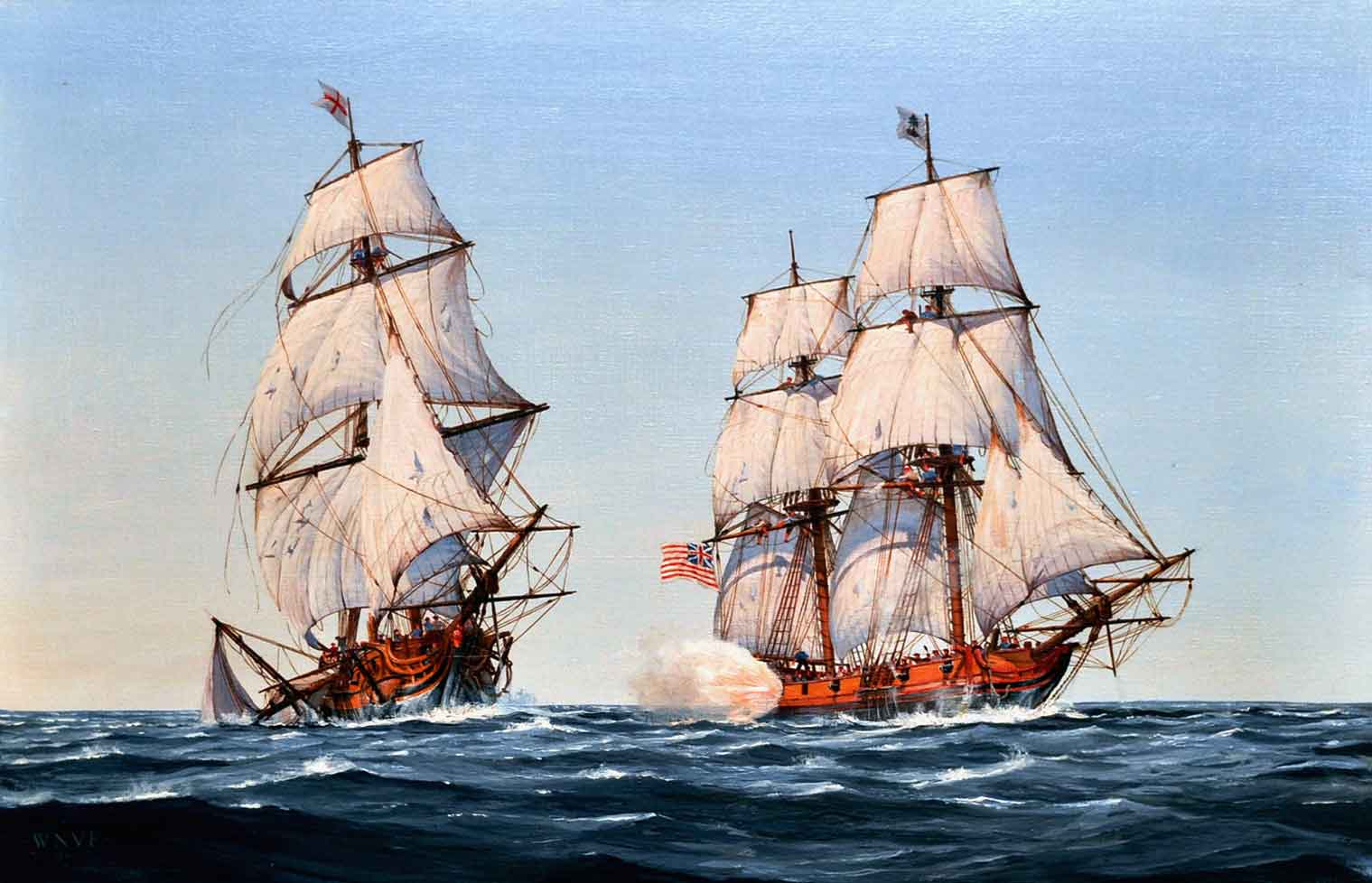
Virginia Navy cruiser Capt. Barron engaging the British navy brig HMS Oxford
| Wikimedia Commons
The Yankee Hero achieved early success by capturing several supply ships during the final months of the Siege of Boston. For instance, on March 6, 1776, “the Yankee Hero sent into Newburyport another prize, a fine brig of about two hundred tons burthen, laden with coal, cheese, &c, bound for White Haven, for the use of the ministerial butchers, under the command of General Howe, Governor of Boston.”1
By early June, the Yankee Hero was under the command of Captain James Tracy, the younger brother of Nathaniel. He ordered the ship to undergo a refit and prepare for a six-month cruise of the Atlantic in search of enemy supply ships. This would ultimately be the Yankee Hero’s final voyage in support of the American cause.
The circumstances surrounding the ship’s last cruise illustrate the considerable challenges associated with privateering. According to a detailed account published in the Boston Gazette, James Tracy sailed from Newburyport on June 7 with only twenty-six men, including officers, which was less than a quarter of the vessel’s complement. He intended to recruit additional crew members in Boston. After rounding Cape Ann, two smaller privateers approached the Yankee Hero, and fourteen men from those boats volunteered to serve, increasing the total crew to approximately forty—still only about one-third of the vessel’s complement.2
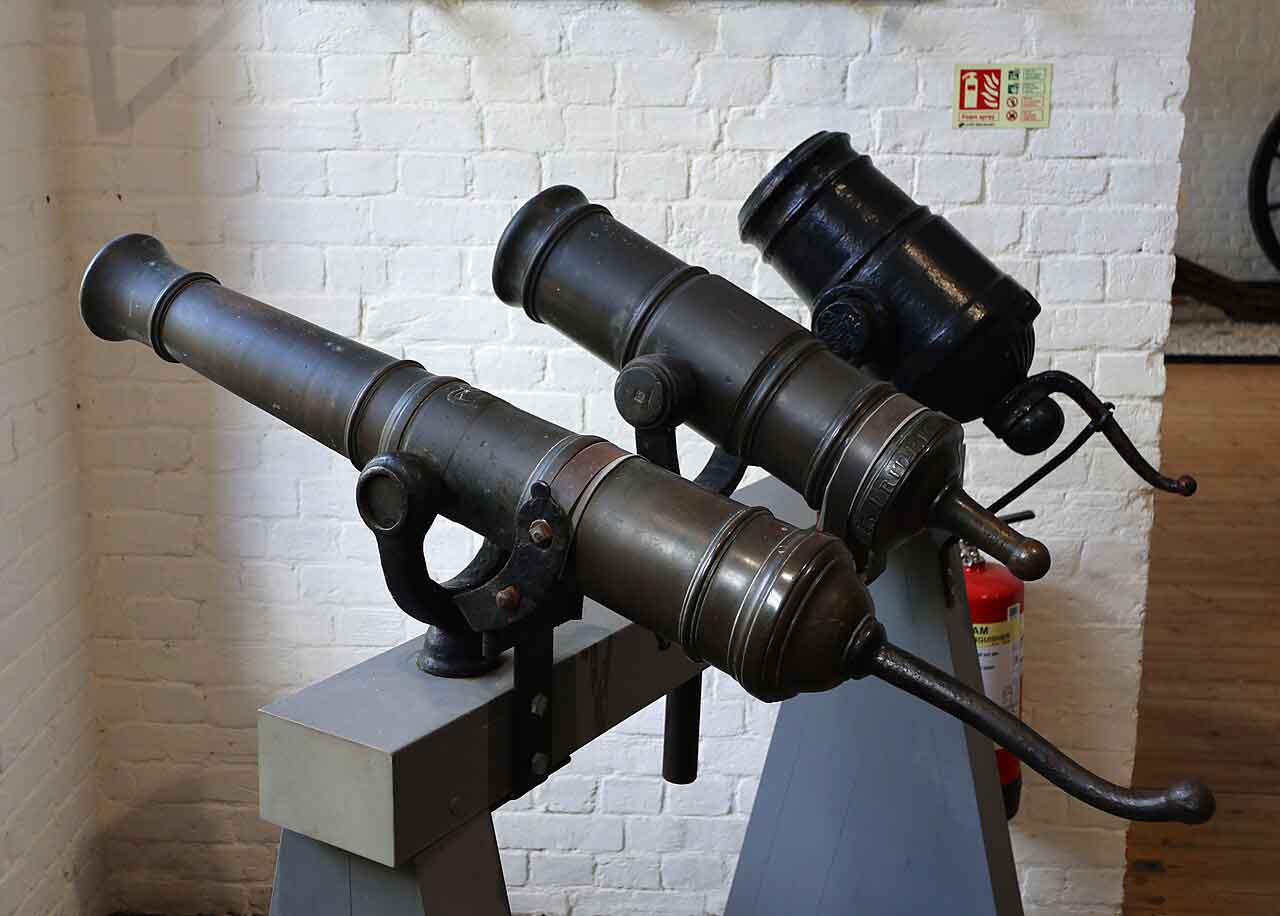
Examples of 18th-century iron swivel guns
| ©Alexander CainShortly after the transfer, Captain Tracy spotted a white sail on the horizon. Believing it to be a British supply ship, he debated whether to pursue, initially deciding against it due to the limited size of his crew. Unbeknownst to Tracy, the vessel was the HMS Milford, a twenty-eight-gun frigate manned by 280 sailors and marines under the command of Captain John Burr. The British captain recognized the brigantine as an American privateer and sought to lure it into a trap. Burr ordered his crew to perform a series of maneuvers that imitated those of a merchant vessel lost off the coast of Cape Ann. Perceiving the vessel as helpless, Tracy ordered the Yankee Hero to attack.
As Tracy and his crew closed in on the Milford, he realized he had been deceived. He ordered the Yankee Hero to reverse course and head for the protection of the Ipswich coastline. The Milford quickly gave chase. No one aboard the American vessel expected the warship to catch the brigantine, but when the wind died about ten minutes later, the Milford rapidly closed the distance, aiming to position itself between Tracy and the shore, cutting off the privateer’s retreat.3
The British warship came within a half mile and opened fire with its two forward bow guns. Tracy withheld fire until the enemy was within pistol range, after which the Yankee Hero responded with her guns, swivels, and muskets. The two ships exchanged fire at close range for more than an hour, with the privateer’s crew continuing to fight despite being overwhelmed by superior firepower. At the height of the battle, Burr ordered his crew to fire broadsides into the privateer, which crippled the ship.
The damage was extensive. The Yankee Hero’s rigging was badly cut, her yards were damaged, her sails were torn, and many crew members were dead or wounded. The crew attempted to repair the rigging and carry the wounded below, hoping to escape toward shore or slip away under cover of darkness. However, before repairs were complete, the Milford came about and renewed its attack. Tracy was wounded in the right thigh and collapsed. Faced with the likelihood that his remaining crew would be killed or the vessel sunk, he ordered the Yankee Hero to surrender. The battle lasted more than two hours. An American contemporary account reported four men killed and thirteen wounded, including officers.4
The Milford sailed south toward Nantasket Roads with its prize and prisoners. On June 8, 1776, it rendezvoused with the HMS Renown in Boston Harbor. Most of the American survivors were turned over to the Renown and transported to a prison in Halifax, Nova Scotia, while twelve were pressed into service aboard the Milford.5
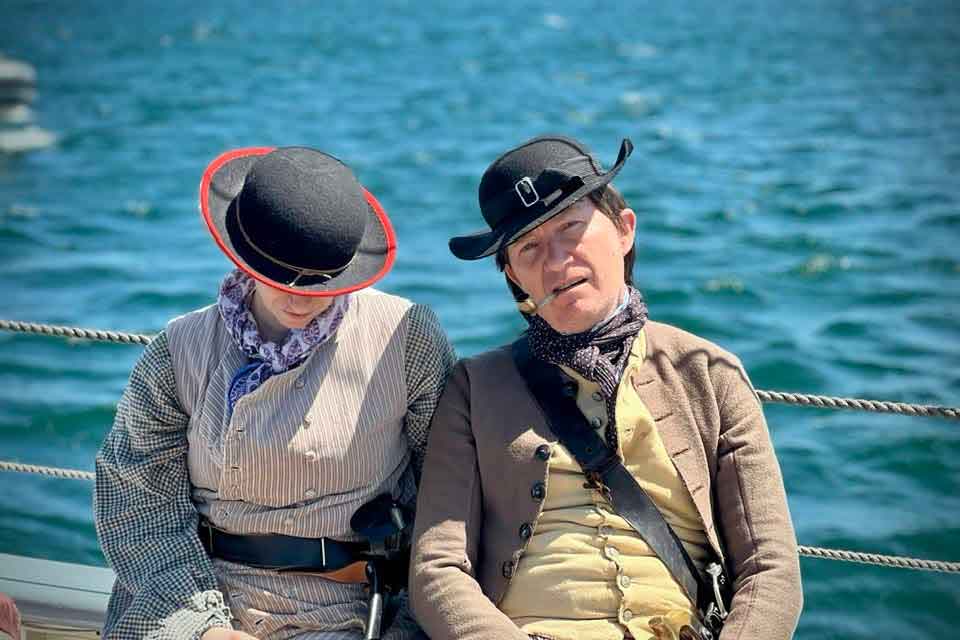
Recreated Newburyport Privateers
| Photo by Rory Nolan. Image used with permission.The loss of the Yankee Hero shocked Massachusetts, especially Newburyport. In a letter to Elbridge Gerry, James Warren lamented that “the loss of the Yankee Hero is a damper.”6 For Nathaniel Tracy, the capture was personal. Many of the sailors and officers on board the privateer were his neighbors, friends, and employees. In a June 10 petition to the Massachusetts government, Tracy pleaded for Major General Artemas Ward of the Continental Army to intervene on behalf of his men. Ward agreed, and an American delegation subsequently went under a flag of truce to negotiate with the Royal Navy. The efforts failed. A month later, on July 18, Tracy appealed directly to General George Washington, describing his crew as “brave & manly” and asserting they could be “greatly serviceable in the American Navy” if released.7 Again, little progress was made.
Despite repeated setbacks, Nathaniel Tracy refused to abandon hope of freeing his men. In early fall, he petitioned the Massachusetts government for permission to personally continue efforts to secure the prisoners’ return and negotiate directly with the enemy, including Lord William Howe, the commander-in-chief of His Majesty’s army in North America. The request was allowed, and by October 15, a representative from the Royal Navy met with Tracy in Marblehead, Massachusetts. A month later, on November 11, Massachusetts newspapers declared that Tracy had successfully secured the release of 174 American prisoners held in Halifax. Among them were his brother, James, and the other officers and sailors of the Yankee Hero.8
Despite the Yankee Hero affair, Newburyport sailors continued to serve aboard privateers throughout the Revolution. Nathaniel Tracy invested in dozens of vessels that captured more than 120 British ships, disrupted trade, and supported the Revolutionary cause with substantial financial contributions to the Continental Army. After the war, however, unpaid government debts, wartime losses, and the collapse of his business interests destroyed Tracy’s fortune, leaving the once-wealthy patriot bankrupt and living in relative poverty until his death in 1796.
NOTES 1 “Salem Gazette, March 14, 1776,” in Proceedings of the Massachusetts Historical Society (Massachusetts Historical Society, 1885), 1:22. https://archive.org/details/sim_massachusetts-historical-society-proceedings_1884-1885_1/mode/2up 2 “Boston Gazette, Monday, June 10, 1776,” in Naval Documents of the American Revolution, 5:448. https://www.navydocs.org/node/5098 3 “Continental Journal, June 13, 1776,” in Naval Documents of the American Revolution, 5:507. 4 Ibid. 5 Ibid. 6 James Warren to Elbridge Gerry, June 12, 1776, in Naval Documents of the American Revolution, 5:490. 7 Massachusetts Council to George Washington, July 18, 1776, Naval Documents of the American Revolution, 5:1,122, https://navydocs.org/node/6164. 8 “Boston Gazette, November 11, 1776,” in Naval Documents of the American Revolution, 7:104, https://navydocs.org/node/8918.
