Many years ago, I studied the ancient bardic tradition in Scotland with one of the last living bards. To be a true bard would have meant a lifetime of study, and my time with this bard was just a glimpse into the Celtic tradition of history keeping.
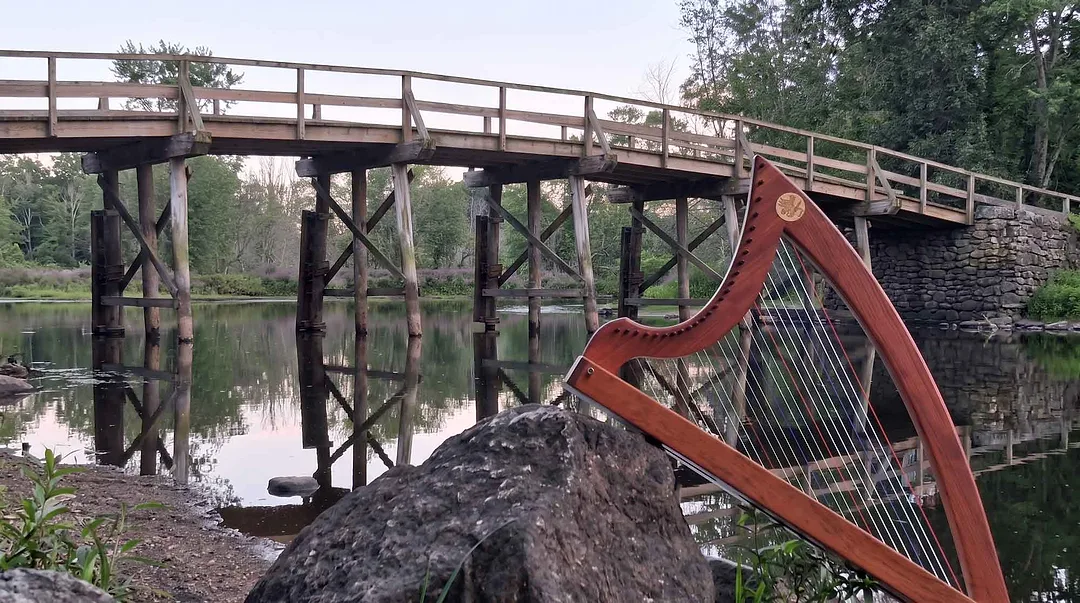
The traditional opening line of a bardic tale, “In the times before history,” indicated a story from before the written word existed. The bards were among the Celtic world’s early historians, learning verbatim from other bards the passed-down histories of their regions, memorizing the genealogies of kings and noble houses (establishing the rights of succession), and preserving current events by composing their own tales of honor, treachery, and all that occurred in between. Many bards were harp players and would accompany their tales with strains from metal or gut harp strings.
When a single string on a harp is plucked, one sound may ring the loudest, but it is also accompanied by overtones from the reverberations of the surrounding strings and wood. To quote Thoreau and Emerson, every sound “connected to the earliest times, and to the latest,” “part and particle…equally related.”
As the anniversary of America250 arrived with commemorations occurring across the country, my mind kept thinking of all the people—from the beginning of time to now—who helped steward oral and written history, preserving and passing on narratives and evidence, creating building blocks for future projects and historians.
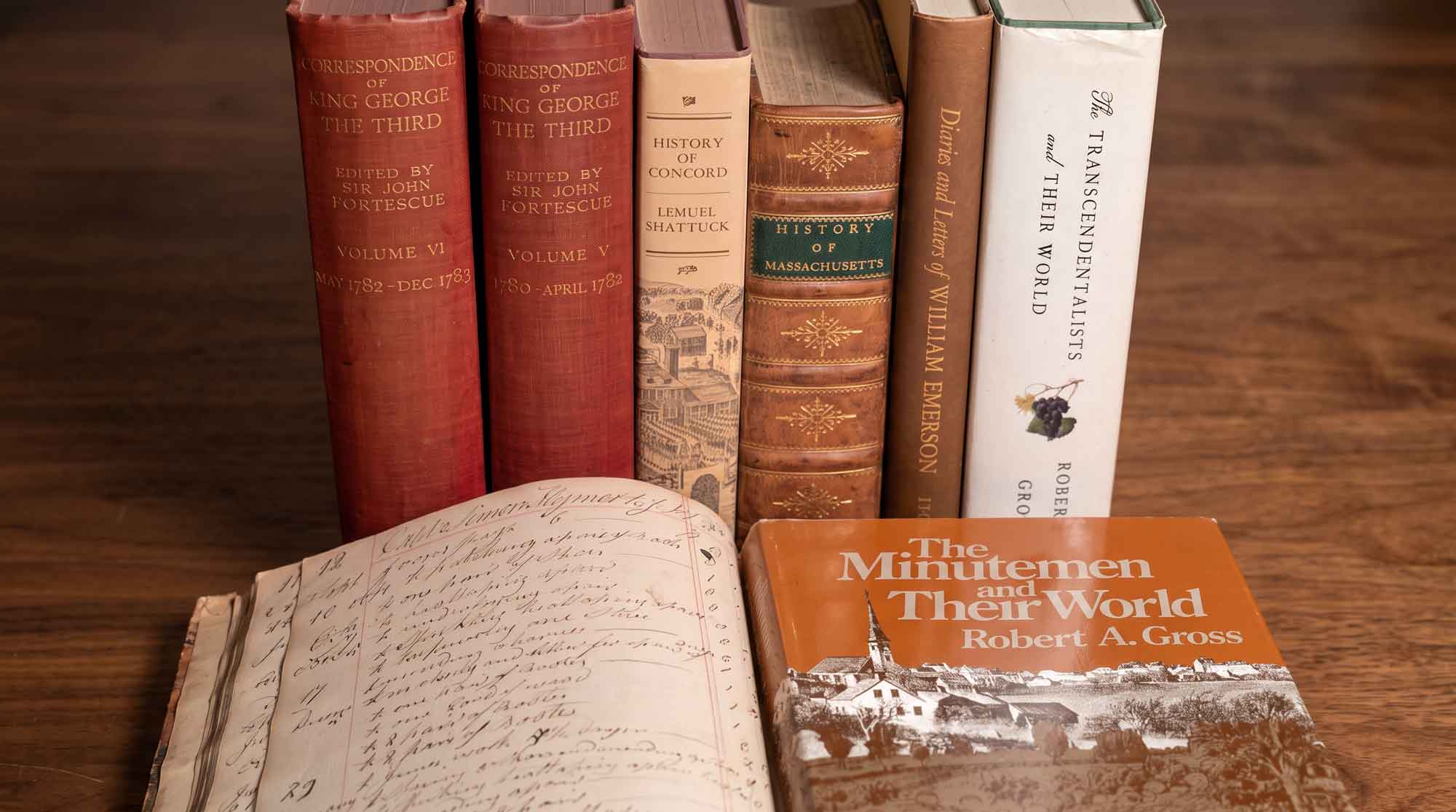
The evolution of preserving history started early in Massachusetts, thanks to a 1639 mandate by the General Court requiring a formal record-keeping system for judicial records, property titles, and vital statistics collected by every town’s clerk. Early Concord historians cited these works in their books about the town, and tales were supplemented as letters and diaries saved by families passed from their hands into archives where they were carefully catalogued—silent but ready to be read by the next person with the time to compose a longer tale.
But like a bardic tale that could be forgotten without repetition, original documents and their content can disappear or lie dormant until rediscovery opens the door for new research and findings. Concord’s own town records provide an example.
When Professor Robert Gross was researching his 1976 book, The Minutemen and Their World, he had read about, but been unable to find, a number of manuscripts and records that an 1880 state survey of local archives had affirmed were in Concord. As a member of Concord’s Town Records and Archives Committee, Gross launched an investigation leading him to a safe in the Concord Townhouse that was packed with boxes. With a team of local high school students, Gross investigated box after box in the walk-in depository, until, at the very back, they found the original documents of Concord! Gross was able to use this material in his more recent book, The Transcendentalists and Their World.
We continue to learn from the material in this collection. For instance, local historian Beth van Duzer recently pored over a volume shared by Town of Concord Archivist Nathaniel Smith to transcribe notes from the 1840s that provided the key to identifying the final resting places of members of Concord’s Black community.
Every tale is made up of many pieces and the people along the way who preserved them. These include the tireless historians and history detectives scouring old documents, archivists, historical societies, tour guides, cemetery groundskeepers who watch over the final chapters, and three generations of curators at the Concord Free Public Library’s William Munroe Special Collections.
History is cumulative. We all have a role to play in living it, preserving it, and telling it with fidelity. As Emerson said in “The Over-Soul,” “Every heart vibrates to that iron string.”
Both photos © Barrow Bookstore