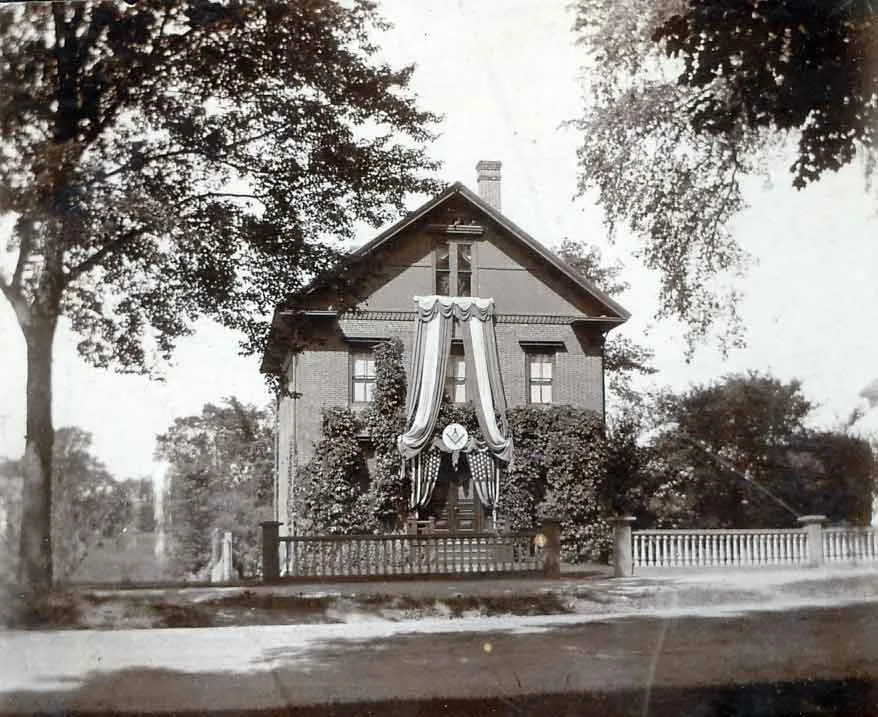
Have you ever wondered about the stately brick building across from the Colonial Inn at 58 Monument Square? This landmark, standing since 1820, is more than a daily sight—it’s a testament to Concord’s rich history and the enduring legacy of Freemasonry.
To truly appreciate this building, let’s journey back to a pivotal moment in history. In April 1775, the original courthouse on this site witnessed the British regulars’ search and destruction of colonial war supplies—a scene vividly captured in Amos Doolittle’s print, A View of the Town of Concord. The courthouse caught fire from a blaze the regulars started to destroy the rebels’ means of war. The smoke from the fire was seen at the Old North Bridge and inspired the minuteman advance toward the Old North Bridge, resulting in the “shot heard round the world.”
This site’s historical significance continued as it evolved over the years. After the courthouse burned, a wooden schoolhouse took its place. Unfortunately, fate struck again as this building, too, succumbed to fire. The recurring theme of rebuilding from ashes illustrates the resilience and determination of Concord’s citizens. In 1820, the town partnered with Corinthian Lodge—chartered by none other than Paul Revere in 1797—to construct a new brick schoolhouse.
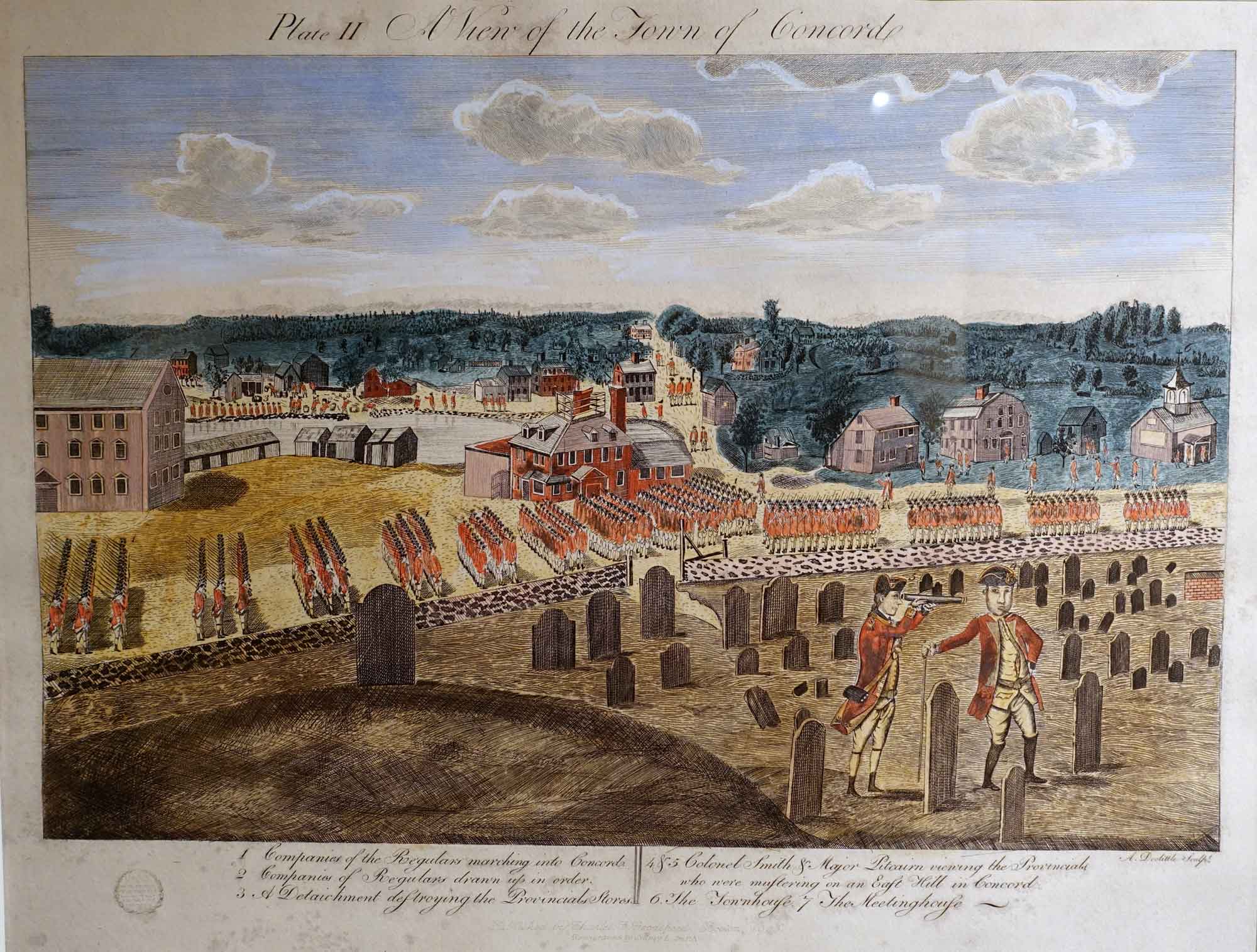
Amos Doolittle, A View of the Town of Concord, Plate II, 1775, engraved print
The collaboration between the town of Concord and Corinthian Lodge was a significant milestone. Paul Revere, a respected Patriot and the grand master of Masons in Massachusetts at the time, personally signed the Lodge’s charter. Despite their initial lack of a permanent meeting place, the Masons gathered monthly at members’ homes and local taverns, fostering a strong sense of community and brotherhood.
The new brick schoolhouse, funded by a public-private partnership, became a beacon of education and fraternity. The arrangement between the town and Corinthian Lodge was straightforward: For $400, the building would function as a schoolhouse on the ground floor and provide a permanent home for the Masonic Lodge on the upper floor.This dual-purpose structure symbolized the town’s commitment to both education and communal values.
Freemasonry, the world’s oldest and largest fraternity, encompasses men of good character from all walks of life who believe in a Supreme Being. Founded on principles of brotherly love, relief, and truth, Freemasonry encourages personal growth, ethical conduct, and community service. It’s about improving oneself and contributing positively to society—a mission that has remained unchanged since its introduction to Massachusetts in 1733.
The new structure served the community well, with notable figures like Henry David Thoreau and Ellen Garrison receiving their education here.
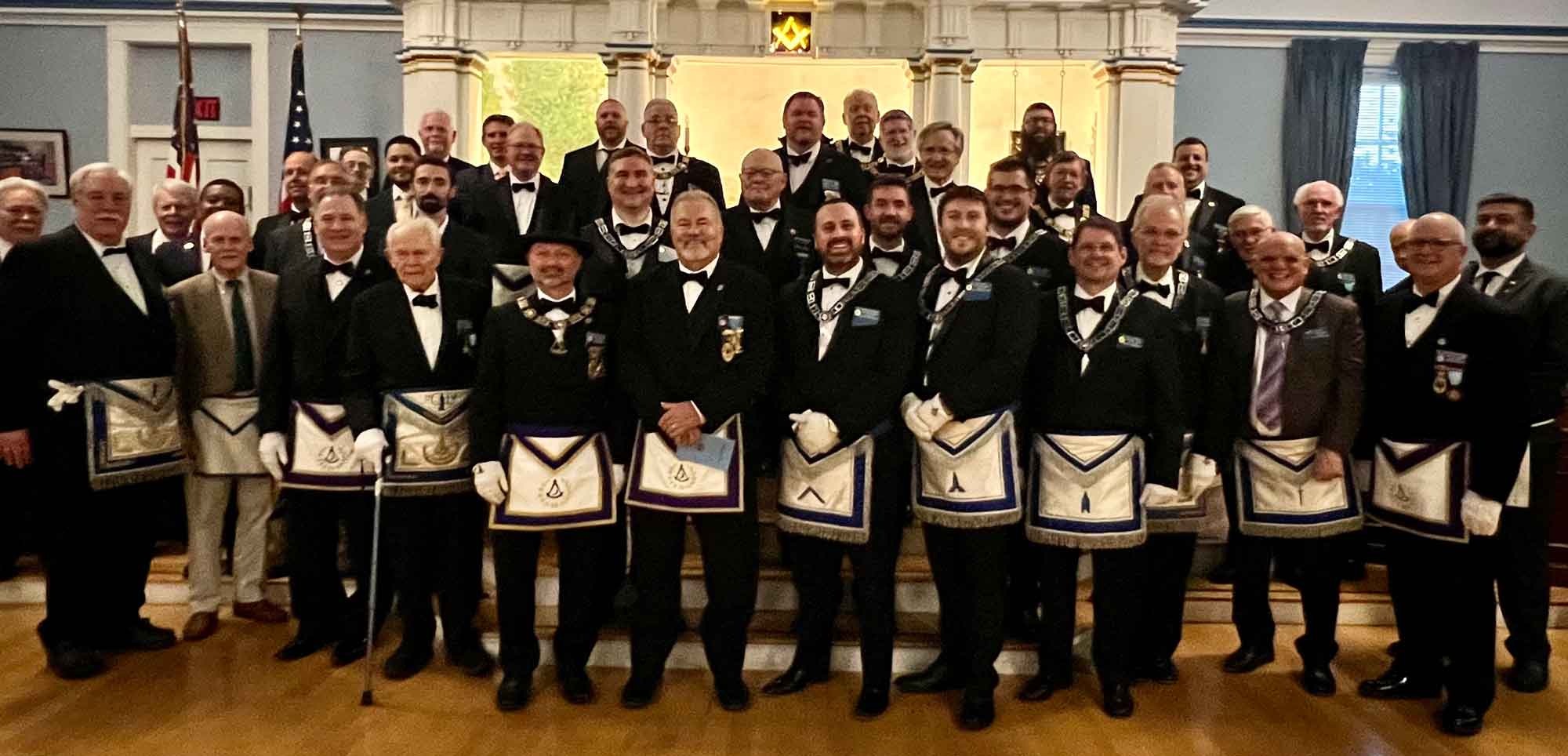
Corinthian Lodge of Freemasons, 2024
Thoreau, a renowned Transcendentalist and author, attended the school and later returned as a teacher. However, Thoreau found the practice of administering corporal punishment distasteful and soon resigned. His brief tenure highlights the building’s role in shaping influential minds.
Garrison, the granddaughter of Caesar Robbins, an emancipated enslaved person, also received her primary education in this building. Garrison went on to become a pioneering civil rights advocate and educator of newly emancipated individuals in the South shortly after the Civil War. To honor her legacy, the Concord Middle School was named after her.
Over the years, the building has adapted to various uses, including hosting the Lyceum for community discussions and education. The Lyceum, established in 1828, became a hub for intellectual exchange and public discourse, reflecting Concord’s vibrant community spirit.
By 1872, the building was showing its wear, and the Lodge moved out temporarily to what is now Coldwell Banker on Main Street. In the meantime, the building was converted into an engine house, as depicted on the 1878 map of Concord. It was around this time that William F. Hurd, a past master of Corinthian Lodge and builder, purchased the property and undertook significant refurbishments.
Hurd moved the building forty-two feet back from its original location and added sixteen feet to the rear, allowing for internal reconfiguration. Corinthian Lodge moved back into the building in 1882 and has remained ever since. This renovation marked a new chapter in the building’s history, preserving its historical essence while accommodating the Lodge’s needs.
Today, Corinthian Lodge and several other Masonic organizations call this building home. With members ranging in age from twenty-five to ninety-nine and representing diverse backgrounds, the Lodge exemplifies Freemasonry’s commitment to unity and mutual support. In a world often divided, Freemasonry’s emphasis on common values and community service is indeed refreshing.
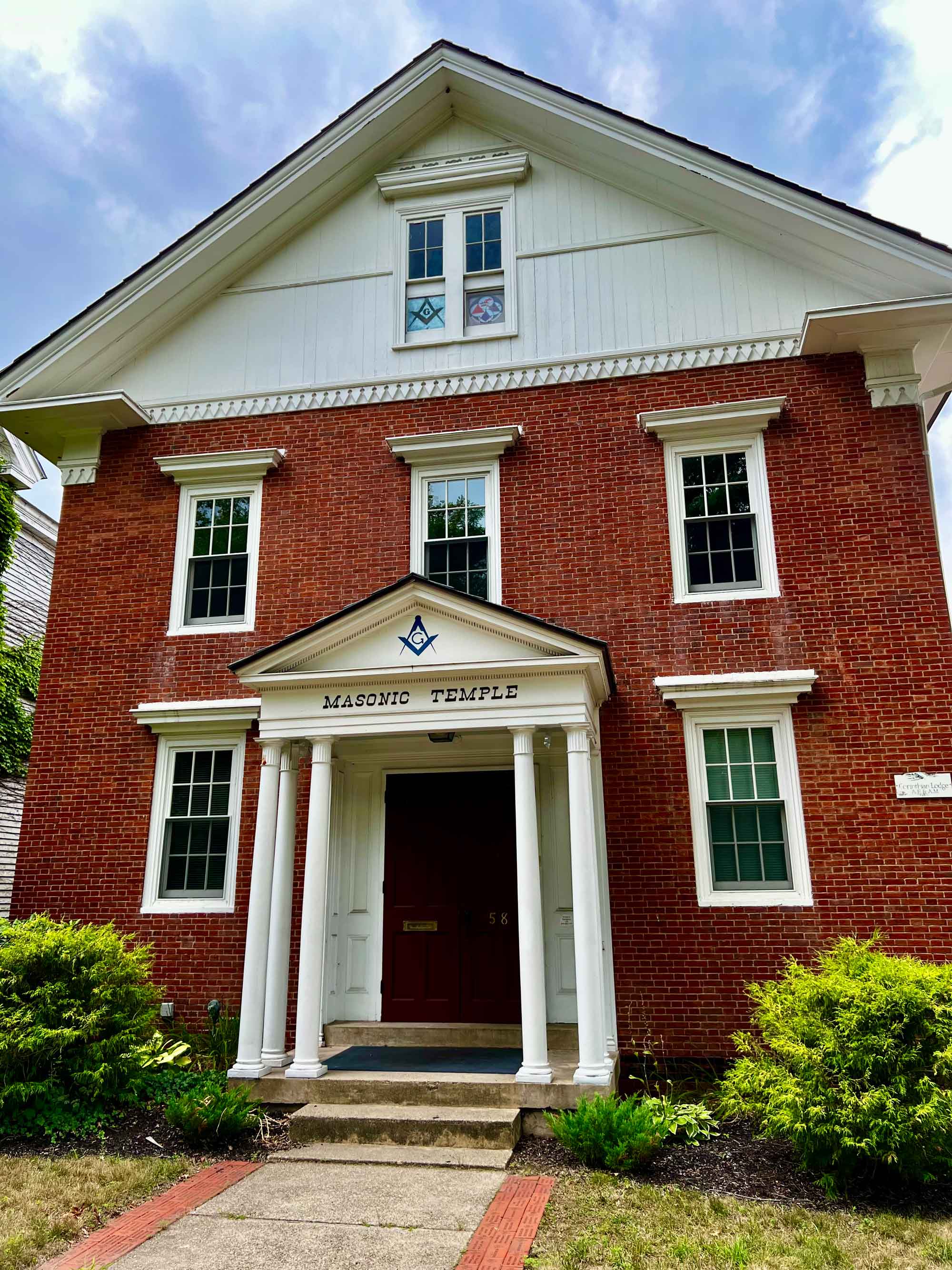
58 Monument Square, 2024
| Courtesy of Corinthian LodgeThe lodge room and dining hall, added in a 1921 expansion, serve as venues for various Masonic activities and community events. These spaces reflect the fraternity’s dedication to fellowship, charity, education, and leadership.
The term Masonic Temple might suggest a religious institution, but it is, in fact, a fraternity that uses symbolic teachings to guide members in their personal and communal lives. Each Lodge, representing King Solomon’s temple, fosters an environment where men of all faiths and backgrounds can come together as equals, united in their commitment to self-improvement and societal betterment.
Corinthian Lodge, along with Charles A. Welch Lodge (formerly of Maynard), Frank W. Thompson Lodge (formerly of Bedford), and various York Rite Bodies, represents a diverse and dynamic Masonic presence in Concord. These organizations continue to uphold the principles of Freemasonry, offering opportunities for fellowship, charity, and personal growth.
Freemasonry’s commitment to community service is evident in the numerous charitable activities and events organized by the Lodge. From supporting local schools, blood drives, and charitable donations to organizing Concord’s July 4th Picnic in the Park, the Lodge plays a vital role in enhancing the well-being of Concord and its residents. What makes Freemasonry unique is that it focuses attention to what draws people together, not what divides them. These are the fundamental and selfless values that our forefathers adopted into the core fabric of our great nation. In today’s divisive political world, isn’t that refreshing?