
Discover Concord Logo
Toggle Mobile MenuToggle Mobile Menu
Subscribe
  • Home
  • Current Issue
  • Back Issues
    • Fall 2025
    • Spring 2025
    • Winter 2025
    • 2024 Back Issues
    • 2023 Back Issues
    • 2022 Back Issues
    • 2021 Back Issues
    • 2020 Back Issues
    • 2019 Back Issues
  • Browse Topics
    • Abolitionism in Concord
    • American Revolution
    • Arts & Culture
    • Celebrity Profiles
    • Civil War
    • Concord History
    • Concord Writers
    • First Nations People of Concord
    • Historic Sites in Concord
    • Parks & Nature
    • Patriots of Color
    • Things to See & Do
    • Transcendentalism
    • Trivia
    • Untold Stories of Concord
  • Plan Your Visit
  • Events
  • Purchase Subscriptions and Back Issues
  • Discover the Battle Road
  • 250 Collectibles
  • Trading Cards
  • More
    • About Us
    • Advertise
    • Contact Us
Toggle Mobile MenuToggle Mobile Menu
Home » Authors » Dianne Weiss

Dianne Weiss

Dianne McConville Weiss is on the Planning Committee of the Transcendentalism Council of First Parish in Concord; she was the lead organizer for Concord’s Margaret Fuller Bicentennial. She served on the Board of Directors of The Thoreau Society. A Developmental Psychology specialist, Ms. Weiss conducted program evaluation research through Tufts University and for the State of Vermont Child Care Services Division. She has also published creative writing.

Articles

ARTICLES

hdt-southwest-coyote.jpg

Bringing Thoreau to Life for Young Readers with Donna Marie Przybojewski

December 15, 2021
Dianne Weiss and Victor Curran
No Comments

The Thoreau Society (thoreausociety.org) is a Concord-based organization with members all over the world. One of the most dedicated is Donna Marie Przybojewski, who teaches at St. Benedict Catholic School in Garfield Heights, Ohio. Five years ago, she set out to share her passion for the author of Walden—“not just [to] introduce Henry to children, but to help them develop a relationship with him.”

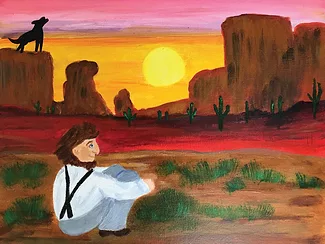
The result was “Saunter the Year with Henry David Thoreau,” a year-long, interdisciplinary curriculum for kindergarten through eighth grade students. (In the classroom she often appears in character as Henry, beard and all.) Resources for such an ambitious curriculum were scarce, so Donna Marie began writing and illustrating books for elementary and middle school readers, presenting vignettes of Thoreau’s life and describing his ideas in age-appropriate ways.


Read More

Featured Stories

  • Cover Spring26.jpg

    The Spring Issue is Here!

    Patriots' Day is almost here, and this issue of Discover Concord brings you a list of events, the parade route, and much more to make your celebration special.  Also in this issue is an in-depth look at the new PBS documentary "Henry David Thoreau," a fascinating piece on how the Concord Lyceum came to be, and a look at how Massachusetts civilians on the homefront managed the challenging months of January - May 1776. Freedom's Way National Heritage Area is launching an exciting program you won't want to miss called "Declaring Independence: Then & Now" in more than 20 towns across Massachusetts. With two special fold-out inserts,  maps, lists of shops, and so much more, you'll want to get your copy early!
  • Mural.jpg

    West Side Story

    Concord Center takes justifiable pride in its history, but today great things are happening in West Concord. Innovation and self-reliance are nothing new on the west side of Route 2; they’ve defined the community for centuries. 
  • Concord-Town-Hall-1875-from-Concord-Library.jpg

    Established for Social & Mutual Improvement: The Concord Lyceum

    The Lyceum Movement started in New England in 1826, when educator and scientist Josiah Holbrook founded the first lyceum in Millbury, Massachusetts. Inspired by the classical Lykeios (Λύκειος) in Ancient Greece, where Aristotle taught, the movement was created to bring education to ordinary people through lectures, debates, and readings. Lyceums quickly spread across New England, fostering education, self-improvement, and civic engagement, and many towns soon formed lyceums of their own, including Boston in 1829 and Salem in 1830. By the 1830s, there were Lyceums across the country. 
©2026. All Rights Reserved. Content: Voyager Publishing LLC. Design, CMS, Hosting & Web Development: ePublishing
Facebook Instagram