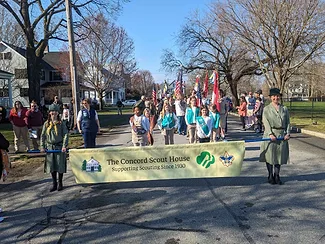
Step back in time at Concord Scout House, where history and community converge in a beautifully preserved New England barn. As you approach down the pine-lined driveway, the white clapboard building emerges like a hidden treasure in the heart of historic Concord.
The Concord Scout House stands on land that was farmed dating back to the founding of the town of Concord. The property, 74 Walden Street, was part of land owned by Timothy Wheeler during the American Revolution. Wheeler was known for successfully hiding colonial supplies from the British troops on April 19, 1775. After a succession of farming owners, The Concord Massachusetts Girl Scouts, Inc. acquired the land with the barn from the Stow family in 1930.
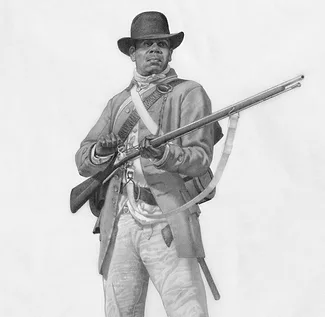
On April 19, 1775, an estimated twenty to forty colonists of African or Native American descent fought in the first battle of the American Revolution. On that historic day, those men, often termed “Patriots of Color,” joined approximately 4,000 other men fighting British Regular soldiers along the “Battle Road” from Concord to Boston. Over the last 250 years, racism and historical bias have effectively ignored or trivialized the contributions of those men and many other people of color in the historic struggle that produced the United States. To understand who the Patriots of Color were, how they contributed to the American Revolution, and why they chose to do so, we must examine their social context.
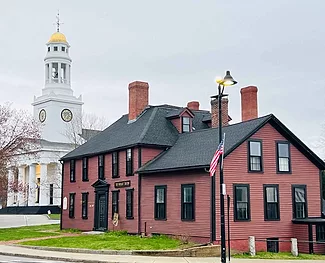
As the 250th Anniversary of the Battles of Lexington and Concord approaches, a witness house sits at the top of Concord’s Main Street, full of stories of rebels and traitors whose actions shaped the America we know today. It is the Wright Tavern, a red wood building with black shutters; one of the last standing colonial-era taverns from that fateful day of April 19, 1775.
The tale of this tavern begins with a dangerous hole in the ground.
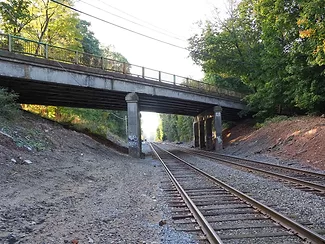
On Rt. 126, as you pass Walden Pond, cross into Lincoln, and dip through wooded drumlins, the road soon rises and straightens out by Baker Bridge Road along the expansive fields of The Food Project’s Baker Bridge Farm. The railroad bridge is straight ahead. Small and easy to miss, it was once the location of the tiny Baker Bridge railway station. It was also one of the deadliest spots in 19th century Massachusetts.
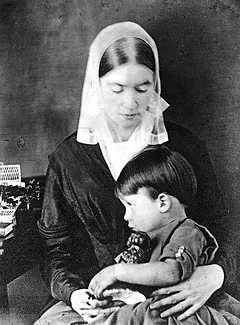
On the list of Concord’s notable 19th century women about whom few people know is Lidian Emerson Jackson; so little is written of her many talents, quiet fortitude, and unwavering support of her famous husband, Ralph Waldo Emerson.
She was Waldo’s second wife, succeeding his marriage to Ellen Tucker in 1829.
After the smoke cleared, the drums ceased, and the United States was founded, life in Concord started returning to a new normal. The Wright Tavern, built and opened in 1747, still operated as an inn and tavern, but conversations inside the tavern were now more about farming, prices, and town gossip.
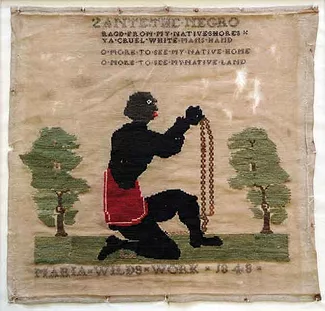
When we think of Concord’s history, images of Walden Pond, the Old North Bridge, Transcendentalists, and Little Women might come to mind. We don’t always think about a remarkable, diverse group of women from Concord’s past dedicated to eradicating slavery. We might not even know their fascinating story. The Concord Female Anti-Slavery Society worked diligently across three decades, becoming important players in the abolitionist cause, and helping to more widely promote its messages.
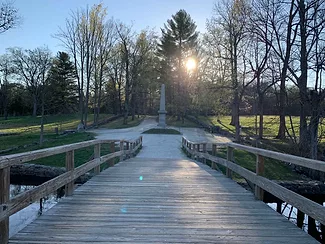
Early this year, National Park Service archeologists working at Minute Man National Historical Park discovered five musket balls that were fired during the
world-changing event known as “The Shot Heard Round the World” on April 19, 1775.
Early analysis of the 18th-century musket balls indicates they were fired by colonial militia members at British forces during the North Bridge fight.
April 19, 1775, marked the first battle of the American Revolution. On that day, 700 British soldiers marched from Boston to Concord to seize a stockpile of military arms and supplies. The expedition caused patriot leaders to raise the alarm and muster the militia. The scale of the response is truly staggering and hints at a surprising amount of organization.
When did the American Revolution begin? At the North Bridge on April 19, 1775, with “the shot heard round the world”? In Philadelphia on July 4, 1776, with the Declaration of Independence? John Adams thought the Revolution was over by the time the first guns were fired. It “was effected in the minds and hearts of the people.”
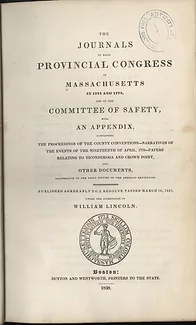
Arguably, that crucial turning-point occurred in Concord two hundred fifty years ago, when on October 11, 1774, delegates from all over Massachusetts, roughly 243 representatives from close to 200 towns, including the District of Maine, gathered in the Congregational meetinghouse (now First Parish) to deal with “the dangerous and alarming situation of public affairs” touched off by Britain’s harsh reaction to the Boston Tea Party.
-public-domain.webp?height=325&t=1731133708&width=325 "Wright's_Tavern_(Concord,_MA)-public-domain.jpg")