
QUESTIONS
1. When the Hawthornes rented the Old Manse from 1842 to 1845, the contents came with it, including a book collection in the attic. How did Nathaniel Hawthorne refer to this collection?
A. “Celestial fire for the kindled mind”
B.
“Extravagant and fantastical”
C. “Heaven’s allegory”
D. “Dreary trash”
Click to show the answer
A. “Celestial fire for the kindled mind”
B. “Extravagant and fantastical”
C. “Heaven’s allegory”
D. “Dreary trash”
Answer: D. “Dreary trash.” In the introduction to Mosses from an Old Manse, Hawthorne wrote, “A part of my predecessor’s library was stored in the garret, —no unfit receptacle indeed for such dreary trash…” Despite Hawthorne judging that “the old books would have been worth nothing at an auction,” he did note their redeeming quality as being passed down through the “consecrated hands from the days of the mighty Puritan divines” and autographed by a number of famous figures. Check out the “dreary trash” yourself by visiting the Old Manse and keep an eye out for their special “Attic Tours” throughout the year.
2. As described by Nathaniel Hawthorne in his nonfiction first chapter of Mosses from an Old Manse, “When summer was dead and buried the Old Manse became as lonely as a hermitage,” and when guests visited, a curious occurrence came over all of them. What was this occurrence?
A.
Shortly after entering, guests found themselves rocked with laughter.
B.
Guests felt as though someone was watching them.
C.
Guests became deeply relaxed and
fell asleep.
D.
Guests experienced an impending
dread and desire to escape.
Click to show the answer
A. Shortly after entering, guests found themselves rocked with laughter.
B. Guests felt as though someone was watching them.
C. Guests became deeply relaxed and fell asleep.
D. Guests experienced an impending dread and desire to escape.
Answer: C. Guests became deeply relaxed and fell asleep. Hawthorne wrote, “Our precincts were like the Enchanted Ground through which the pilgrim travelled on his way to the Celestial City. The guests, each and all, felt a slumberous influence upon them; they fell asleep in chairs, or took a more deliberate siesta on the sofa, or were seen stretched among the shadows of the orchard. . . . I held it as a proof that they left their cares behind them as they passed between the stone gate-posts at the entrance of our avenue.” Follow in the footsteps of Hawthorne’s guests. Leave your cares behind you as you pass through those same stone gate-posts and visit Concord’s Old Manse Museum at 269 Monument Street.
3. In the 1850s, this landscape architecture firm designed Sleepy Hollow Cemetery in Concord, Massachusetts, and submitted a plan for New York City’s Central Park. What was the firm’s name?
A. Bronson and Lane
B. Cleveland and Copeland
C.
Olmsted and Vaux
D.
Thoreau and Staples
Click to show the answer
B. Cleveland and Copeland
C. Olmsted and Vaux
D. Thoreau and Staples
Answer: B. Cleveland and Copeland. While Cleveland and Copeland submitted a proposal for New York’s Central Park, the winning design was created by Frederick Law Olmsted and Calvert Vaux. (If you guessed Olmsted and Vaux, you get partial credit as Olmsted designed the campus of Middlesex Academy in Concord.)
4. Concord’s Sleepy Hollow Cemetery
was consecrated on September 29, 1855. Ralph Waldo Emerson gave the opening speech, in which he called the cemetery what?
A. “A garden for the living”
B. “The sepulcher of angels”
C. “These hallowed hills”
D. “The hollow of the forget-me-nots”
Click to show the answer
A. “A garden for the living”
B. “The sepulcher of angels”
C. “These hallowed hills”
D. “The hollow of the forget-me-nots”
Answer: A. “A garden for the living.” Emerson’s full address may be read in The Complete Works of Ralph Waldo Emerson, in the volume titled Miscellania.
5. As he wrote in Walden; or, Life in the Woods, after some experimentation, Henry David Thoreau found he could make what out of either pumpkins or beets?
A. Rust-colored pencil lead
B. Molasses
C. Cough elixir
D. Anything other than bean soup
Click to show the answer
A. Rust-colored pencil lead
B. Molasses
C. Cough elixir
D. Anything other than bean soup
Answer: B. Molasses. In Walden, Chapter 1, “Economy,” Thoreau wrote that he discovered “that I could make a very good molasses either of pumpkins or beets. . . . For, as the Forefathers sang, ‘we can make liquor to sweeten our lips of pumpkins and parsnips and walnut-tree chips.’”
6. The year is 1930. You live in
Concord and enjoy being a busy
eleven-year-old. Halloween night is here,
and Concord residents have organized a “fun” activity for you and your young friends to do to keep you out of trouble. What will you spend the evening doing?
A. Chasing rats
B. Making scarecrows
C. Stargazing
D. Having a tug-of-war tournament
Click to show the answer
A. Chasing rats
B. Making scarecrows
C. Stargazing
D. Having a tug-of-war tournament
Answer: A. Chasing rats. As described in a November 1, 1935, Boston Globe article, “around Concord . . . they chased rats. For six years the citizens of Middlesex County have turned out on the eve of All Saints’ Day to kill the rodents—and to give the boys and girls something to do besides ringing doorbells and changing gates.”
7. In Louisa May Alcott’s short story “An Old-Fashioned Thanksgiving,” a character is wearing a brown silk pumpkin-hood. What was another common name for this type of warm bonnet?
A. A cold-preventer
B. A hair squasher
C. An ugly
D. A head muff
Click to show the answer
A. A cold-preventer
B. A hair squasher
C. An ugly
D. A head muff
Answer: C. An ugly. While quilted pumpkin-hoods were warm to wear, their nickname might not have been a selling point for fashionistas.
8. Which famed Concordian was
buried twice?
A. Louisa May Alcott
B. Henry David Thoreau
C. Harriett Lothrop
D. Sophia Hawthorne
Click to show the answer
A. Louisa May Alcott
B. Henry David Thoreau
C. Harriett Lothrop
D. Sophia Hawthorne
Answer: This was a trick question—B and D. Henry David Thoreau’s sister Sophia moved Henry and other family members from the New Hill Burying Ground up to Author’s Ridge in Sleepy Hollow Cemetery. Sophia Hawthorne and her eldest daughter, Una, were originally buried in England and were brought back to join Nathaniel on Author’s Ridge in 2006. Read more about “A Hawthorne Homecoming” by Victor Curran here: DiscoverConcordMA.com/articles/ 767-a-hawthorne-homecoming.
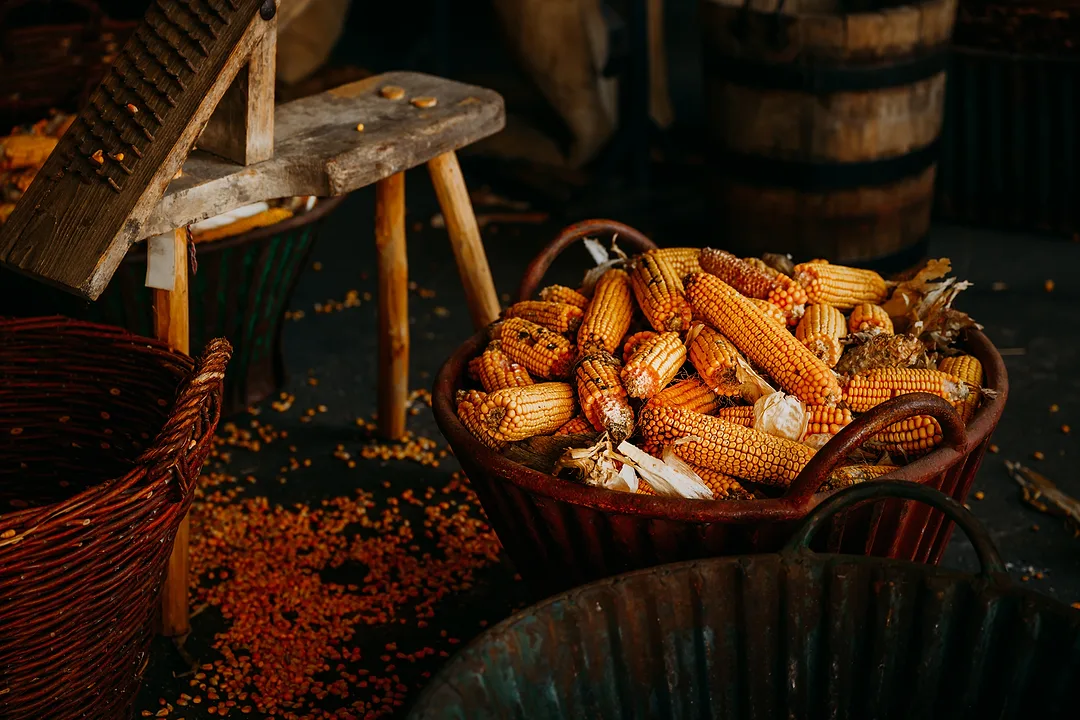
9. October is here! The year is 1790. You’re a recent immigrant to Concord and are invited to a husking party. You love parties! You don’t know what “husking” is but are about to learn it is which of the following?
A.
Shouting loudly into the sky and then reciting poetry
B.
Shearing sheep
C.
Removing kernels from dried corn
D.
Hollowing out gourds for winter
storage bowls
Click to show the answer
A. Shouting loudly into the sky and then reciting poetry
B. Shearing sheep
C. Removing kernels from dried corn
D. Hollowing out gourds for winter storage bowls
Answer: C. Removing kernels from dried corn.
10. Now that you know what husking is, you’re less excited about the party, but you’ve already accepted the invitation, and it would be rude to decline. Your neighbor keeps saying, “Last year’s husking party was so much fun,” and tells you that you can also expect what?
A.
Six hours of continuous background preaching by Reverend Ripley, who has been working on the sermon since last year
B.
Frolicking
C.
A huzzah-ing contest
D.
Mud wrestling
Click to show the answer
A. Six hours of continuous background preaching by Reverend Ripley, who has been working on the sermon since last year
B. Frolicking
C. A huzzah-ing contest
D. Mud wrestling
Answer: B. Frolicking. Described by John Neal in his 1825 book Brother Jonathan: or, the New Englanders, if neighbors came to help at a husking, the farmer who invited them would permit attendees “to tumble and roll about, in his barn, all night long, if they please; eat his pumpkin pies; drink his cider, and waste his apples; under pretence of husking corn.” Contemporary newspapers occasionally reported husking parties and frolics getting out of hand with frolickers accidentally stumbling into fires, stabbing each other, or meeting untoward ends due to excess drink.
Contact Barrow Bookstore for a list of sources. Barrowbookstore@gmail.com.
————————————————————————
For more than 50 years, Barrow Bookstore has been a favorite of residents and visitors alike, specializing in Concord authors and history, children’s books and literature. The shop also provides a wide array of gently read and rare titles ranging from paperbacks to first editions and original manuscripts. Staff members have all worked as tour guides and reenactors in Concord and are happy to share their knowledge about the town and its history. Discover more at barrowbookstore.com.