

So revered is the Baldwin apple that Massachusetts has not one but two monuments to the bright-red winter fruit.
For many years, the Baldwin apple was the most popular fruit in New England and New York. A small, hard apple remarkably free of blight and blemishes, people prized it for making hard cider and pie. Commercial growers loved it because it produced huge crops every other year and shipped easily.
In 1885, an article in the New England Farmer praised the apple: “What the Concord is among grapes, what the Bartlett has been among pears, the Baldwin is among apples.”
Wilmington Origins
The Baldwin apple originated as a wild seedling on the farm of John Ball in Wilmington, Massachusetts, around 1740. William Butters bought the farm and transplanted the tree near his house. He called the apple Woodpecker because the tree attracted so many of the birds. Others called it the Butters apple.
In the late 18th century, Deacon Samuel Thompson stumbled across that apple tree while surveying for the Middlesex Canal. He told the canal’s engineer, Loammi Baldwin, about the fine red apple. Baldwin quickly recognized its appeal.
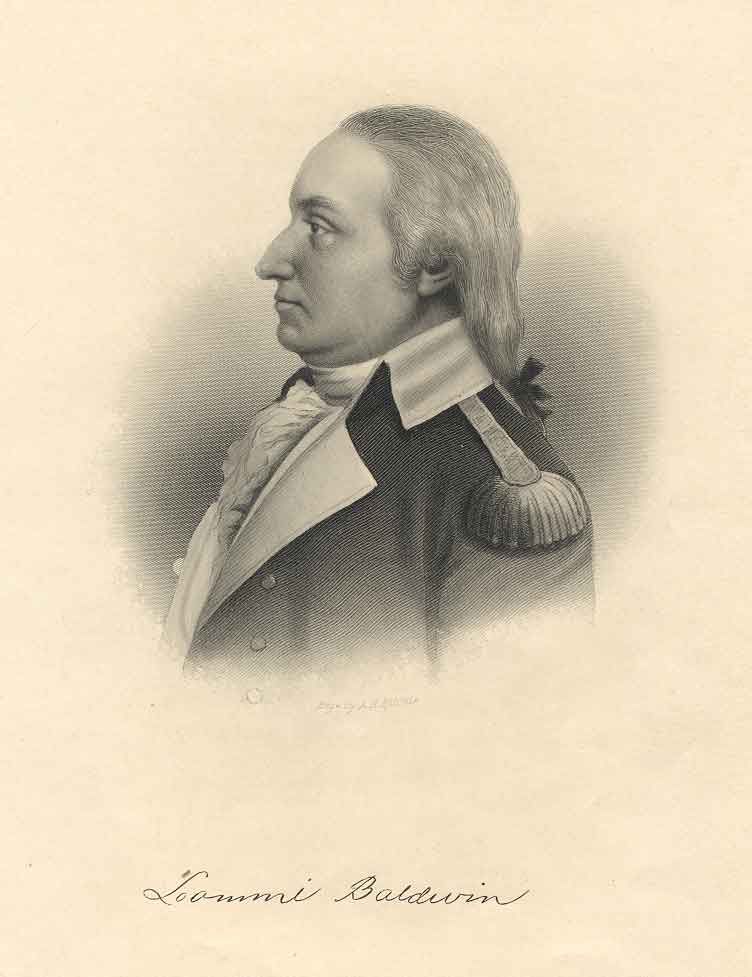
Loammi Baldwin
The Baldwin Apple
Loammi Baldwin accomplished many things in his lifetime, but he is best known for promoting the eponymous apple.
Born January 10, 1744, he was a Revolutionary War veteran who crossed the Delaware with George Washington. Baldwin commanded the Woburn Regiment during the Battle of Concord and Lexington. He conducted experiments with electricity and served in the Massachusetts General Assembly and as high sheriff of Middlesex County.
Baldwin’s most significant achievement was the construction of the Middlesex Canal, a pioneering waterway that connected the Merrimack River to Boston Harbor. He earned the moniker Father of Civil Engineering because of his innovations—and perhaps because his five sons became well-known civil engineers.
While building the canal, he visited the Butters farm and cut scions from the Woodpecker apple tree. He then planted a row of trees near his house in Woburn and gave away scions to his friends. Some say the apple was named for him after his death. But according to Woburn historian Reverend Samuel Sewall, the proposal to name the apple after Baldwin happened at a party he held.
Fittingly, Loammi Baldwin was a second cousin to Johnny Appleseed.
Apple historian John Bunker writes that Baldwin apple trees are especially vulnerable to winter injury. The cold weakens them from harvest time until recovery during the next offseason.
The severe winter of 1933–34 wiped out millions of apple trees in New Hampshire, Vermont, and Massachusetts. In Maine, two-thirds of the apple trees died. Throughout New England, the cold hit the Baldwin apple the hardest.
Then, in the spring of 1934, the State of Maine organized a tree pool for apple growers, offering two varieties: Red Delicious and McIntosh.
Monumentally Popular
In 1895, the Rumford Historical Association erected a monument to the apple in Wilmington, near the site of the original tree.
The monument’s inscription notes the tree fell in the gale of 1815. And it says the apple “first known as the Butters, Woodpecker, or Pecker apple” was named after Colonel Loammi Baldwin of Woburn.
Another memorial to the Baldwin apple can be found on a plaque on the base of a statue of Loammi Baldwin in Woburn. It reads “Disseminator of the apple in honor of him called the Baldwin which proceeded from a tree originally growing wild about two miles north of this monument.”
All images Wikimedia Commons
Reprinted with permission from the New England Historical Society.
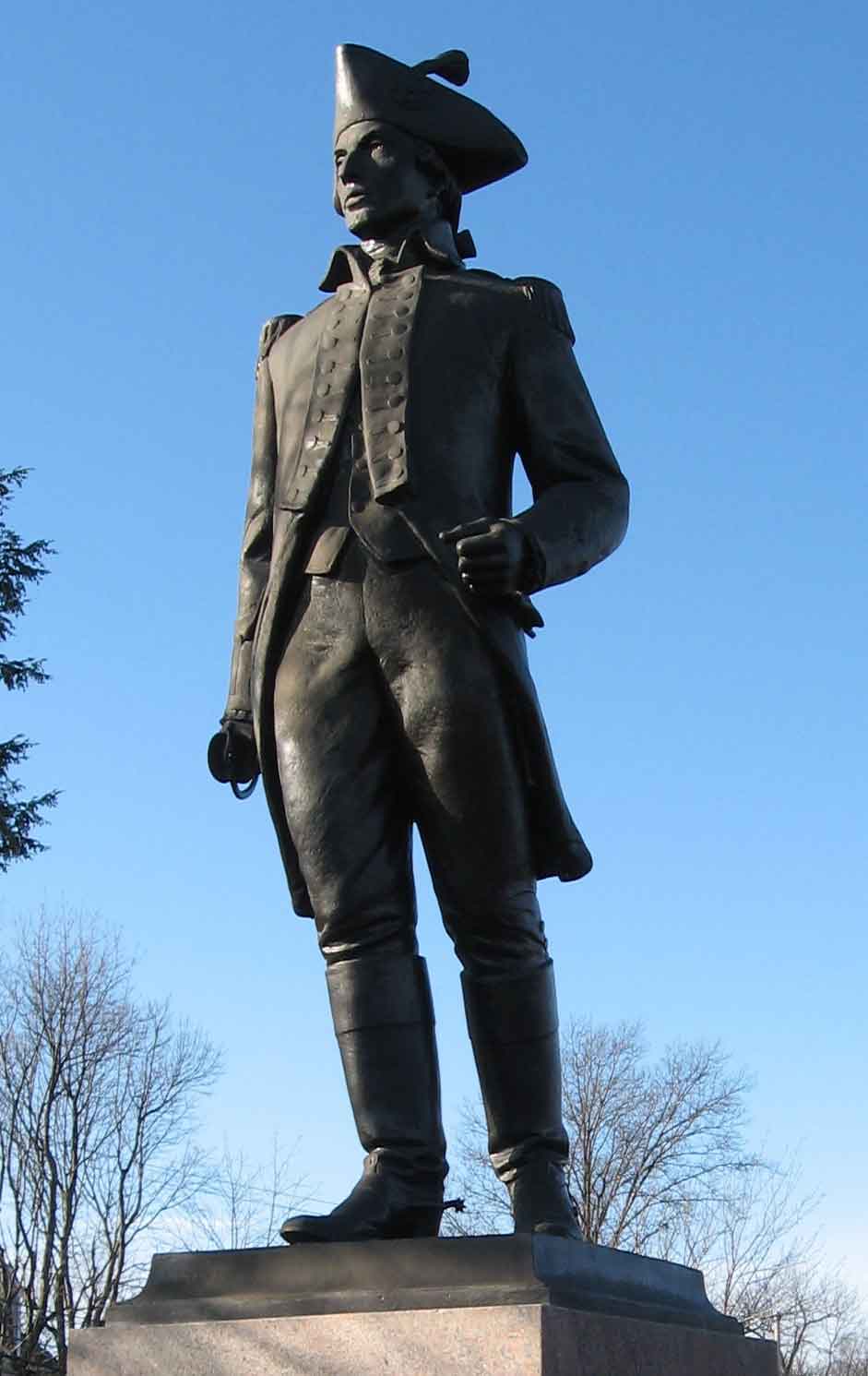
Statue of Loammi Baldwin in Woburn