
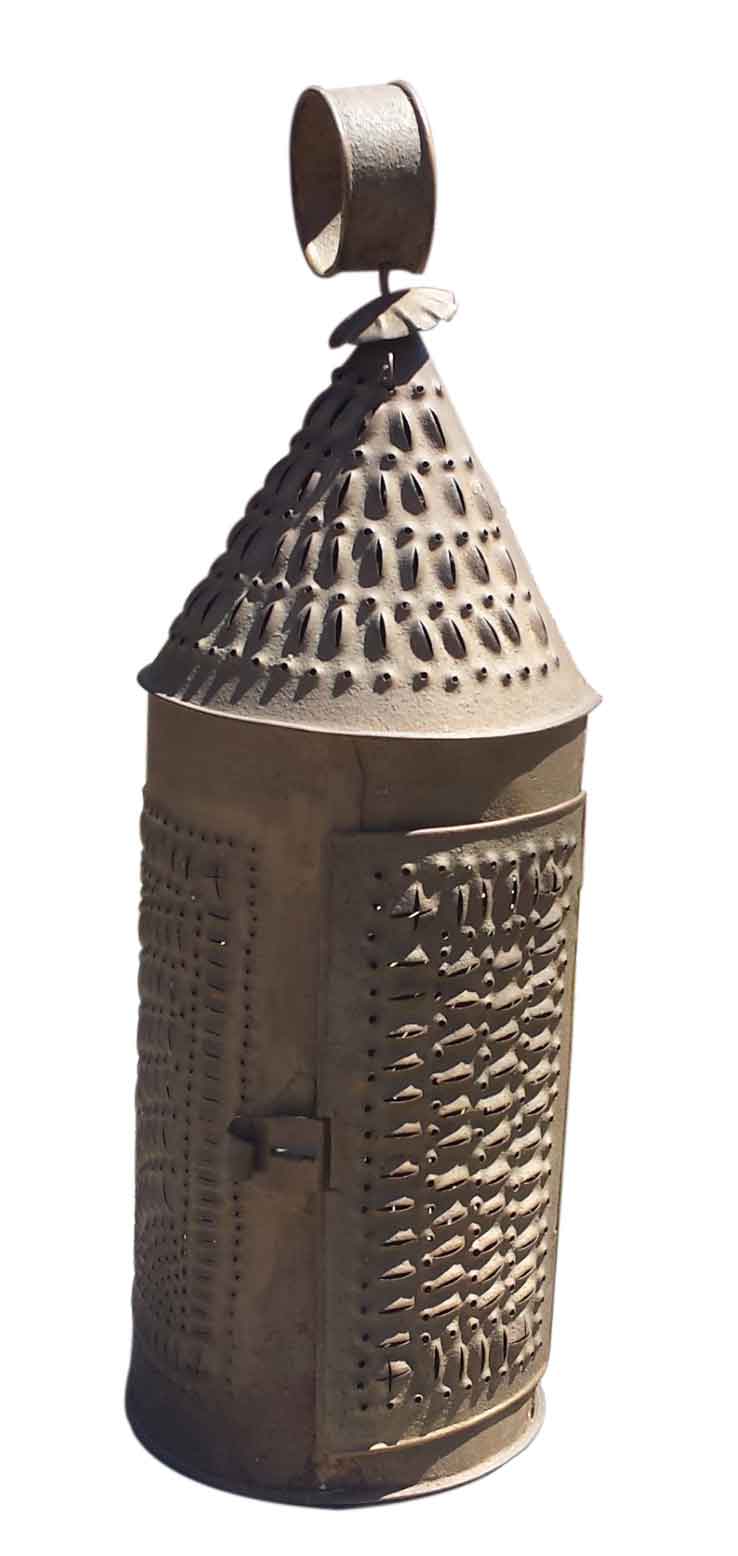
This revolutionary era lantern is more than an antique. Knowing the story of the person who held it one night shortly after April 19, 1775, transforms it into a historical treasure.
Prudence Cummings, born in 1740 in Hollis, New Hampshire, did chores, learned household skills, and played much like any other colonial girl. But unlike many, she attended school, hunted and fished with her father, and participated in family discussions about the future of the colonies. By the time she married David Wright and moved to Pepperell, Massachusetts, colonial resistance to British rule had increased. Soon, Prudence led the women of Pepperell to burn tea on the town common and boycott English goods. When the townspeople raised a liberty flag, Prudence joined in, boldly defying the king.
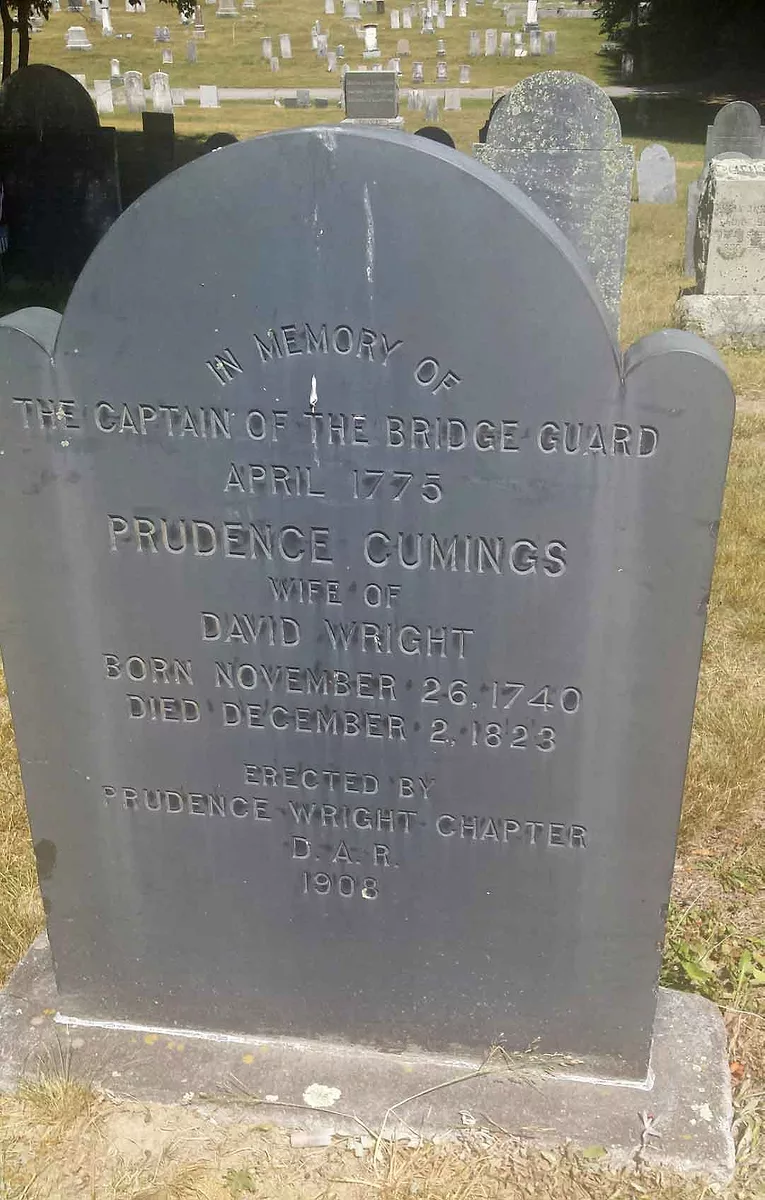
 ©Daughters of the American Revolution, Prudence Wright Chapter
Though Pepperell was united against the king, Prudence’s family wasn’t. In March 1775, while visiting her mother, Prudence overheard one of her brothers talking with Leonard Whiting, a British officer and former schoolmate. Scraps of their conversation made it clear her brother was working with the British, and if it came to war, her family would be torn apart.
Just after sunrise on April 19, an alarm rider galloped into Pepperell to warn of advancing British troops. Prudence’s husband marched off with the minutemen, and, with her five children, she carried on. A few days later, news of battles in Lexington and Concord arrived, along with rumors of Redcoats invading towns and spies passing from British Canada to Boston. Prudence knew, with the men gone, no one was guarding Jewett’s bridge over the Nashua River—the route British in the north would take to Boston.
Prudence rallied 30-40 women to guard the bridge. Dressed in men’s clothes, the women grabbed whatever weapons they could, from old muskets to pitchforks and axes, and headed to the bridge. They elected Prudence their captain, and began their wait, not knowing how many British they might encounter.
Hoofbeats approached. As two horsemen slowed across the wooden bridge, Prudence’s orders rang out, and the women sprang from the darkness. The second rider reportedly recognized his sister’s voice, spun around, and got away. But the other, Leonard Whiting, was surrounded. The women disarmed him, searched his clothes, and found a dispatch in his boots. They held their prisoner in a nearby tavern overnight and delivered him and the papers to the Groton Committee of Safety the next morning.
Prudence Wright’s story has been handed down through generations in several slightly different versions. Since records of the dispatch and detention are incomplete and questions remain, it’s impossible to know the military significance of this incident, but town records testify to the women’s bold action and payment received for their service. The power of the story of Prudence Wright and what some have called the “minutewomen” of Pepperell continues to inspire people today through commemorations and historical markers.
Of all the treasures Prudence Cummings Wright passed on to future generations, the most important is her story. Like the lantern she carried that night, it lights the way, summoning the courage and confirming the capableness of everyday people.