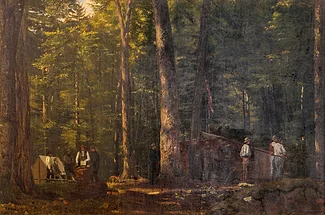
“Is it true that Emerson is going to take a gun?” asked Henry Wadsworth Longfellow. “Then I shall not go, somebody will be shot.”
Ralph Waldo Emerson was no marksman, but in July 1858, he bought a “rifle & gun” (a two-barreled rifle-shotgun combination) for twenty-five dollars, prompting his friend Henry David Thoreau to quip, “The story on the Mill Dam is that he has taken a gun which throws shot from one end and ball from the other.”1
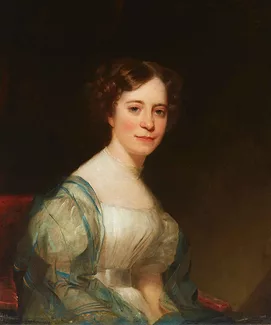
When Sophia Peabody met Nathaniel Hawthorne at her home in Salem, Massachusetts, he had little to offer but his Byronic good looks. He had published two books, but they brought him neither fame nor fortune, and at age 33, he had run out of ideas and motivation.
Shortly after sunrise, Reuben Brown crouched on a hill just outside the center of Lexington, Massachusetts. He was out of breath from his six-mile ride from Concord, and what he saw didn’t make him breathe any easier. More than 700 British troops were on the road, and 70-odd provincial militia were all that stood between them and Concord.
It was cold outside, but the glowing fire in the brick oven warmed the kitchen as Elizabeth busied herself baking the week’s bread for her enslavers, Col. John Ashley and his wife Hannah. Her younger sister Lizzie, also enslaved in the Ashley household, was too frail for heavy labor, so she watched as Elizabeth stirred the fire with an iron shovel. A
Victor Curran: On the Concord Free Public Library website, you wrote, “It is a very exciting time to get to know the staff, to serve this wonderful community and all those who support the library.”
The Thoreau Society (thoreausociety.org) is a Concord-based organization with members all over the world. One of the most dedicated is Donna Marie Przybojewski, who teaches at St. Benedict Catholic School in Garfield Heights, Ohio. Five years ago, she set out to share her passion for the author of Walden—“not just [to] introduce Henry to children, but to help them develop a relationship with him.”
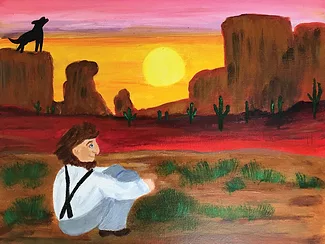
The result was “Saunter the Year with Henry David Thoreau,” a year-long, interdisciplinary curriculum for kindergarten through eighth grade students. (In the classroom she often appears in character as Henry, beard and all.) Resources for such an ambitious curriculum were scarce, so Donna Marie began writing and illustrating books for elementary and middle school readers, presenting vignettes of Thoreau’s life and describing his ideas in age-appropriate ways.
“Why Concord?” asks historian Robert A. Gross in the preface to his new book, The Transcendentalists and Their World (Farrar, Straus and Giroux, 2021). One drizzly October afternoon I asked him the same question about his own choice to devote much of his career to examining this singular dot on the map of New England.
“I came to study Concord not because I was interested in the local history,” he said. “I was interested in the local history as it helped to tell a national history. And I’ve come to love living here. I love the fact that I’m telling a large story with broad implications in one place, a place that is not a backwater, not on the margins.”
One autumn day in Monument Square, a visitor asked me about Sleepy Hollow Cemetery. “Is that the one in The Legend of Sleepy Hollow?” he wanted to know.
“No, that one is in New York,” I smiled. (I hear that question a lot.) “There’s no headless horseman here.”
“Then who’s that?” he asked, pointing over my shoulder. I spun around to see a figure all in black, strumming a black guitar as he cruised through the roundabout on his bicycle. But the weirdest part was, his head was conspicuously absent.
Concord’s cycling minstrel goes by the name of Slam Dunkle, and he’s irresistibly drawn to novel ideas and opportunities. A couple of years ago, he spotted a broken guitar in a trash barrel, put it back together, and painted it black. Then he painted his beach cruiser bicycle black to match. He found a bargain-priced headless horseman outfit in a costume shop, and voilà, the headless horseman materialized.
It was April 1900, and the First Parish in Concord was putting the finishing touches on a splendid renovation of its historic meetinghouse on Lexington Road. No expense had been spared, for in a few days the parish would celebrate Easter Sunday, and less than a week later, the town would gather in its pews to honor the 125th anniversary of the minutemen’s victory at
the North Bridge.
“Is not all the summer akin to a paradise?” wrote Henry David Thoreau in 1852. This summer seems especially heavenly as we start to travel and enjoy social activities safely again. Concord has much to offer literary pilgrims, Revolutionary War buffs, and nature lovers from near and far.