
I left the woods for as good a reason as I went there. Perhaps it seemed to me that I had several more lives to live and could not spare any more time for that one.
On September 6, 1847, Henry David Thoreau left his one-room house at Walden Pond and returned to Concord. Living at Walden for over two years had been a life-changing experience for the thirty-year-old Thoreau. Wanting to be a writer, he went to the pond to write, and while there he did exactly that. He produced two drafts of A Week on the Concord and Merrimack Rivers. He wrote one lecture about Thomas Carlyle and another about living at the pond called “A History of Myself.” He also penned an essay titled “Ktaadn” about going to Maine in the summer of 1846. And he wrote in his journal almost daily. But what would he do once he was back in Concord?
He would move into the home of Ralph Waldo Emerson in October 1847, where Thoreau had previously lived (1841–43) in what he called “dangerous prosperity.” He returned to the small bedroom at the top of the front stairs—a room not much bigger than his house at Walden. Emerson was off to Great Britain for an extensive lecture tour lasting until July 1848, and in his stead, Thoreau acted as handyman and head of the household, providing physical and emotional support for Lidian Emerson and her three children.
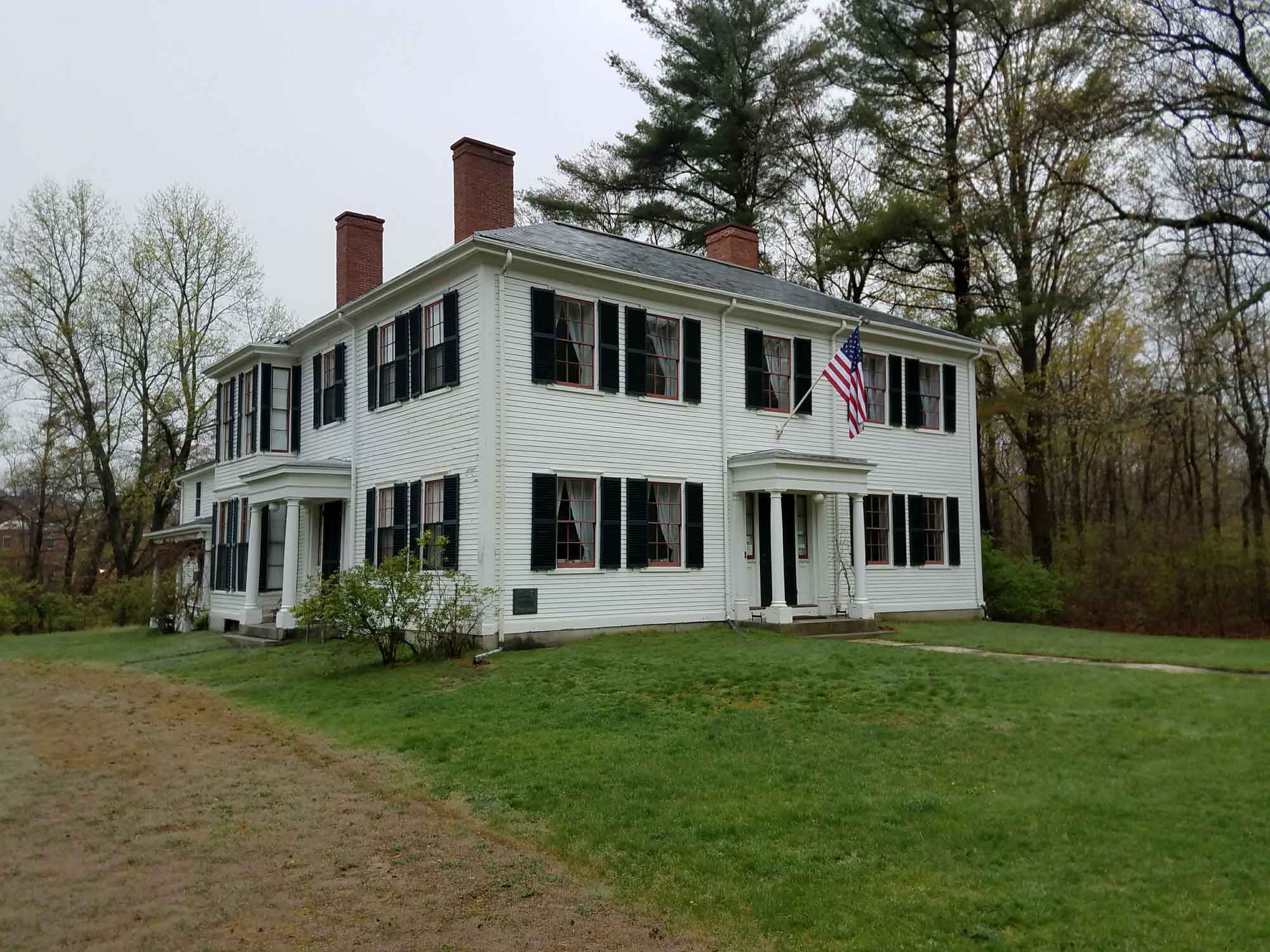
The Emerson House
| ©Richard SmithFirst and foremost, Thoreau was at the house, which the Emersons called Bush, to assist Lidian with daily household chores as well as perform general repairs and odd jobs around the property, like tending to the Emersons’ vegetable gardens and doing some landscaping. Ellen Emerson would later remember that Thoreau came up with a unique solution when Lidian’s chickens were causing problems with her flower beds:
But too soon they showed such zeal in digging all the roots and seeds of her garden that they had to be shut up. Mother’s heart was now oppressed with a sense of the weariness & cruelty of their imprisonment. . . . Mr. Thoreau then made some neat little cowhide shoes for them which fitted well and were tied tight round their slender ankles, so that at least they could promenade about the yard. 1
Thoreau was a great favorite of the Emerson children, and while he was at Bush, he acted as their tutor, babysitter, and friend. He led them on berry-picking excursions in Walden Woods and played “Mr. Rough and Tumble” with three-year-old Edward. Thoreau carved whistles out of wood with his jackknife, popped popcorn in the fireplace using an antique copper bed-warming pan from the Emersons’ attic, and entertained the kids with juggling tricks he learned from his Uncle Charles. It’s also widely believed that Thoreau was the one who built the miniature dollhouse for Ellen and Edith that still sits in the children’s nursery.
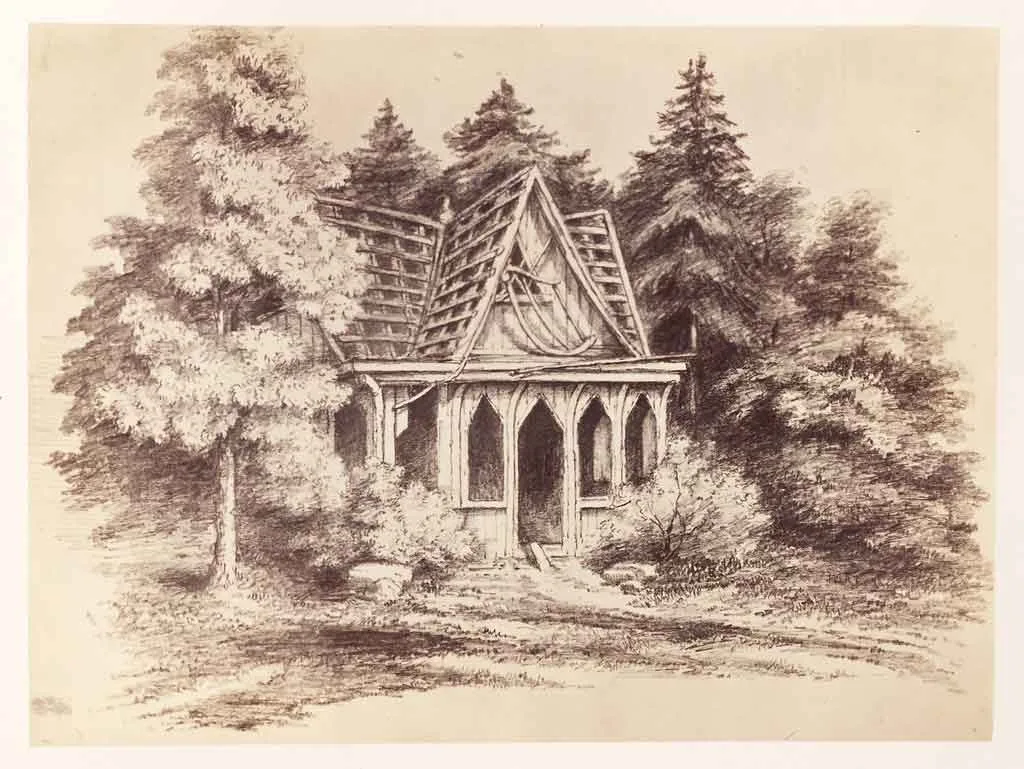
Before leaving for England, knowing the perpetually cash-strapped Alcott family was facing another harsh winter without income, Emerson commissioned Bronson Alcott to build a rustic “summer house” on his property while he was away. Paying Alcott fifty dollars upfront gave him immediate financial relief and a purposeful project to obsess over during the coming autumn months. Thoreau helped with the construction of the small house, but the project didn’t always go smoothly, as he would report to Emerson:
Alcott has heard that I laughed, and so set the people laughing, at his arbor, though I never laughed louder than when I was on the ridgepole. But now I have not laughed for a long time, it is so serious. He is very grave to look at. . . . I strove innocently enough, the other day, to engage his attention to my mathematics. “Did you ever study geometry, the relation of straight lines to curves, the transition from the finite to the infinite? Fine things about it in Newton and Leibnitz.” But he would hear none of it—men of taste preferred the natural curve. Ah. he is a crooked stick himself. 2
The fanciful branch-and-twig structure was widely mocked by locals. Emerson’s mother called it “the ruin,” while Lidian christened it “Tumbledown Hall.” Emerson and his family rarely stepped inside the house because it was plagued by intense summer heat and swarms of mosquitoes. Still, it stood for about fifteen years before it was dismantled.
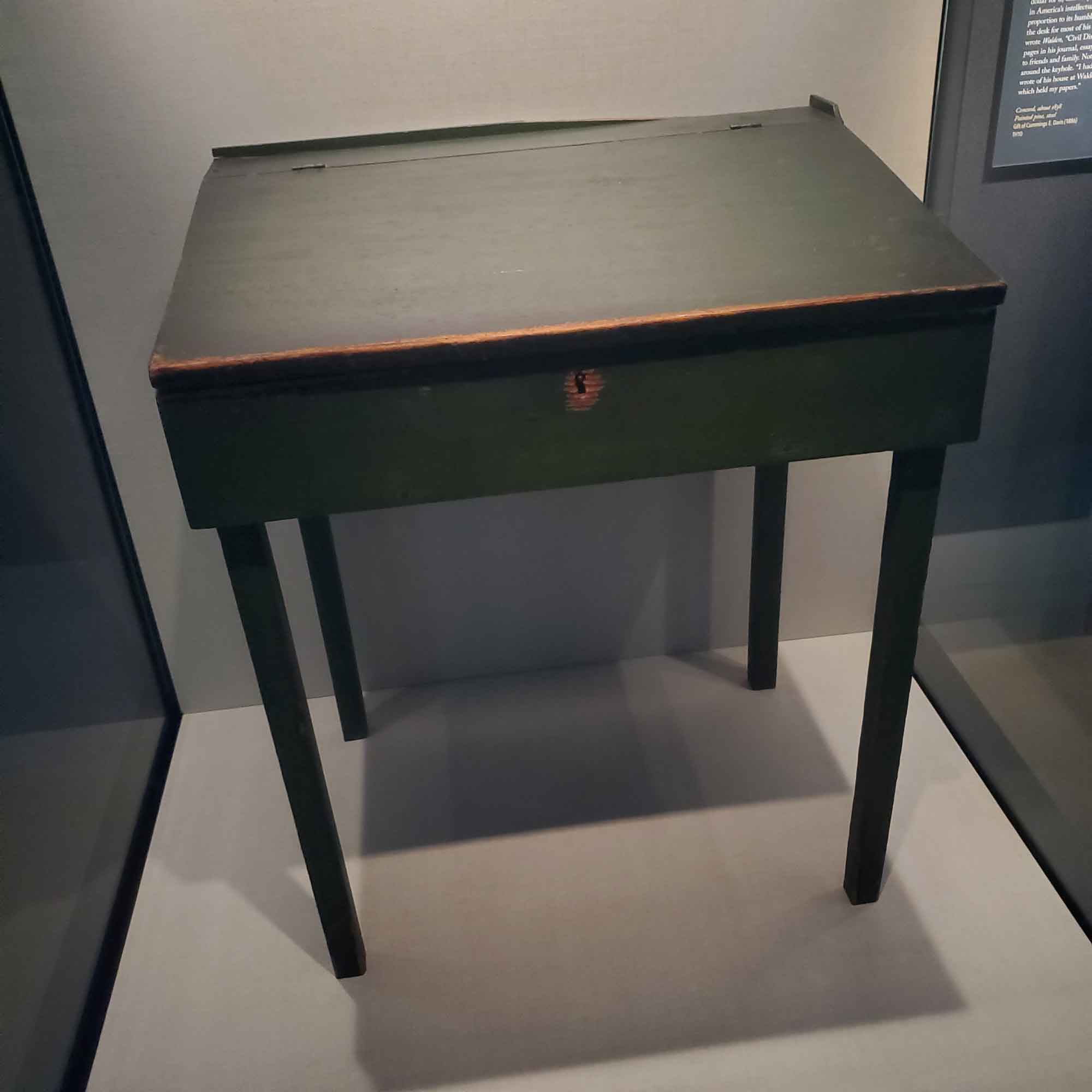
Thoreau’s writing desk in the Concord Museum
| ©Richard SmithBut what about Thoreau’s writing career? Despite the family obligations at the Emerson house, Thoreau had plenty of free time to work on his writing and concentrated on drafting, revising, and finalizing what would become some of his most well-known works. Even with gardening and babysitting, he had time to organize the rough drafts, lectures, and journal entries he had accumulated during his stay at Walden into finished pieces.
Thoreau had not yet published a book, and his main project during this time was to complete revisions for A Week on the Concord and Merrimack Rivers. He had been thinking about writing the book as early as 1840, about a year after he and his brother, John, had taken their river excursion to New Hampshire. At that point, the book was called Memoirs of a Tour—A Chit-Chat with Nature, and by the next year, he had changed it to Merrimack & Musketaquid. Following John’s sudden, tragic death from tetanus in January 1842, the project shifted completely; it was no longer a lighthearted “chit-chat” but a deeply philosophical elegy dedicated to his brother.
Thoreau read passages from the manuscript to Bronson Alcott, who praised the work, describing it as “purely American” and having an “aboriginal vigor.” He noted that it was “fragrant with the life of New England woods and streams,” which combined the influences of Virgil and Izaak Walton with a Yankee perspective.3
Thoreau had been arrested in the summer of 1846 for not paying his poll tax and put into the Concord jail for a night. But it wasn’t until he left Walden and moved into the Emerson house that he began to write about his arrest. In early 1848, he wrote and delivered two lectures at the Concord Lyceum. On January 26, Thoreau spoke on “The Relation of the Individual to the State.” Bronson Alcott wrote that the lecture was an “admirable statement” and that an “attentive audience” heard Henry’s “pertinent, well considered and reasoned” statement.4
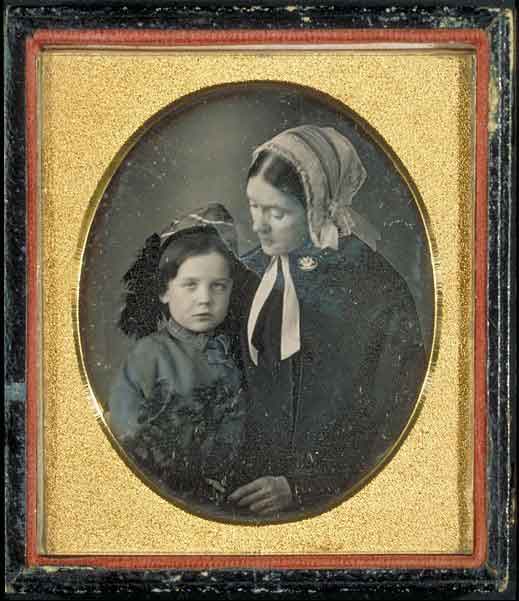
Lidian Jackson Emerson and her son Edward, 1850
| Courtesy of Harvard University LibraryOn February 16, Thoreau again spoke on his jailing before the Concord Lyceum—this time in a lecture titled “The Rights and Duties of the Individual in Relation to the State.” This was not simply a repeat of the lecture he had given three weeks earlier; instead, it was an expanded and revised version of the previous piece. Thoreau later polished these lectures into an essay called “Resistance to Civil Government” that would be published in a periodical called Aesthetic Papers in May 1849.
While living at Emerson’s, Thoreau also worked on editing his travel narrative about his 1846 excursion to Mount Katahdin. He completed the essay and read it at the Concord Lyceum in January 1848; it was published in consecutive installments in The Union Magazine of Literature and Art later that year under the title “Ktaadn and the Maine Woods.”
In 1847, Henry David Thoreau was still an aspiring writer with only some poetry and a handful of essays to his credit. The two years he lived at Walden and the one year that followed at Emerson’s made him a better writer—the works he produced after leaving the pond are light years ahead of the writing he did before 1845. By 1849, he had produced some of his most celebrated works, several of which became classics. He created these classics by living the life he imagined—the life of a writer—and putting that life into words. As he penned in 1851, “How vain it is to sit down to write when you have not stood up to live.”
NOTES 1 Ellen Tucker Emerson, The Life of Lidian Jackson Emerson, ed. Delores Bird Carpenter (East Lansing: Michigan State University Press, 1991), 68. 2 F. B. Sanborn, ed., “The Emerson-Thoreau Correspondence,” The Atlantic Monthly 69, no. 416 (June 1892), 188. 3 Amos Bronson Alcott, The Journals of Bronson Alcott, ed. Odell Shepard (Little, Brown and Company, 1938), 738. 4 Ibid.