
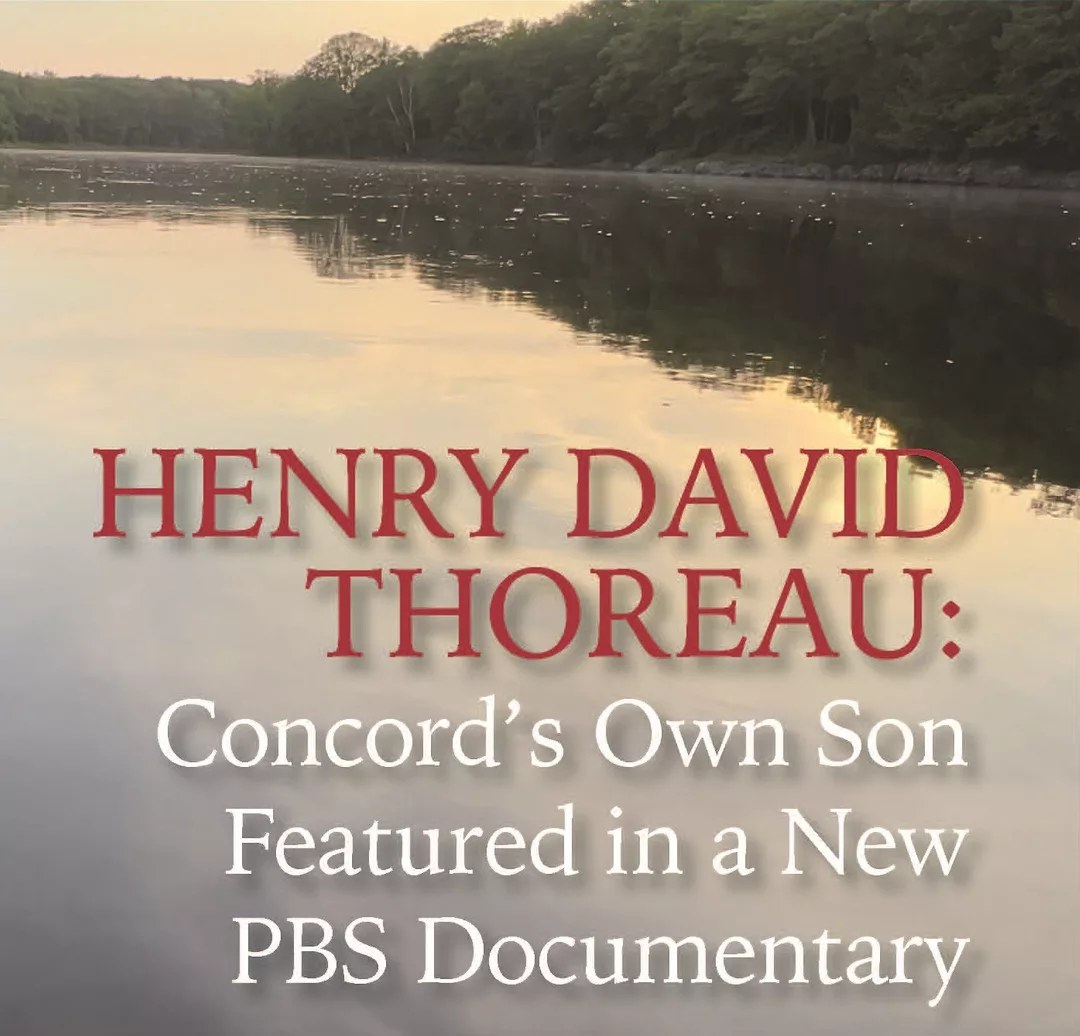
HENRY DAVID THOREAU, a new, three-part, three-hour film directed by Erik Ewers and Christopher Loren Ewers, and executive produced by Ken Burns and Don Henley (Founder of the Walden Woods Project), aired March 30 on PBS.
HENRY DAVID THOREAU examines the life and work of Concord’s 19th-century writer in the context of antebellum New England and the larger United States, as well as through the universal themes he focused on in his writings: an individual’s relationship to the state, how to live an authentic life, our connection to nature, and the impact of race on American life. Set against the political and social tensions of the mid-19th century, the film traces Thoreau’s journey from his early days in Concord, Massachusetts, to his deep engagement with the moral crises of his time, including industrialization, slavery, war, and environmental degradation. Through his essays, journals, and landmark works such as Walden and Civil Disobedience, he became an inspiration for generations of writers, thinkers, and activists.
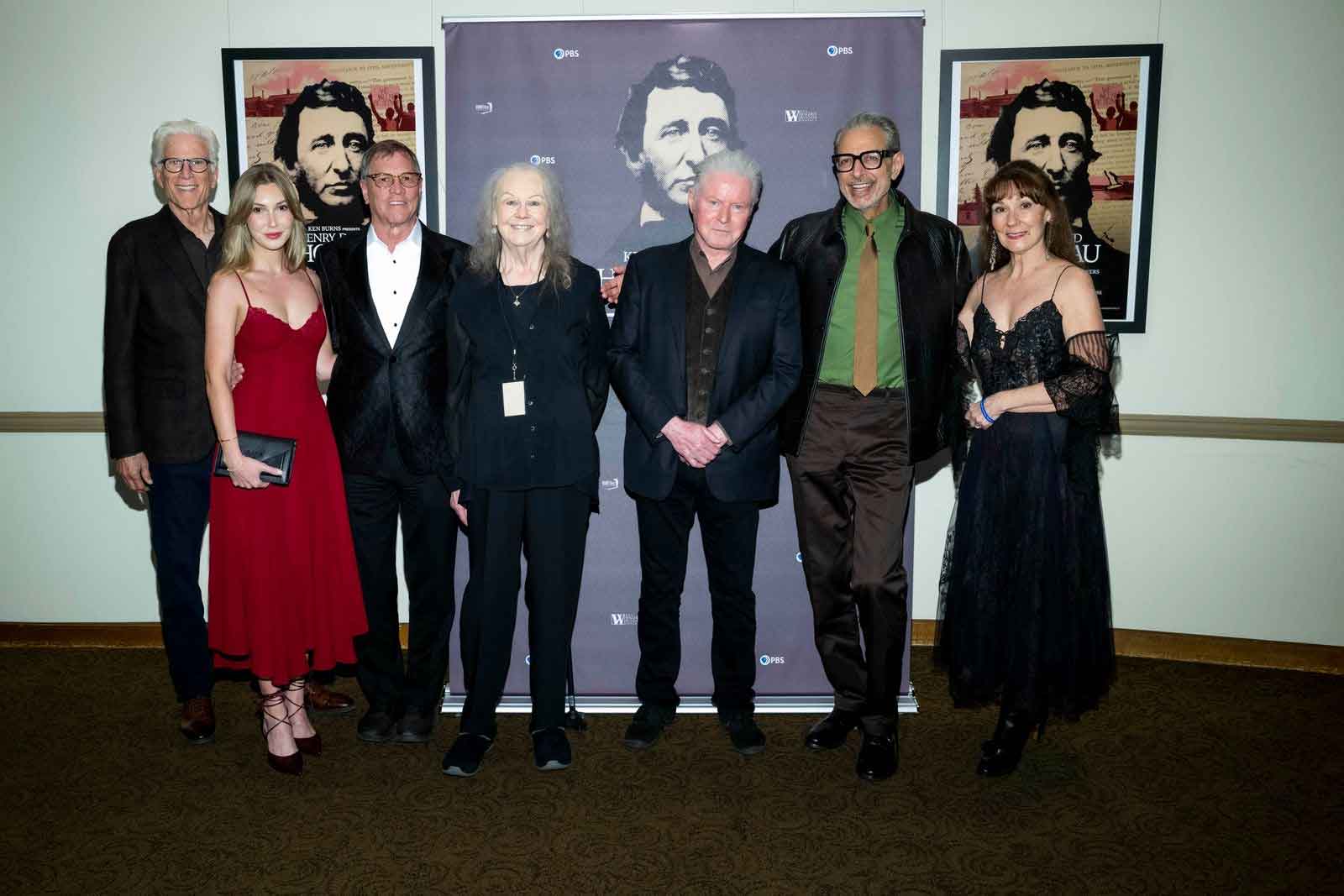
From the Film Screening in Los Angeles (left to right): Ted Danson (voiced Emerson for Henry David Thoreau); Autumn Rasmussen; Neil Rasmussen; Kathi Anderson, Executive Director, The Walden Woods Project; Don Henley, Founder/Chairman of The Walden Woods Project & Executive Producer of Henry David Thoreau; Jeff Goldblum (voiced Thoreau for Henry David Thoreau); Anna Winter Rasmussen, Board Member for The Walden Woods Project
The film draws on a rich collection of archival materials, newly filmed cinematography in Concord and beyond, and interviews with scholars, writers, and environmentalists. The film is enhanced by the talents of Jeff Goldblum as Thoreau’s voice, narrator George Clooney, and the additional voices of Ted Danson, Tate Donovan, and Meryl Streep.
“Thoreau’s insistence that conscience must guide citizenship, and that solitude can be a source of strength, continues to speak directly to our time,” said executive producer Ken Burns. “He challenged Americans to ask hard questions about who we are and what kind of society we want to build, a challenge that remains as urgent today as it was in his day. But perhaps most importantly he asked us to stop and to pay attention to the world around us.”
Executive producer Don Henley, founding member and lead singer of the Eagles, and a longtime advocate for environmental causes, added: “Thoreau was not only a pioneering environmentalist, but also a prophetic philosopher who believed in the power of individual action. His writings have been a guiding force throughout my life. This film honors his legacy while asking what it means to live with purpose in the 21st century.”
Henley, founder and chairman of The Walden Woods Project (WWP), has long worked to preserve the physical and philosophical legacy of Thoreau. Established in 1990, the organization led a successful campaign to protect nearly 200 acres of threatened land surrounding Walden Pond and has since become a national leader in conservation and environmental education – promoting Thoreau’s writings and values through research, public programming, and efforts to engage new generations in discussions around environmental stewardship and civic responsibility.

Meryl Streep
| Courtesy of Walden Woods Project“Walden is important to me because Thoreau - and Emerson - were, and still are, significant touchstones in my life,” said Henley. “I began reading the works of these men in 1968, the year I turned 21. My father had fallen gravely ill and I was searching for solace, for meaning. I first read Emerson’s essay, Self-Reliance, and that led me to Thoreau.”
“I was a longhaired kid, playing in a rock & roll band, so I was very interested in the themes of individualism, personal responsibility, and nonconformity,” he continued. “I was trying to juggle college, band gigs on weekends, and helping my mother care for my ailing dad. I was their only child and I felt, acutely, that I needed to make something of myself, not just for my own edification, but to help them, to honor them. I was a drummer, so Thoreau’s words about nonconformity resonated, deeply, with me – ‘If a man does not keep pace with his companions, perhaps it is because he hears a different drummer. Let him step to the music which he hears, however measured or far away’.”
When asked why he founded Walden Woods Project, Henley responded, “Public Lands are one of our most precious resources, and are considered more endangered now than at any time in recent history. As the pace and pressure of American life increases and we continue to mechanize and technologize our daily lives, we need all the oases we can get … places of quietude, where we can unwind and reflect; interfaces with Nature that help us to realize that we are all a part of the web of life and that the earth is extraordinary. It provides the very stuff that keeps us alive. Thoreau summed it up best when he said - ‘In wildness is the preservation of the world’.”
The idea for this documentary was born out of a collaboration between WWP, filmmaker brothers Erik and Christopher Loren Ewers (who created the welcome film for the Walden Pond Visitor Center), Ken Burns, Don Henley, and PBS.
“I can’t say enough about the immense effort and dedication Don Henley, as Executive Producer of the film, has put into bringing this vision to life,” said Kathi Anderson, Executive Director of Walden Woods Project. “Don was passionately involved in everything from sound editing, to reaching out to many of the narrators of the film, to advocating so strongly to make the film happen.”
To extend the reach and impact of the film, WWP has prepared a series of educational support programming for schools across the country. A collaboration with PBS will extend this ongoing educational platform to include discussion documents for PBS stations and ideas for PBS collaborations with other local entities, such as libraries. These include WWP’s Where’s Your Walden and Henry’s Hat programs.
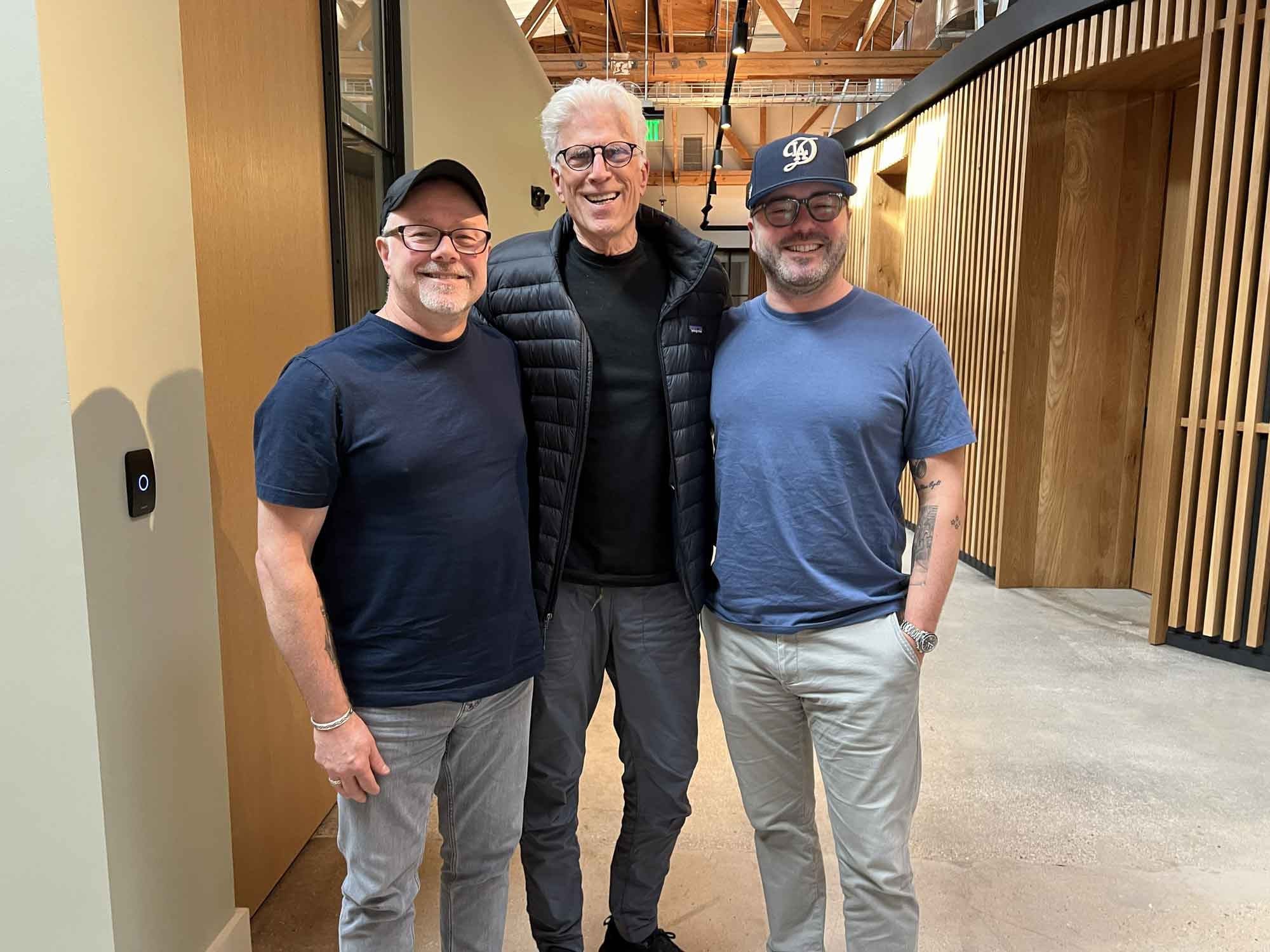
Ted Danson with co-directors Erik Ewers and Christopher Loren Ewers
| Courtesy of The Walden Woods Project“Our family has been blessed to call Concord our home, and for decades we have been devoted to protecting its invaluable natural and historic resources,” said Anna West Winter, Board Member of WWP and Executive Director of Save Our Heritage. “It has been a true honor to serve on the board of the Walden Woods Project, to support this film, and to work with Don Henley and Kathi Anderson. This brilliant documentary couldn’t air at a more critical time for us to heed Henry’s words — when overwhelmed and disheartened by a world embroiled in turmoil, division, and despair — we need to seek stillness, simplicity, truth, kindness, connection, and nature in order to embrace hope and discover the positive path forward.”
HENRY DAVID THOREAU is the latest in a long line of PBS documentaries that explore the American experience through the lives of extraordinary individuals. As the nation prepares to mark the 250th anniversary of its founding, the film offers a timely meditation on democracy, nature, and the responsibilities of citizenship. It is also the first full-length documentary devoted to Thoreau, one of the country’s greatest writers and among the most enduring thinkers and artists of what came to be known as the Transcendentalist Movement in America.
“Thoreau famously retreated into nature not to escape the world but to better understand it,” film director Erik Ewers said. “His writing about the wild and nature remains so vibrant because he was acutely aware of how the surrounding countryside was teetering on the edge of industrialization. He believed strongly that we have a connection to the landscape and nature and must remain grounded to fully experience what it means to be human.”
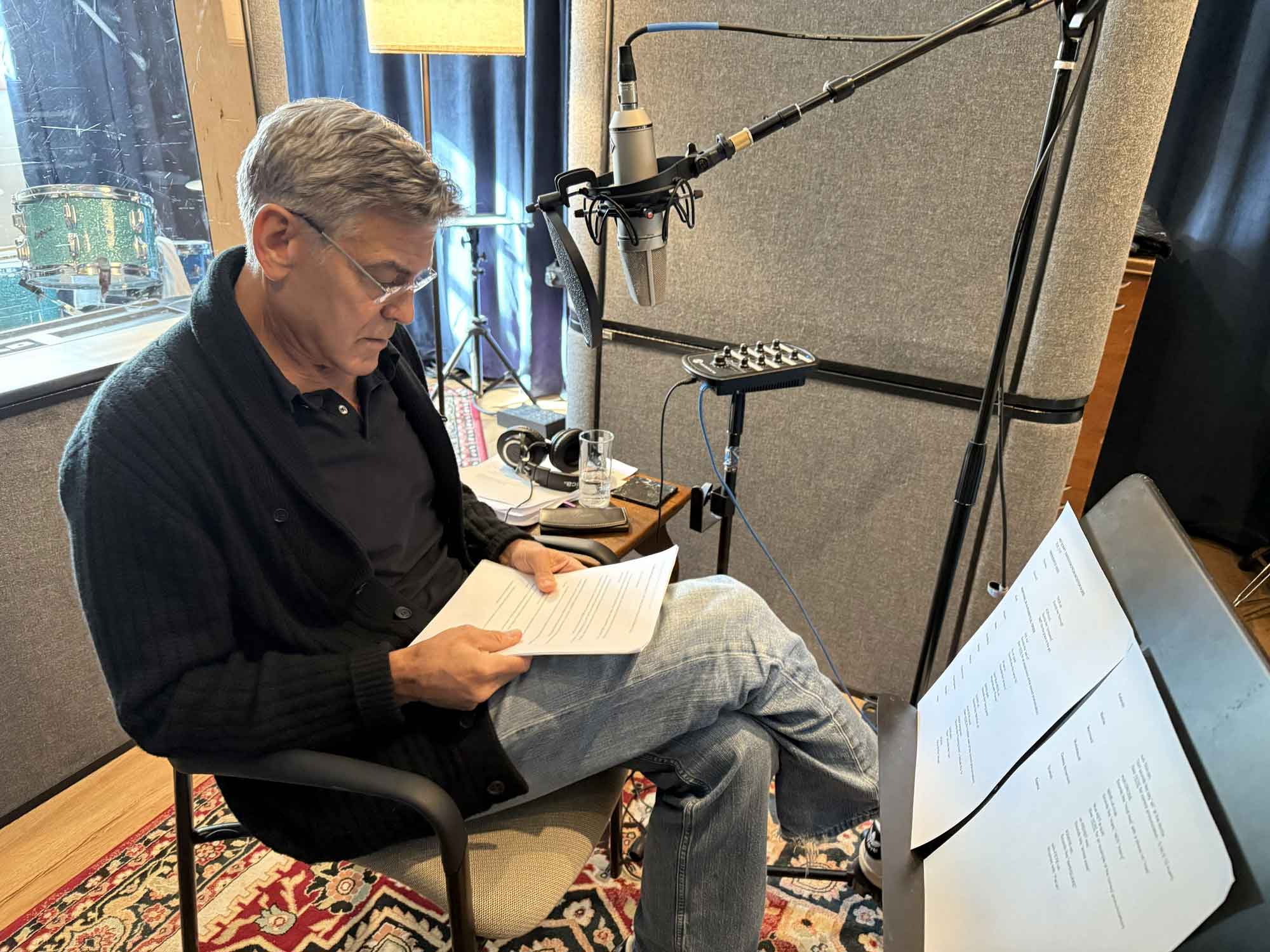
George Clooney
| Courtesy of Walden Woods ProjectThoreau was active in the most pressing political and social issues of the day, especially abolitionism and slavery. He lectured and wrote in support of freedom for the enslaved, defied the Fugitive Slave Act, and defended the right of citizens to resist unjust laws. His insistence on moral action would influence later generations of reformers, from John Muir and the early conservation movement to Mahatma Gandhi and Martin Luther King, Jr. The film examines the universal nature of many of his writings, and his concerns about humanity and the “quiet desperation” of life by also reflecting on current events and challenges, through footage focused on other periods in American history and social and cultural issues today.
“Thoreau’s popularity and writings are often presented as simplified statements about wellness or simple living,” said fellow film director Christopher Loren Ewers. “To the contrary, they provide deep, thoughtful investigations that combine an appreciation for nature and the environment with a keen sense of moral responsibility. Not only is he one of the first great nature writers in American literature but he’s also an acute observer of the times.”
The film illuminates the vibrant intellectual and political community that shaped and nurtured Thoreau. Concord, Massachusetts in the mid-19th century was a crucible of new ideas about religion, nature, politics, and social reform. Thoreau moved among the towering figures of American thought, such as his mentor Ralph Waldo Emerson, Margaret Fuller, Bronson Alcott, Frederick Douglass, the radical abolitionists of Boston, and the even more controversial John Brown, engaging in debates that would define the era.
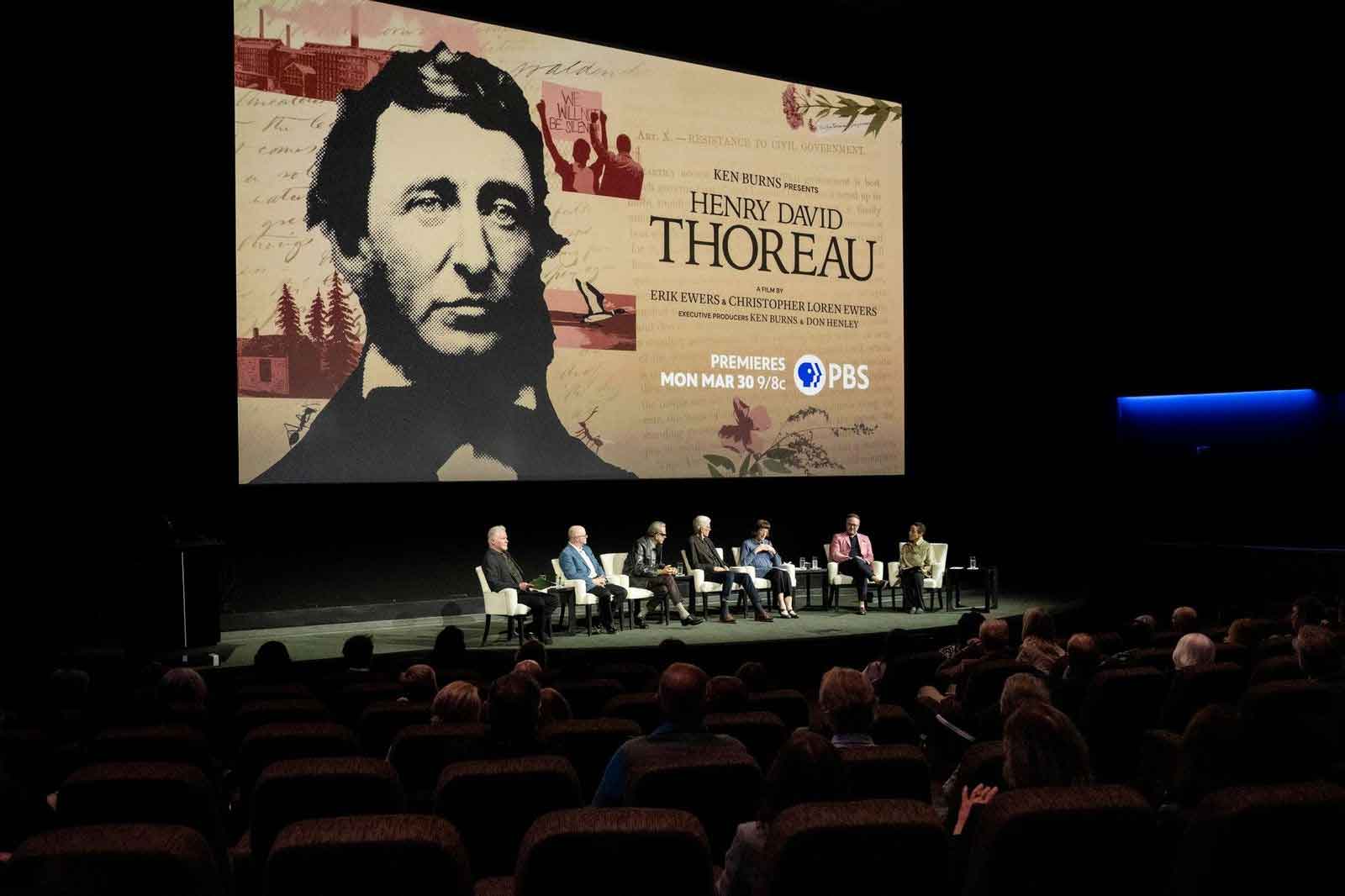
A live panel discussion in Los Angeles
| Courtesy of Walden Woods ProjectViewers will also encounter the broader world of reform and resistance in which Thoreau participated. The film situates his life within the ferment of antebellum America: the fight against slavery, the rise of women’s rights, the impact of industrialization on New England’s landscape, and the continued displacement of Native peoples. Thoreau’s journals reveal how these forces shaped his thinking and his art.
At the same time, the series explores the Transcendentalist movement, of which Thoreau was a central figure. Transcendentalism’s emphasis on self-reliance, spiritual intuition, and the moral dimension of everyday life informed Thoreau’s experiments at Walden Pond and his lifelong quest to live deliberately. The film draws out how these ideas still animate debates about the environment, citizenship, and individual conscience.
Ultimately, HENRY DAVID THOREAU presents a portrait of a man both rooted in his time and speaking far beyond it. By placing his life and writings within the great moral struggles of the 19th century, the film underscores why Thoreau endures as a guide to the tensions and possibilities of American democracy—offering wisdom and provocation as the nation approaches its 250th anniversary.
To learn more about when the film will be available in your area, visit pbs.org/show/henry-david-thoreau/
For more information on The Walden Woods Project, please visit Walden.org