Discover Concord Logo
Toggle Mobile MenuToggle Mobile Menu
Subscribe
  • Home
  • Current Issue
  • Back Issues
    • Fall 2025
    • Spring 2025
    • Winter 2025
    • 2024 Back Issues
    • 2023 Back Issues
    • 2022 Back Issues
    • 2021 Back Issues
    • 2020 Back Issues
    • 2019 Back Issues
  • Browse Topics
    • Abolitionism in Concord
    • American Revolution
    • Arts & Culture
    • Celebrity Profiles
    • Civil War
    • Concord History
    • Concord Writers
    • First Nations People of Concord
    • Historic Sites in Concord
    • Parks & Nature
    • Patriots of Color
    • Things to See & Do
    • Transcendentalism
    • Trivia
    • Untold Stories of Concord
  • Plan Your Visit
  • Events
  • Purchase Subscriptions and Back Issues
  • Discover the Battle Road
  • 250 Collectibles
  • Trading Cards
  • More
    • About Us
    • Advertise
    • Contact Us
Toggle Mobile MenuToggle Mobile Menu
Home » Keywords » african american

Items Tagged with 'african american'

ARTICLES

Brister-Freeman---Codman-Estate--Grotto-1286.jpg

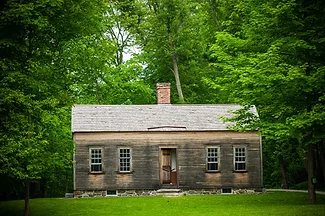
At the Frontier of Hope: Brister Freeman

September 15, 2020
Alida Vienna Orzechowski
No Comments

When you hear the words ‘Walden Pond’ you probably think of Henry David Thoreau and his cabin in the woods. If you’ve been here, you might also think of the many hiking trails and sandy little coves surrounding the gin-clear water of the pond where tens of thousands of people enjoy swimming and walking each season.

What you might not think about is the community of formerly enslaved people who once lived near Walden. Not because it was the beautiful, tranquil scene we flock to today, but because it was considered an infertile, out of the way, undesirable piece of land to Concord’s white population.

As Elise Lemire writes in her excellent book Black Walden, as many as fifteen formerly enslaved people ‘made a life for themselves in Walden Woods, enough that Henry David Thoreau could describe their community as a “small village.”’ 


Read More
Robbins-House-.jpg

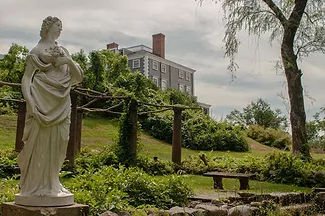
The Robbins House: Preserving the Legacy of African American History in Concord

March 15, 2020
Alida Vienna Orzechowski
No Comments

If historical Concord had to be summed up in one sensational newspaper headline it might read something like, “TINY TOWN THAT TROUNCED BRITISH BATALLION ALSO BELOVED BY BOOKWORMS”. 

Fortunately, most pilgrims to Concord don’t rely on alliterative excerpts of history when they visit, and yet, there’s so much more to our story than armies and authors. In particular, there is a great deal just waiting to be learned about Concord’s African American history, a complex and very human story that far predates our nation. 

A short drive down Monument Street and across from the venerable Old North Bridge, sits a restored early-19th century vernacular farmhouse, such as can be found all over New England. What sets this farmhouse apart is that it belonged to the family of Revolutionary War veteran Caesar Robbins, who was enslaved at birth around 1745. 

Read More

Featured Stories

  • Edited-Photo-of-library.jpg

    The Historic Peabody Building: A Gem in the Woods of Concord

    The Peabody Building is part of Concord’s mid-century modern architectural legacy. Designed in 1968 by The Architects Collaborative (TAC) as an elementary school, it was opened in 1970 and served (along with the Sanborn building) for 55 years as the Concord Middle School. This building is the physical manifestation of the mid-century architects’ aspirations for the elevation of our society, starting with children and the design of their environment.
  • COVERDiscoverBattleRoad NPS image no logo.jpg

    Discover the Battle Road

    This week from Discover the Battle Road: Concord didn’t suddenly wake up on April 19, 1775, and decide the time had come for action. For months, the town was already moving from uneasy tension to open defiance, organizing militia readiness and helping lay the groundwork for what was coming. Discover more in “Concord on the Eve of War." And when the fighting finally erupted, the men weren’t carrying standardized weapons. Instead, they came armed with what they had available - local fowlers, older British arms, imported pieces, and even prized French guns with histories of their own. “I Picked Up a Good French Gun: The Muskets of the Battles of Lexington and Concord" delves into the armaments of citizen-soldiers on that day.
©2026. All Rights Reserved. Content: Voyager Publishing LLC. Design, CMS, Hosting & Web Development: ePublishing
Facebook Instagram