The list of Concord abolitionists is long, and the names of Thoreau, Alcott, Bigelow, and Brooks are assured in the town’s history. But for every famous name involved in abolitionism, many more remain forgotten. One of Concord’s heroes, while not exactly lost to history, is certainly not a household name: he was the Reverend Daniel Foster.
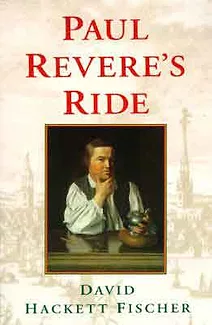
It’s that time of year again when we start to think about holiday gift giving. And what’s better than giving or getting a book as a present? So let’s talk about books! Since this is a magazine dedicated to Concord, let’s focus on books about that most important day of days in Concord history, April 19, 1775.
In the summer of 1842, Concord was like any other New England town. Sitting 18 miles west of Boston, the town of 2,000 souls was still very rural. The railroad wouldn’t come through for another two years, and there was no telegraph yet; only the daily stagecoach and the post office connected Concord to the rest of the world.
On May 8, 1859, John Brown was back in Concord. The tall, humorless abolitionist had grown a flowing white beard, making him look like an Old Testament prophet. Like he did during his first visit in 1857, Brown spoke on his anti-slavery activities in Kansas to a large crowd at the Town Hall; he had come east in the hope of raising money for those activities. As in 1857, Ralph Waldo Emerson and Henry Thoreau were again in the audience, and they supported Brown; intellectually, philosophically, and monetarily.
January 1, 1863. As the Civil War entered its third bloody year, President Abraham Lincoln signed his Emancipation Proclamation. With a stroke of his pen, Lincoln ensured that the war now took on a bigger objective. It was not just a fight to save the Union; the lives — and freedom — of nearly four million enslaved African Americans now depended on the success of the Federal armies.
With the Emancipation Proclamation, nearly 200,000 Black men, many of whom had been slaves, now joined the Union Army to fight in a war that had already taken the lives of tens of thousands of white men. This sudden surge of manpower would help tip the balance to Union victory in 1865.
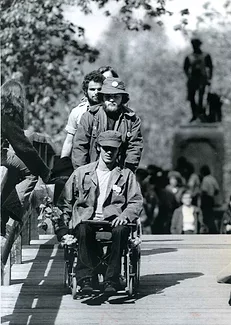
Hundreds of soldiers marching from the North Bridge in Concord, through Lexington, and onto the Bunker Hill battlefield in Charlestown — this sounds like a scene from the Revolutionary War. But this event didn’t take place in 1775; this march took place in 1971, and the men were American soldiers. More specifically, they were Vietnam veterans.
On April 19, 1775, the long-simmering uneasiness between the American colonies and the British Crown broke out into open warfare with the Battles of Lexington and Concord. A year later, rebellion turned into revolution and, in 1783, after eight years of war, the United States of America gained its independence from Great Britain.
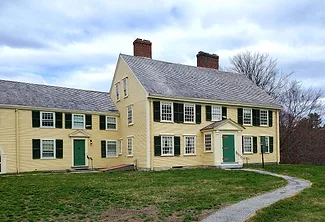
Today, visitors to Minute Man National Historical Park can experience firsthand where the American Revolution began. The Park passes through three towns; from the Battle Green in Lexington, past the Hartwell Tavern and Bloody Angle in Lincoln, and westward to the Old North Bridge in Concord. Parts of the five-mile-long Battle Road Trail literally follow in the footsteps of the Colonial militia and British Redcoats. Along the way, there can be seen many buildings, called “Witness Houses” by the National Park. These were the homes and farms of the people who lived here in the 18th century, and these houses bear mute testimony to the violence, chaos, and bloodshed of April 19, 1775.
Here are four of the eleven historic buildings you’ll see on the Battle Road Trail, highlighting the lives of the people who experienced the first day of the American Revolution.
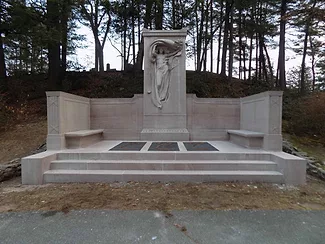
Among the luminaries buried at Sleepy Hollow Cemetery, few made greater sacrifices for their nation than did Asa, John, and Samuel Melvin. Their story echoes down the years and reflects the courage, commitment and integrity of one of Concord’s oldest families.
Shock. Anger. Patriotism. Resolve. These were just some of the emotions that swept through the Northern states when Confederate forces fired on the Federal-held Fort Sumter in Charleston Harbor, South Carolina on April 12, 1861. The Civil War had begun.
Two days after Sumter’s surrender, President Lincoln issued a call for 75,000 volunteers to put down the rebellion. Massachusetts answered the call with an overwhelming response, and nearly 160,000 Bay Staters would serve in the Union army and navy. Like the rest of the North, the people of Concord were angered and inspired, and the town of just over 2,000 inhabitants would ultimately do its part by sending 450 men off to the war.